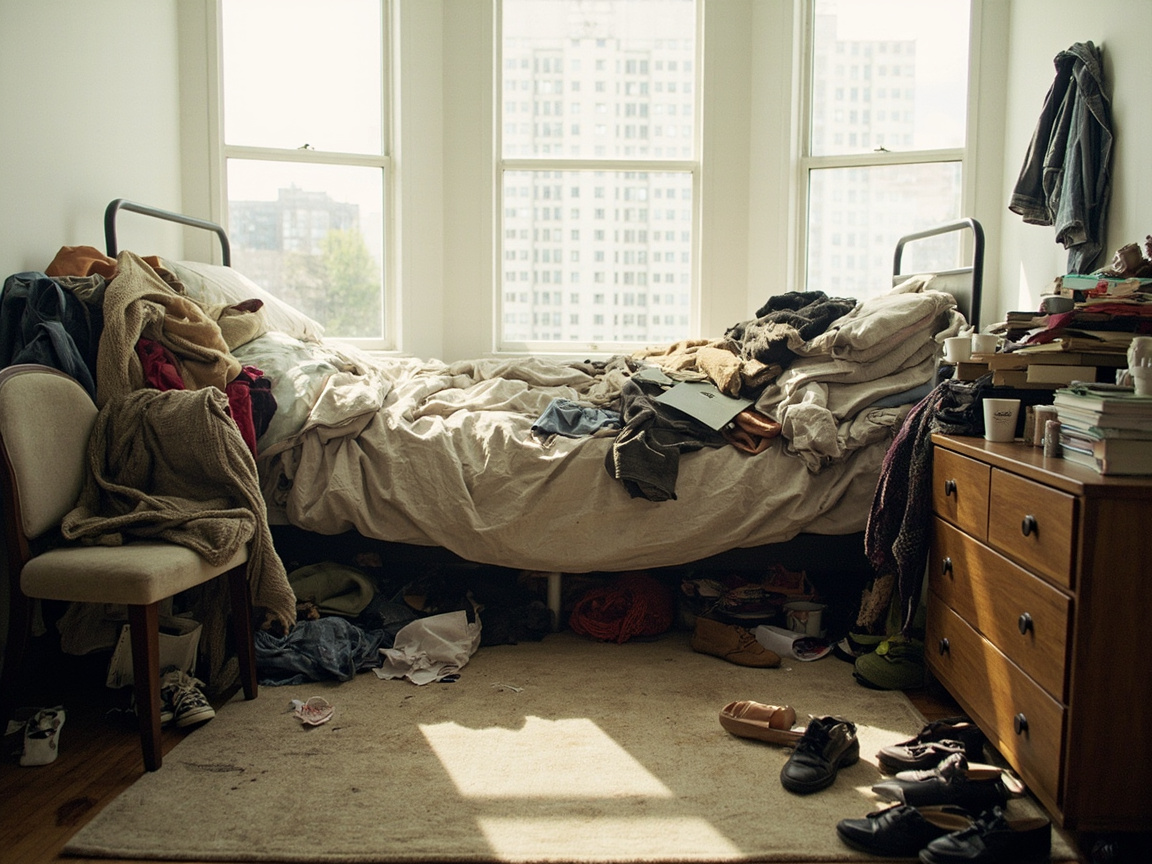
A dresser is one of the highest-leverage storage spots in your bedroom — six drawers of organized capacity — but it becomes the place where mismatched socks go to die and dresser tops turn into display surfaces for bills and lip balm. The fix is a simple framework: measure every drawer, group clothes by category, fold with a single method that turns folding into a 5-second habit. Apply this to your dresser and the top will stop absorbing every flat object in the house.
This guide walks through the 5-step dresser organization system, including the “top” rule that gives you a flat surface by the time you finish.
Why Dressers Get Messy
A dresser has the highest “items per square foot” of any bedroom storage spot, but it’s the easiest to neglect because the mess hides behind drawer fronts. Three failure modes recur:
- The miscellaneous drawer. One drawer becomes the catch-all for everything that doesn’t fit anywhere else. Within 3 months it’s a horizontal junk drawer with no categories.
- The top absorbs everything. Once one item lands on the dresser top, the next gets a free pass. Within a week the top is full of bills, lip balm, a charging cable, and a book.
- Dividers without the right drawer height. A 4-inch-tall divider in a 3-inch-tall drawer is wasted money. Dividers without measuring first is a guessing game.
The 5-step system below handles all three.
What You’ll Need
These 8 products cover every dresser failure mode. Most readers need 3-5 from this list:
Soft fabric drawer dividers
For soft goods (socks, underwear, t-shirts) that can compress around a divider, the DIMJ Drawer Organizers - Set of 4 at $9.01 collapses flat when empty and creates 4 compartments per drawer. Worth it in the top 2-3 drawers.
Hard plastic drawer organizers
For drawers where items shouldn’t slide around, the Vtopmart 25-Piece Clear Plastic Drawer Organizer Set at $17.98 gives you 25 rigid compartments in 4 sizes. Clear plastic beats fabric because you see what’s in each compartment without lifting the divider.
High-capacity drawer set
For a full dresser redo, the Vtopmart 44-Piece Clear Plastic Drawer Organizers Set at $20.99 has 44 pieces in 5 sizes — enough to subdivide a standard 6-drawer dresser completely. The 44-piece set is what professional organizers use.
Foldable drawer bins
For drawers you empty seasonally (sweaters, seasonal clothes), the Criusia 10-Pack Foldable Drawer Organizer at $17.88 collapses flat when not in use. Best for low-use drawers.
Lazy susan for hard-to-reach corners
A LANDNEOO Non-Skid Lazy Susan Set at $24.99 (4 turntables) lets you spin the back of the drawer into view. Put rarely-worn items (formal socks, tie accessories) on the turntable and rotate to grab without emptying the drawer.
Drawer liner
The cheapest upgrade that makes a dresser feel “finished”: a Beautysaid Non-Adhesive Drawer Liner at $9.65 covers the drawer floor, prevents items from sliding when you open the drawer, and adds a layer of friction so dividers stay put. Non-adhesive means you can remove it without residue.
Fabric bin for soft goods
If you want a hybrid drawer-bin (fabric on the outside, structured on the inside), the Homsorout Closet Organizer Bins 6-Pack at $29.99 holds bulky items (sweaters, scarves, hats) that don’t fit dividers. Pair with labels.
Drawer labels
Once you have 3+ categories per drawer, labels save 5 seconds every morning. ONUPGO Chalkboard Labels at $9.99 (180 stickers, chalk marker included) work on fabric bins, plastic dividers, and drawer fronts. Chalkboard surface rewrites when categories change.
Daily-wear valet tray
The single most important “top rule” tool: a Zosenley Wooden Valet Tray with Leather Base at $12.99 holds watch, ring, folded earrings, lip balm. The leather base prevents items sliding when you wipe the top.
Step 1: Measure Every Drawer First
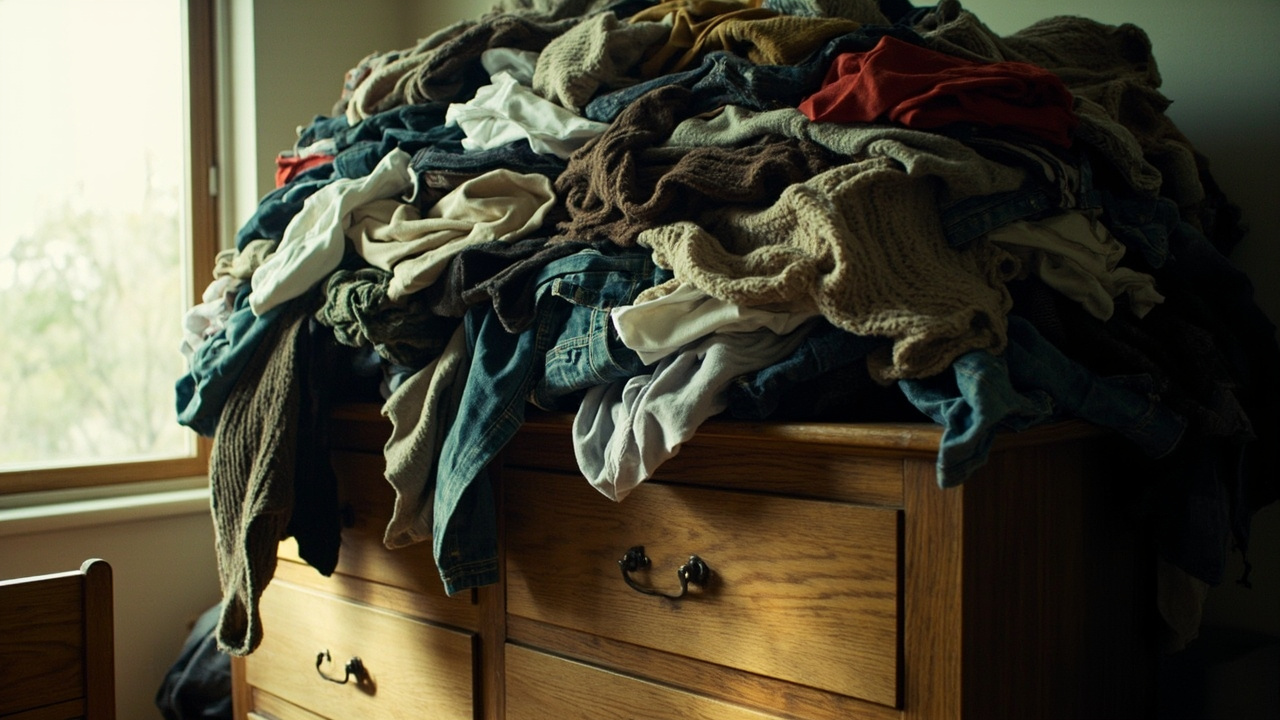
Before any bin or divider purchase, measure all six drawers: width, depth, and usable height (the platform floor, not the top of the frame). Small differences dictate which dividers actually fit.
What to measure:
- Inside width (left to right inside the frame, not the outer face)
- Inside depth (front to back)
- Usable height (top of the bottom panel to top of the frame)
- Track or glide clearance (about 1 cm at the back; some glides hit center too)
Write each drawer on a sticky note and tape it to the front. This becomes your “shopping list” for step 4.
Step 2: Empty Each Drawer into One Pile
Pull everything out and put it on the bed (or floor). Every drawer at once, not one at a time — the entire-drawer outage forces the question of “does this go in any drawer?” rather than “where in this drawer?”
The 4-pile rule (every drawer combined):
- Keep: items you wear at least monthly
- Donate: items you haven’t worn in 6-12 months
- Move: items that belong in a closet (not dresser), kitchen, bathroom, or laundry
- Discard: items that are torn, stained, or otherwise unwearable
This is where most dressers lose half their contents in 30 minutes.
Step 3: Assign Each Drawer One Category (One Only)
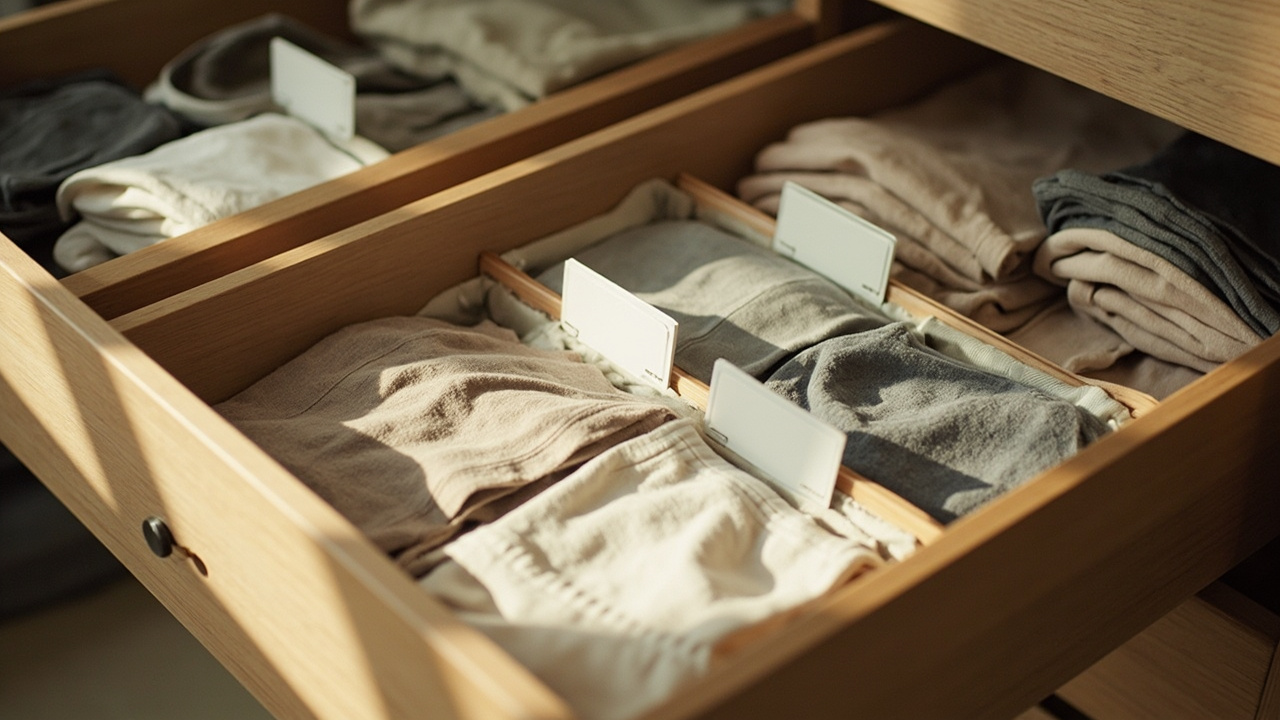
The single biggest failure mode is “miscellaneous drawer” — one for everything that doesn’t fit. Once that exists, the dresser stops being organized. Lock each drawer to one category:
| Drawer | Locked Category | Example contents |
|---|---|---|
| 1 (top, shallow) | Daily-wear base layers | Socks, underwear, bras |
| 2 | Active tops | T-shirts, tanks, light sweaters |
| 3 | Inactive tops | Heavy sweaters, occasional blouses |
| 4 | Active bottoms | Workout pants, jeans you wear weekly |
| 5 | Pajamas + loungewear | PJs, sweatpants, hoodies |
| 6 (bottom, deep) | Bulky items or seasonal | Sweaters in storage, suitcase |
Avoid: a “miscellaneous” drawer; a “rarely worn” drawer (it’ll become a graveyard within 3 months).
Step 4: Add Dividers Only Where They Earn Their Cost
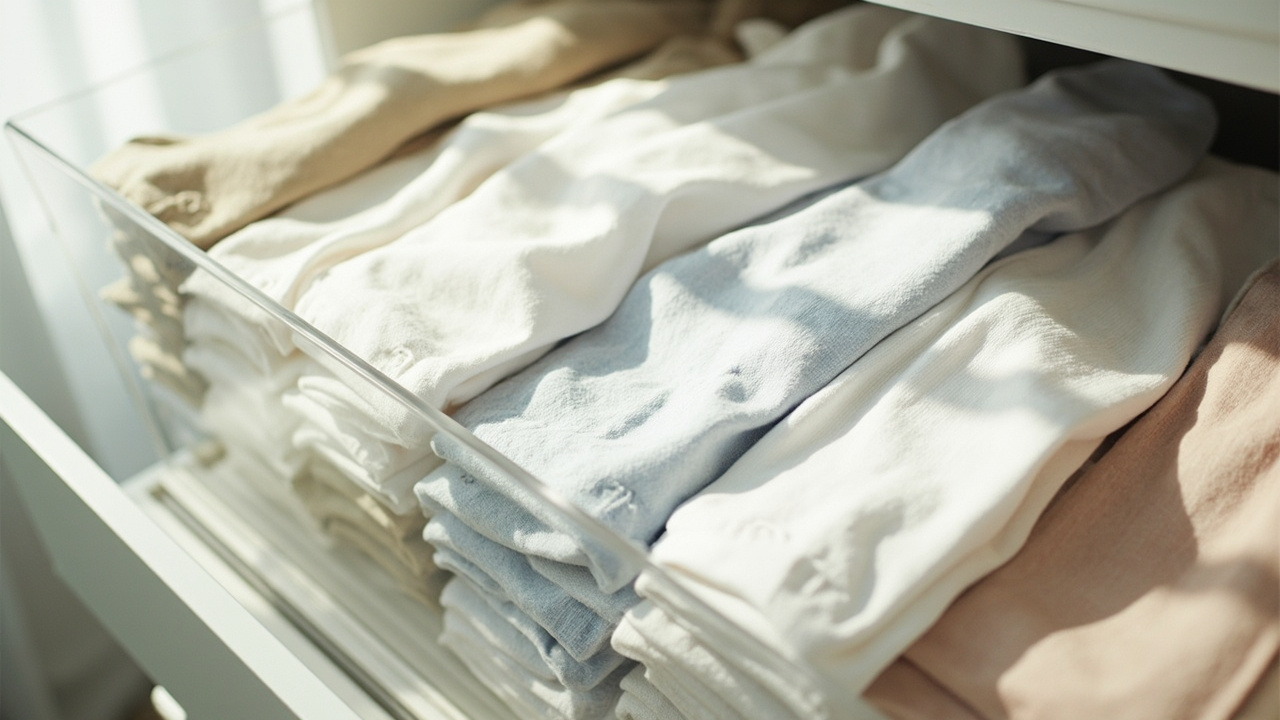
A 4-pack of soft fabric drawer dividers like the DIMJ set runs $9-15 and adds about 30 minutes of install time. Worth it in top 2-3 drawers (where socks and t-shirts tangle); not worth it in the sweater drawer.
For drawers where you want hard walls (so socks don’t slide under the divider), the Vtopmart 25-Piece Clear Plastic Drawer Organizer Set at $17.98 gives you 25 rigid compartments in 4 sizes — most readers use the small ones for socks and the medium ones for underwear. The clear plastic beats fabric because you can see what’s in each compartment without lifting the divider.
Use dividers for:
- Sock drawer: pair socks before placing (don’t roll balls). One pair per slot prevents orphan-sock syndrome.
- Underwear drawer: shape-based slots keep things flat.
- T-shirt drawer: vertical file fold (KonMari) so each shirt is visible at a glance.
Skip dividers for:
- Sweaters (folded flat, stack 3-4 high)
- Bulk winter items (scarves, gloves, hats in a single bin)
- Pajamas (folded, stacked)
Rotate hard-to-reach items: a LANDNEOO Non-Skid Lazy Susan Set ($24.99 for 4 turntables) lets you spin the back of the drawer into view — put rarely-worn items (formal socks, tie accessories) on the lazy susan and rotate to grab without emptying the drawer.
Fold method: pick one — KonMari vertical file fold, classic flat fold, or ranger roll — and use it consistently. The fold itself doesn’t matter; consistency does.
Step 5: The “Top” Rule — Nothing Stays on Top
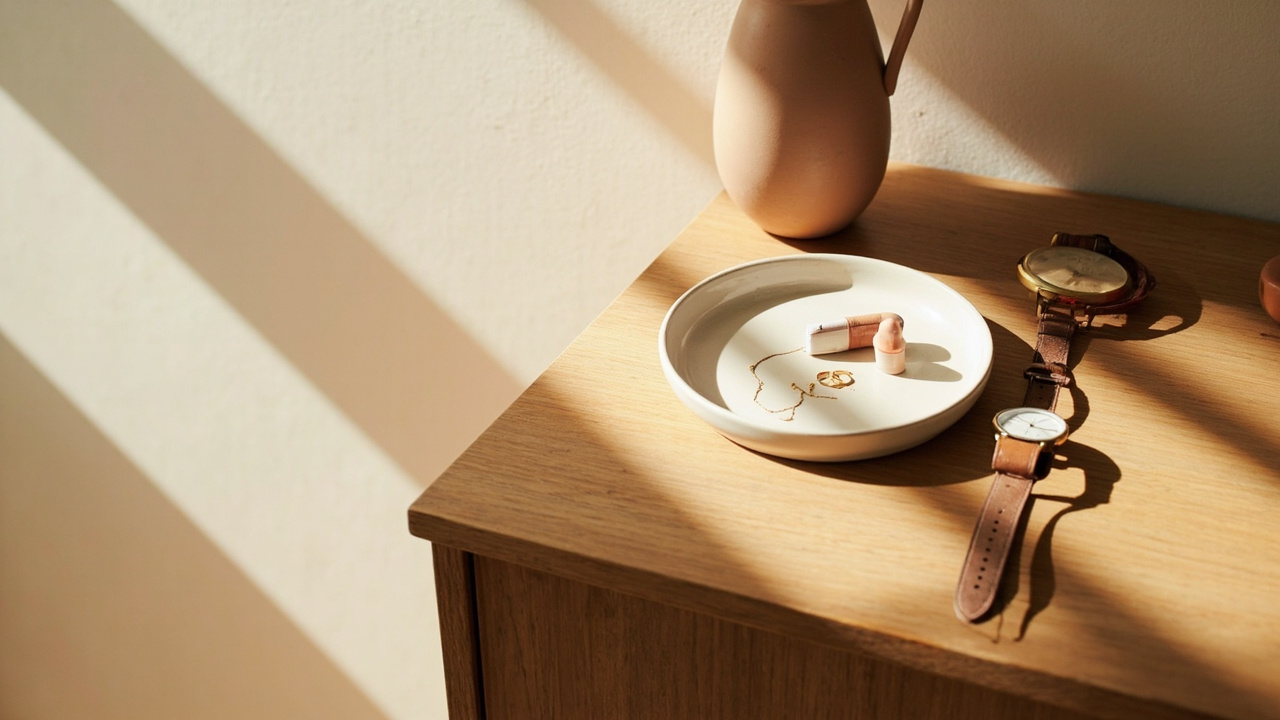
The dresser top is the highest-leverage surface in your bedroom. Once one item lands there, the next item gets a free pass, and within a week the top is a horizontal junk drawer.
Rule: at the end of every day, the top contains exactly:
- One small tray with daily-use items (watch, jewelry you wear often, lip balm)
- A lamp, clock, or plant if you have one
- Nothing else
A small tray is the cheapest “boundary” to enforce this rule. A Zosenley Wooden Valet Tray with Leather Base at $12.99 holds a watch, a ring, a folded pair of earrings, and lip balm without crowding; the leather base prevents items from sliding when you wipe the top. Items not in the tray are out of place; pick them up daily; the top stays clear.
Common Mistakes and How to Avoid Them
Mistake 1: Stacking folded clothes horizontally. That “I know where everything is” feeling fades after the second layer. Switch to vertical file fold — every item visible at a glance.
Mistake 2: Buying a beautiful drawer organizer before decluttering. Most organizers are sized for normal-volume wardrobes. After Step 2, you might find half the drawer is empty, and you don’t need any organizer.
Mistake 3: Putting dresser-top “decor” in every drawer. Books, extra candles, lotions, a charging cable — these items belong on a bathroom shelf, bedside table, or entryway tray, not on top of where you sleep.
Mistake 4: One “misc” drawer. If a drawer is labeled “miscellaneous” or “other,” it’s not organized. Move those items to a real category or purge them. Empty drawers are better than “miscellaneous” drawers.
Maintain the System in 60 Seconds Per Day
Nightly (30 seconds):
- Open dresser top, return any stray items to their drawer. Pile any clothing-thrown-on-the-bed-instead-of-hung back into the laundry bin.
Weekly (3 minutes):
- Pair socks (if you missed any). Re-fold any drawer that got rushed. Glance at the top — keep it empty.
Monthly (10 minutes):
- Empty the sock drawer and re-pair. Swap seasonal items in/out. Donate anything you didn’t reach for during the month.
When the top rule holds and the categories stay locked, the dresser becomes the lowest-maintenance storage in your bedroom.
Quick Recap
Q: My dresser drawers are shallow. Can I still use dividers? A: Yes, but check the height — most fabric dividers are 3-4 inches tall. If your usable drawer height is under 3 inches, skip dividers and rely on the fold-and-stack approach.
Q: What if my dresser has 4 drawers instead of 6? A: Combine categories. Top = base layers + socks. Two middle drawers = tops (active + inactive). Bottom drawer = bottoms + bulky.
Q: Should I store off-season sweaters in dresser drawers? A: Only if your dresser is empty enough to handle the bulk. A dresser drawer is fine for 4-6 sweaters; more than that belongs in under-bed storage or a closet shelf.
Q: Is it OK to use dresser drawers for non-clothing items? A: Some are fine — jewelry, wallets, watches in a small organizer. But the dresser is fundamentally a wardrobe-anchor spot; using it as a junk drawer is what creates the “misc” problem.
Related Bedroom Guides
This guide is part of the broader Bedroom Organization Hub. For a complete weekend reset, see our Bedroom Declutter Checklist — 9 steps and a 5-minute nightly habit.
For specific room surfaces:
- Closet Within a Bedroom — building a closet when you have none
- Nightstand Organization Ideas — drawer organizers and valet trays
- Jewelry and Accessory Storage — five zoning systems
- Under Bed Storage Ideas — 4-zone system for hidden clutter
- Small Bedroom Organization — for studios and tight rooms