Jewelry has a special property: it’s high in value but low in size, so the natural instinct is to toss it all in a drawer. That drawer becomes a tangled black hole where necklaces knot, earrings lose their match, and rings vanish. The fix is a zoning system — 5 separate “homes” based on how often you wear an item, not on what kind of item it is.
This guide walks through 5 zoning systems, each one a different solution for a different collection size and budget. Pick one; don’t try to apply all five.
Why Jewelry Storage Is Different
Jewelry has a unique problem among bedroom items: it’s high in value but low in size. That property triggers the worst storage instinct — tossing it all in a single drawer “because it fits.” Within a month, that drawer becomes a tangled black hole where necklaces knot, earrings lose their match, and rings vanish into felt trays.
Three failure modes recur across every reader:
- All-jewelry-in-one-drawer. Chains + earrings + bracelets + watches piled together = tangles within a week.
- Drawer depth hides items. A 12-inch-deep drawer means the bottom 3 inches never get touched. Items slide to the back and get forgotten.
- No category separation. Storing by item type (all rings together, all necklaces together) instead of by frequency (daily, weekly, occasional) means daily items get buried under occasional ones.
The 5 zoning systems below solve each failure mode by separating items by frequency, not by type.
What You’ll Need
These 8 products cover all 5 zoning systems. Most readers need 3-4 from this list, depending on collection size:
Stackable tray system
For 10-30 daily-wear items, the mDesign Stackable Jewelry Trays at $24.99 give you shallow compartments that prevent items sliding to the bottom. Stack 2-4 trays to fit any dresser surface.
Velvet tray alternative
For a more luxurious look, the Frebeauty Stackable Velvet Jewelry Trays (9-piece) at $29.99 has 9 velvet-lined trays. Velvet prevents fine jewelry from scratching; the shallow compartments mean nothing vanishes.
Drawer organizer for daily items
For 30-80 mixed items, the mDesign Acrylic Makeup Organizer at $19.99 turns a drawer into a jeweler’s display case. Clear acrylic lets you see every ring and earring.
Stackable boxes for occasional items
For 100+ items or varied types, the SONGMICS Stackable Storage Boxes (6-pack) at $39.99 gives you 6 modular boxes for closet-shelf storage. Label each by category.
Travel case
For 2-4 trips a year, the Frebeauty Stackable Velvet Jewelry Trays at $29.99 doubles as a travel case when you only need 1-2 trays — the velvet lining prevents scratching and the shallow compartments hold items secure in luggage. Keep the rest in the closet.
5-compartment valet tray
For daily-wear consolidation, the Zcaukya 5-Compartment Valet Tray at $14.99 has 5 slots sized for rings, earrings, watch, bracelet. One designated spot per item type eliminates the morning “where did I put it” hunt.
Hanging basket organizer
For dangling items (necklaces, long earrings), the HERCHR Hanging Basket Organizer (2-Pack) at $24.99 hangs under a closet shelf. Each basket holds one category (gold chains, silver chains, statement earrings).
Label maker
For 50+ items or a multi-zone system, a Brother P-Touch PT-N10 Personal Label Maker at $39.99 prints clean labels on tape. Pair with ONUPGO Chalkboard Labels at $9.99 for rotating categories. Add a Beautysaid Non-Adhesive Drawer Liner at $9.65 to keep tray surfaces from sliding inside the drawer.
Step 1: Audit Your Jewelry (15 minutes)
Take every piece of jewelry, accessory, watch, and small wearable item and put it in a single pile on the bed.
Categorize:
- Daily-wear: items you put on most days (everyday earrings, watch, wedding ring)
- Work-week: items you wear most workdays (small hoops, simple necklaces)
- Weekend/evening: items for dressier occasions (statement earrings, layered necklaces)
- Sentimental: items you keep but rarely wear (heirloom pieces, gifts)
- Try-out: items you bought but never wear
Pass rule: each item is in one category. Total count by category tells you which zoning system below fits.
Step 2: Pick the Zoning System That Matches Your Audit
The 5 systems below cover 95% of jewelry storage needs. Pick the one closest to your audit:
System 1: Tray Stacks (best for 10-30 daily-wear items)
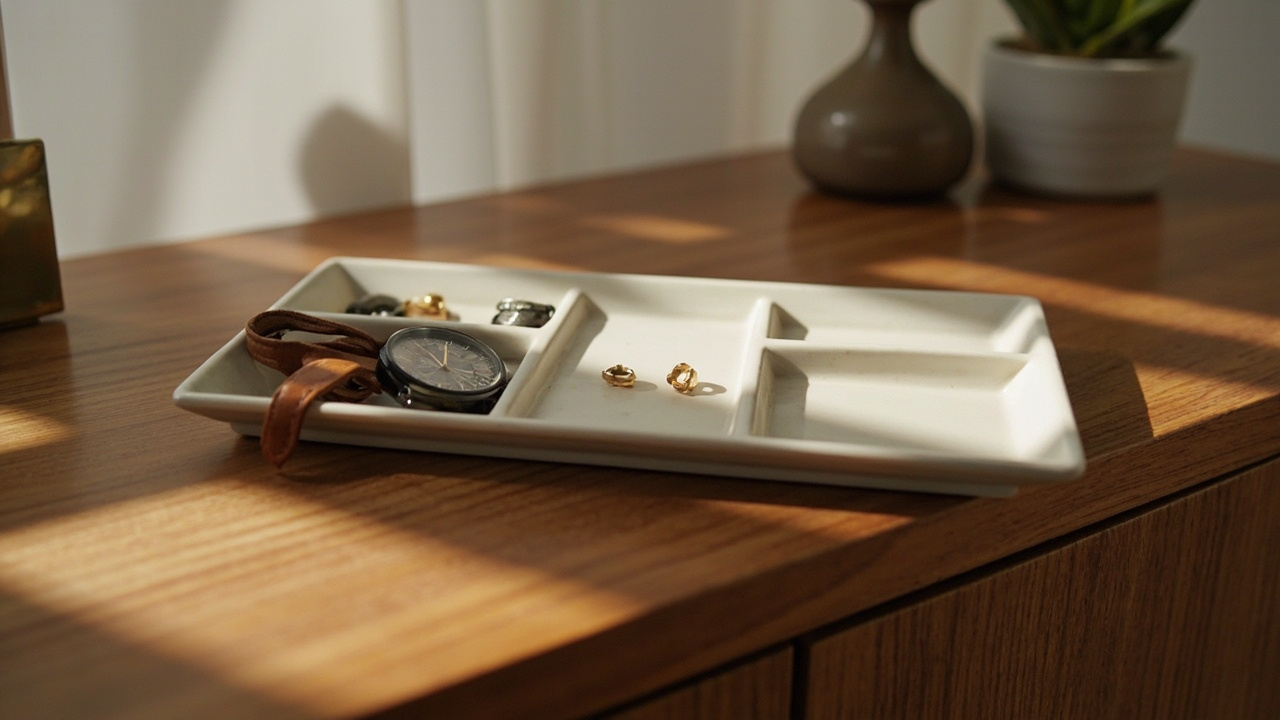
A stack of 2-4 decorative trays on your dresser top. Each tray holds one category (daily earrings, daily necklace, watch, weekly items).
For most readers the right starting tray is a stackable set like the mDesign Stackable Jewelry Trays at $24.99 — the compartments are shallow enough that nothing slides to the bottom and vanishes, and the trays stack into a 4-6 inch tower when you need more vertical space on the dresser.
Pros: looks intentional, daily items at hand, every piece visible at a glance. Cons: takes dresser surface (12-24 inches wide), needs occasional dusting, not great for > 50 items. Limitations: not a theft deterrent, but bedroom jewelry storage rarely is.
System 2: Drawer Organizers (best for 30-80 mixed items)
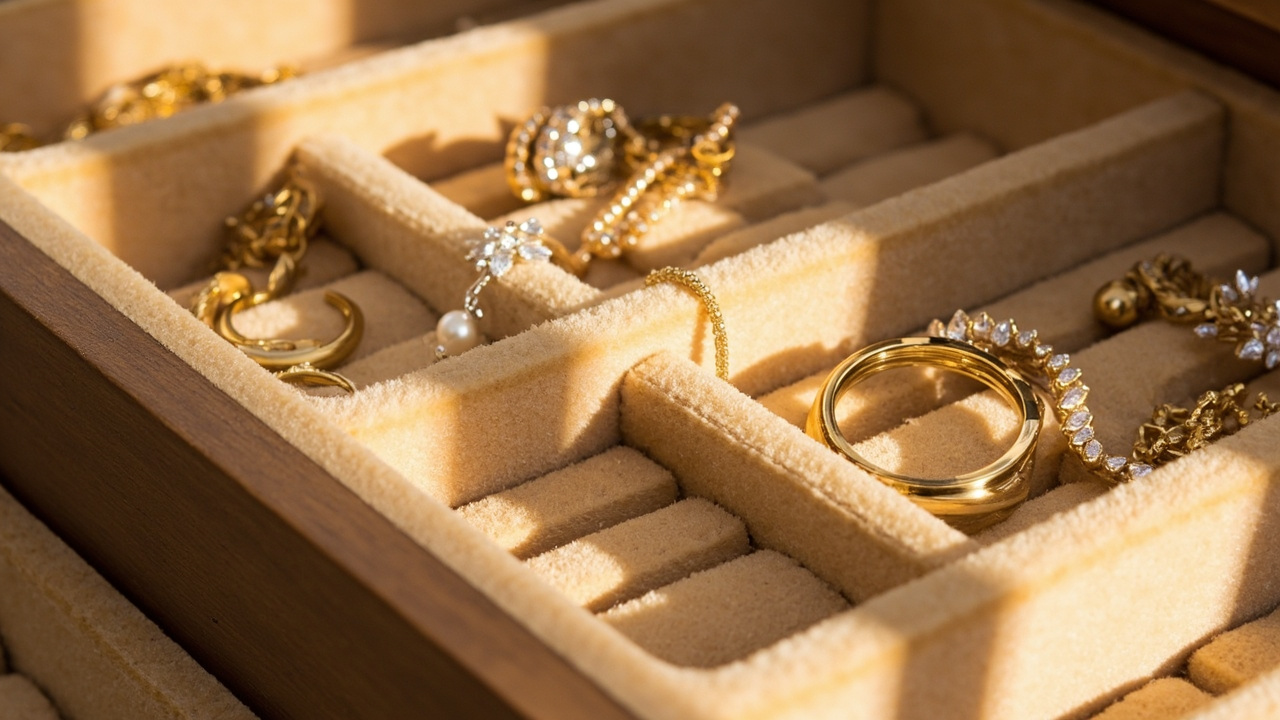
A velvet or fabric drawer insert with multiple compartments. Looks like the inside of a jeweler’s display case.
Pros: hides everything in one drawer, looks luxurious, dividers prevent tangling. Cons: requires empty drawer, items under a tray pile invisibly (use small stacking trays for daily items on top). Limitations: deep trays mean bottom items vanish; consider stacking trays.
System 3: Wall-Mounted Jewelry Organizer (best for 80-200 items)
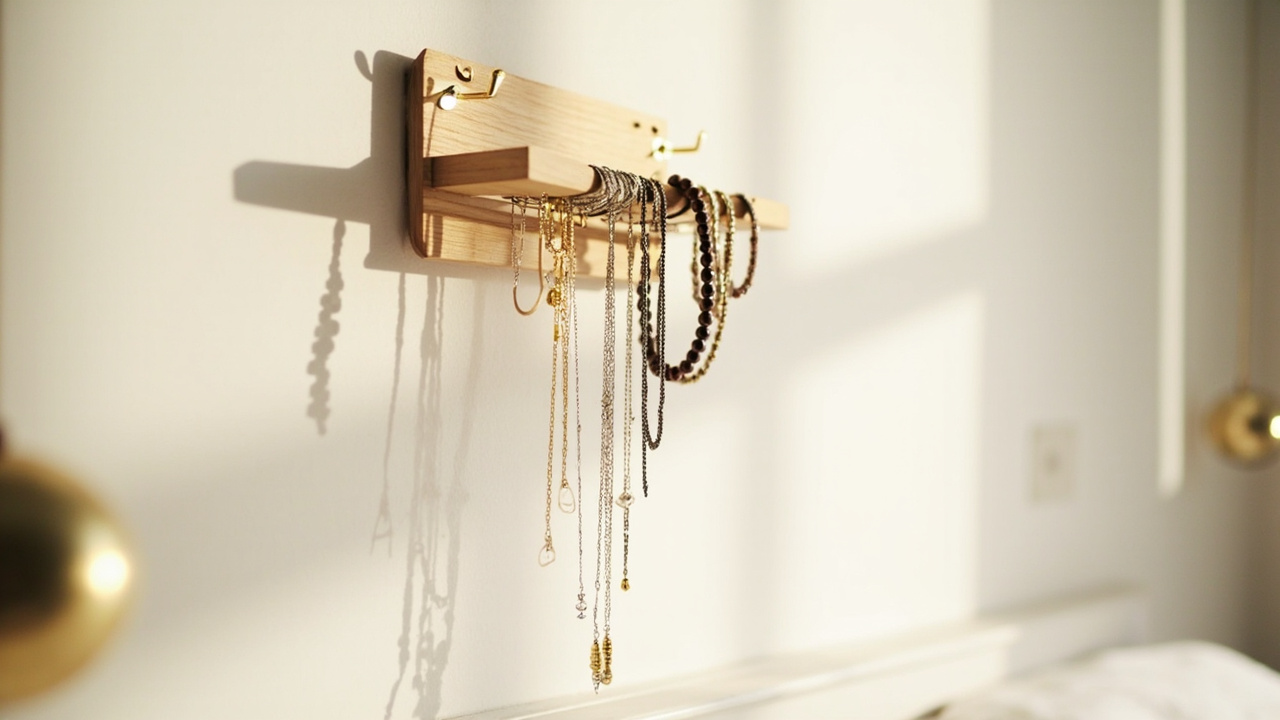
A wall-mounted frame or armoire with hooks for necklaces, slots for earrings, ring rolls, and bracelet rods.
For a top-shelf or inside-armoire clear-view zone, add an mDesign Acrylic Makeup Organizer ($19.99) — the clear acrylic lets you see every ring and earring through the wall, and the dividers keep necklaces from tangling at the bottom of a deep armoire shelf.
Pros: huge capacity, every piece visible (or behind glass doors), looks like furniture, often mirrors on the inside. Cons: takes wall space and adds depth to the room (extends 4-6 inches), requires anchoring (especially if heavy). Limitations: needs light inside to see well; deep pieces near back can vanish.
System 4: Stackable Boxes (best for 100+ items or varied types)
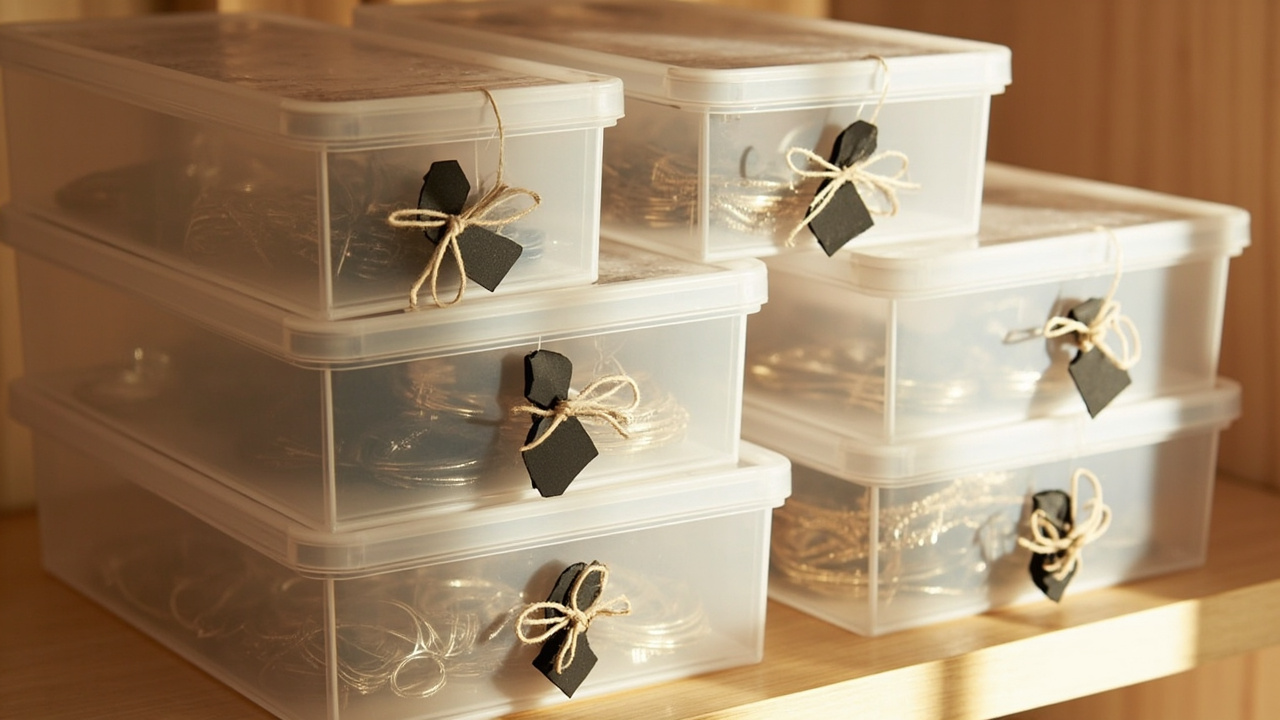
5-15 small stackable boxes, each labeled (with a chalkboard label or printed tag). Stored in a closet shelf.
A 6-pack of SONGMICS Stackable Storage Boxes at $39.99 gives you 6 modular boxes — label each by category (occasional earrings, travel watches, sentimental pieces) and stack them 2-3 high on a closet shelf. The boxes are translucent enough that you can scan categories without opening.
Pros: modular, scalable, hides everything in a closet, easy to find one box at a time. Cons: not great for daily items (you have to pull the box out each morning), items out of sight. Limitations: needs a closet with shelf space and good organization habits.
System 5: Combination (best for 50-150 mixed items)
The most realistic for most people: tray for daily items, drawer organizer for weekly, stackable boxes in closet for occasional.
Pros: matches how you actually wear jewelry (different frequencies = different storage). Cons: requires buying 2-3 systems. Limitations: more places to forget where you put something — but a once-a-month inventory solves it.
Step 3: Apply the “Daily Surface” Rule
Whatever system you pick, the daily-wear items must be:
- Easily reachable: at eye level or in the most-used drawer
- Visible at a glance: not buried under other items
- Don’t require opening: no boxes, lids, or covers in your daily routine
The 5-minute morning rule: jewelry routine takes 60 seconds. If it takes longer, the storage is too complex.
Step 4: Use Hooks and Rods for Necklaces
Necklaces tangle. Tangled necklaces break. Prevent both with:
- Hook strips: 5-10 small hooks on a wall, door, or inside a closet, each holding one necklace by its clasp
- Tension rods: a closet rod with S-hooks, each holding one necklace
- Pegboard: mounted inside a closet door, each peg holds one necklace vertically
Why: tangled necklaces take 5+ minutes to untangle. A $10 hook strip removes the problem at the source. For very fine chains, line a Beautysaid Non-Adhesive Drawer Liner at $9.65 inside the drawer before adding trays — the non-slip surface keeps trays from sliding when you open the drawer.
Step 5: Maintain the System
Weekly (2 minutes):
- Wipe down the tray (or wherever daily items live)
- Return any wandering earring to its slot
Monthly (10 minutes):
- Inventory the stackable boxes — anything you didn’t reach for in 30 days, donate
- Move rarely-worn items between boxes
Quarterly (30 minutes):
- Check for tarnishing items — clean and re-store
- Re-evaluate your “try-out” pile — items that haven’t been worn in a quarter should be donated or sold
Common Mistakes and How to Avoid Them
Mistake 1: Using a divided tray that hides small items. Velvet trays where earrings slide into slots lose items to the bottom of the slot. Use trays with raised lips and shallow compartments — every item visible. Label each compartment with ONUPGO Chalkboard Labels at $9.99 so you stop digging for “the small gold studs” every morning.
Mistake 2: Storing all jewelry together. Chains + earrings + bracelets in one box = tangles. Store by category, not by container.
Mistake 3: Hiding jewelry in high dresser or bed frame. Out of sight, out of mind. The hidden jewelry gets forgotten until you’re late, searching for a specific earring. Daily items need to be visible.
Mistake 4: Buying cheaply made organizers. A velvet tray that pills, a wooden box that warps, an acrylic stand that cracks — all create more mess than they solve. Spend $30-50 on a quality organizer that lasts.
Quick Recap
Q: How much jewelry is “too much” for a single drawer? A: If you have to dig to find a specific piece, the drawer is too full. Aim for every piece visible at a glance. Anything past that goes to “occasionally worn” boxes or donations.
Q: Where do wedding jewelry and heirlooms go? A: Heirlooms and items you’ll never lose should be in a safe or safe-deposit box. Sentimental pieces you actually wear go in your daily zones. Don’t mix heirlooms with daily-wear; it increases loss risk.
Q: My jewelry drawer has too many pieces. How do I declutter? A: Same rule as clothing: worn in last 90 days = keep, last 90-365 = try once more, 365+ days = donate or sell. Most people find 30-50% of their jewelry goes unworn.
Q: What about watches? A: Watches don’t tangle like necklaces. A small tray for daily watches (3-5 slots) plus a box for occasional works. Watch winders are nice for automatic watches but not required. For travel, a ProCase Travel Jewelry Case at $14.99 has zippered compartments that hold rings, earrings, and a small necklace without them shifting mid-flight — most readers use it for 2-4 trips a year and keep it in the closet the rest of the time.
Related Bedroom Guides
This guide is part of the broader Bedroom Organization Hub. For a complete weekend reset, see our Bedroom Declutter Checklist.
For specific room surfaces:
- Dresser Organization — drawer-by-drawer system (jewelry often lives in dresser top drawer)
- Closet Within a Bedroom — building a closet when you have none
- Nightstand Organization Ideas — drawer organizers and valet trays
- Under Bed Storage Ideas — 4-zone system for hidden clutter
- Small Bedroom Organization — for studios and tight rooms