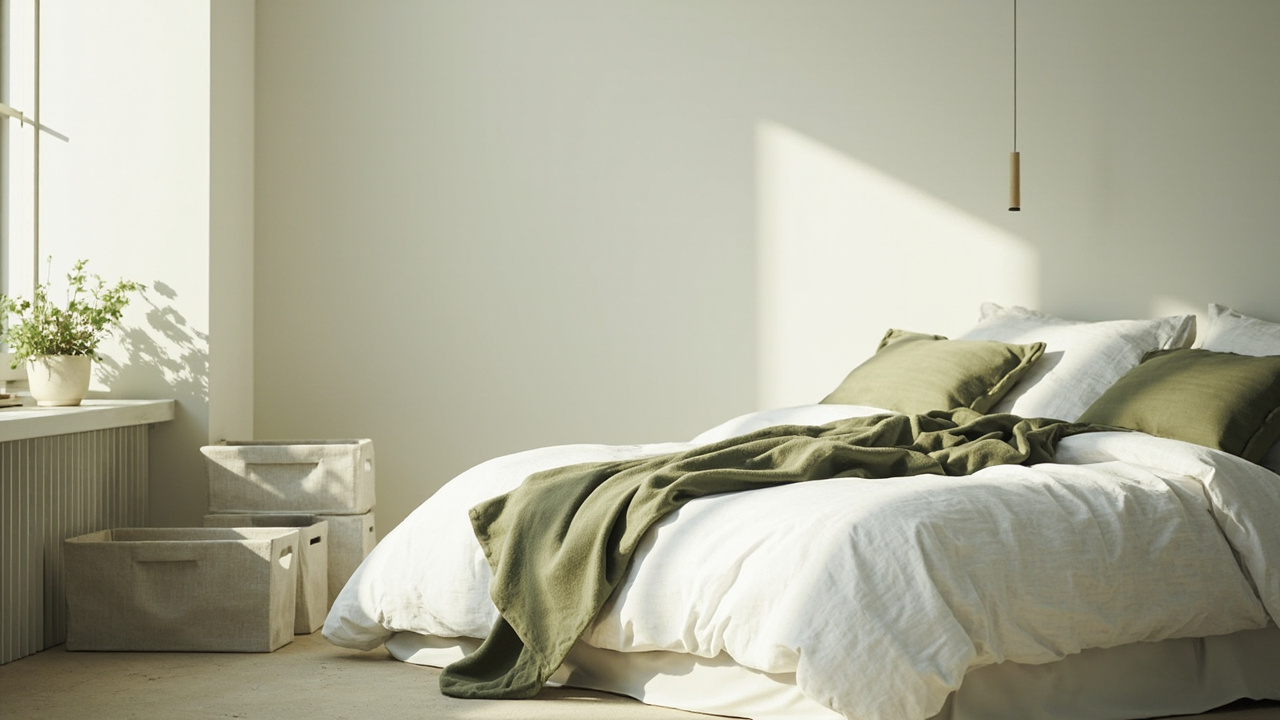
Your bedroom is the smallest “always visible” room in your house — first thing you see in the morning, last thing at night. A messy bedroom hits harder than a messy kitchen: it follows you into sleep and chips away at the one space that’s supposed to feel restful.
This is the 9-step system I use when a bedroom has tipped into chaos: clothes on the chair, papers from the kitchen on the dresser, half-empty water glasses on the nightstand, a donation pile that never made it to the car. One weekend gets it done, plus 5 minutes a night to keep it that way. The same framework scales to other rooms — see our declutter-fast 4-quadrant method for the broader system and the pantry checklist for a kitchen example.
Why Bedrooms Get Messy
Three patterns cause most bedroom clutter, and the checklist below targets each one.
Clothes migration. Clean clothes land on the chair, bed edge, dresser corner, or floor instead of back in the closet. Sixty days of skipping the hanger is a chair you can’t sit on. Apply the 12-month rule: anything unworn for a year goes to donate.
Surface accumulation. The nightstand, dresser top, and floor pull in receipts, mail, charging electronics, and half-empty water glasses from other rooms. Everything without a home migrates to a horizontal surface willing to accept it.
Sentimental overflow. Photo boxes, journals, old concert tickets, guilty-feeling gifts. Bedrooms become the museum for items no other room will store. The fix is a decision system, not more storage — if it sparks guilt, it goes in donate or trash.
The 9-step checklist below reverses this loop in one weekend.
The 9-Step Bedroom Declutter Checklist
Plan for 3 hours plus a 1-hour follow-up session the next day for under-bed and donation drop-off. The whole checklist prints to one page if you skip the explanations.
Step 1: Set up 4 quadrant bins (5 minutes)
Before you touch a single item, stage four bins in the bedroom corner: Trash, Donate, Keep, Relocate. This is the same 4-quadrant framework our declutter-fast guide uses, scaled to bedroom size.
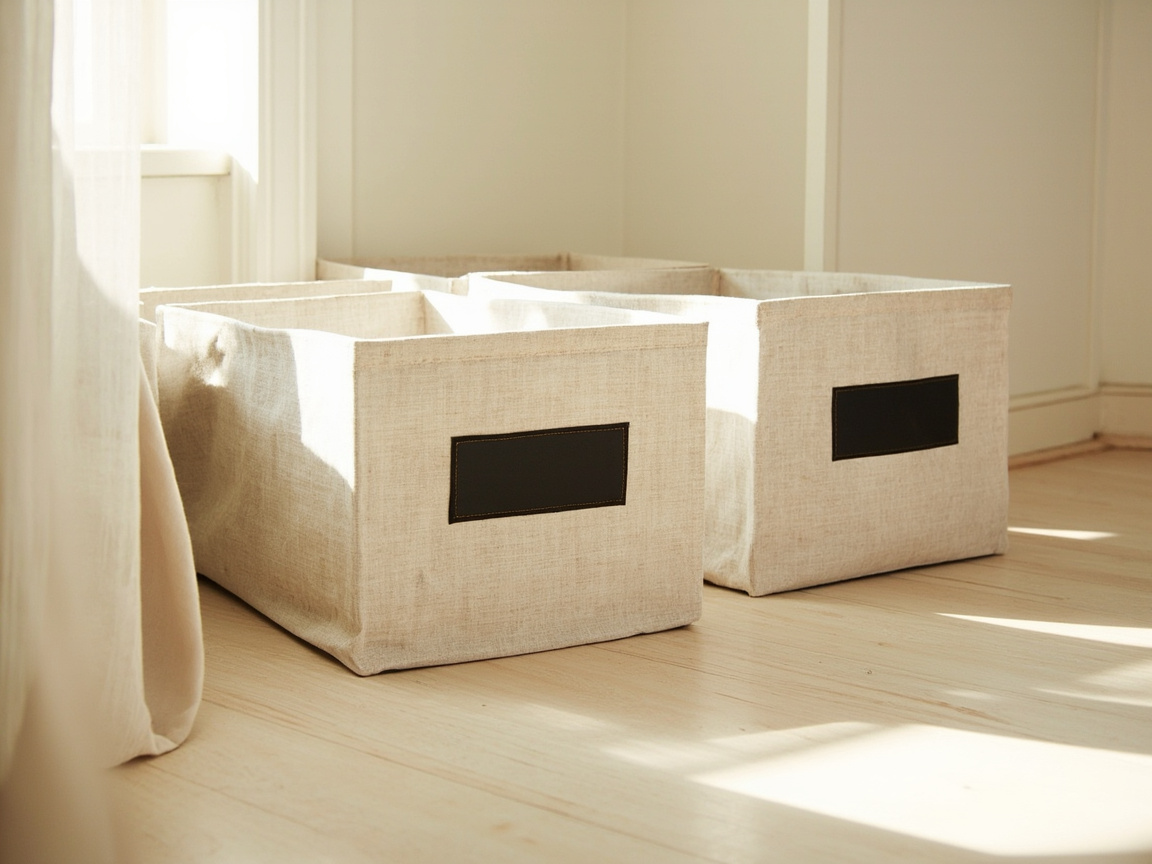
A DECOMOMO foldable donation bin handles the Donate quadrant — collapsible fabric with handles carries easier than cardboard when you load it into the car. Pair it with Hefty 30-gallon heavy-duty trash bags for the Trash quadrant. 30-gallon is heavier than kitchen 13-gallon bags, which matters when you’re tossing old bedding, broken hangers, and expired cosmetics in single loads.
Step 2: Make the bed and clear the floor (10 minutes)
Starting with a made bed creates a “this is already a bedroom” baseline. The floor clear matters more — donations have somewhere to land instead of piling up where you stand. If the bed itself is the pile, pick a single chair or hamper as the staging zone. The same logic applies to bedside zones — see our nightstand essentials guide for that surface.
Set a 3-hour timer when you start. The timer is the guardrail against perfectionism.

Step 3: Clear the nightstand (15 minutes)
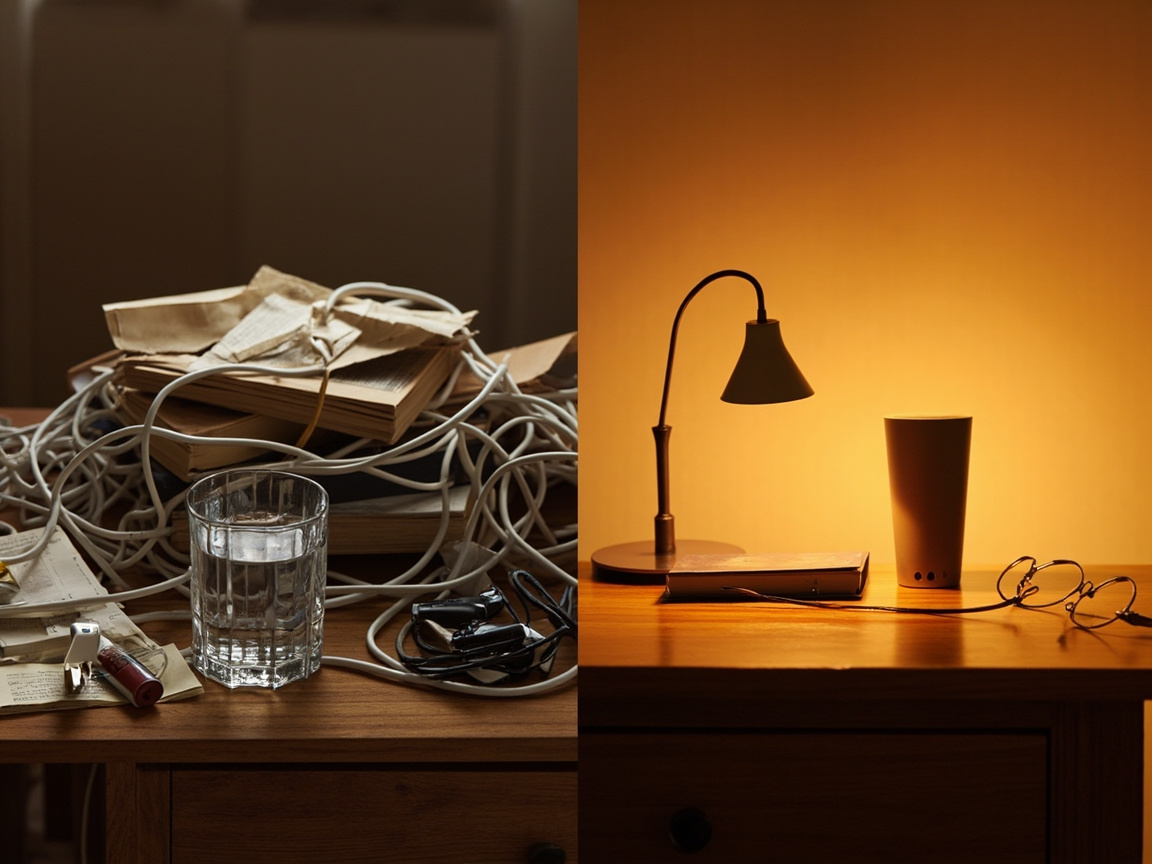
Three zones to hit: top surface, drawer, and under-shelf if your nightstand is open-frame. Apply the function-first rule: lamp + sleep aid + charger only. Everything else migrates — water glasses to the kitchen, books to the living room stack, lip balm and medications to the bathroom.
The nightstand is where decision fatigue shows up first. After 90 minutes of sorting clothes, the “should this lip balm live here?” debate feels enormous. Decide before you start: sleep essentials stay, everything else goes. Our nightstand essentials guide covers the full tool list if you want drawer organizers, a valet tray, or a USB lamp.
Step 4: Sort clothes — keep, donate, discard, relocate (45 minutes)
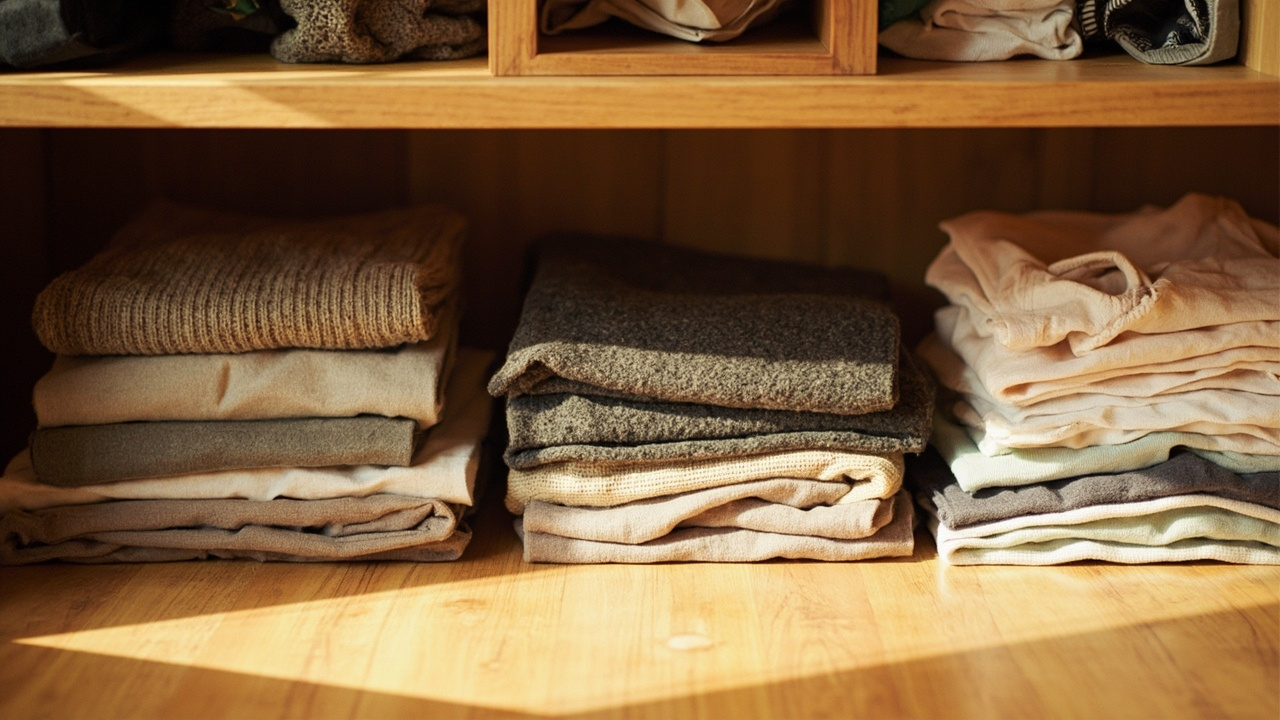
This is the biggest step in time. Pull every piece of clothing out — hanging, folded, shoes, accessories, the laundry basket. Don’t sort yet; just remove. Everything on the floor in front of the closet.
Now sort into four piles using the 12-month rule:
- Keep — worn in the last 12 months (winter coats in summer count as seasonal)
- Donate — wearable but unworn 12+ months
- Discard — stained, torn, or worn out
- Relocate — belongs in another room (gym clothes that migrated, work shirts by the door)
The #1 mistake here is doing “I’ll do the dresser next week.” Don’t. Sort the entire closet and dresser in one pass — the 45 minutes hurts once; partial sorts hurt every week for months. Seasonal survivors go in labeled under-bed bins (guide). Torn? Use KonMari spark-joy as a tiebreaker.
Step 5: Clear the dresser top (10 minutes)
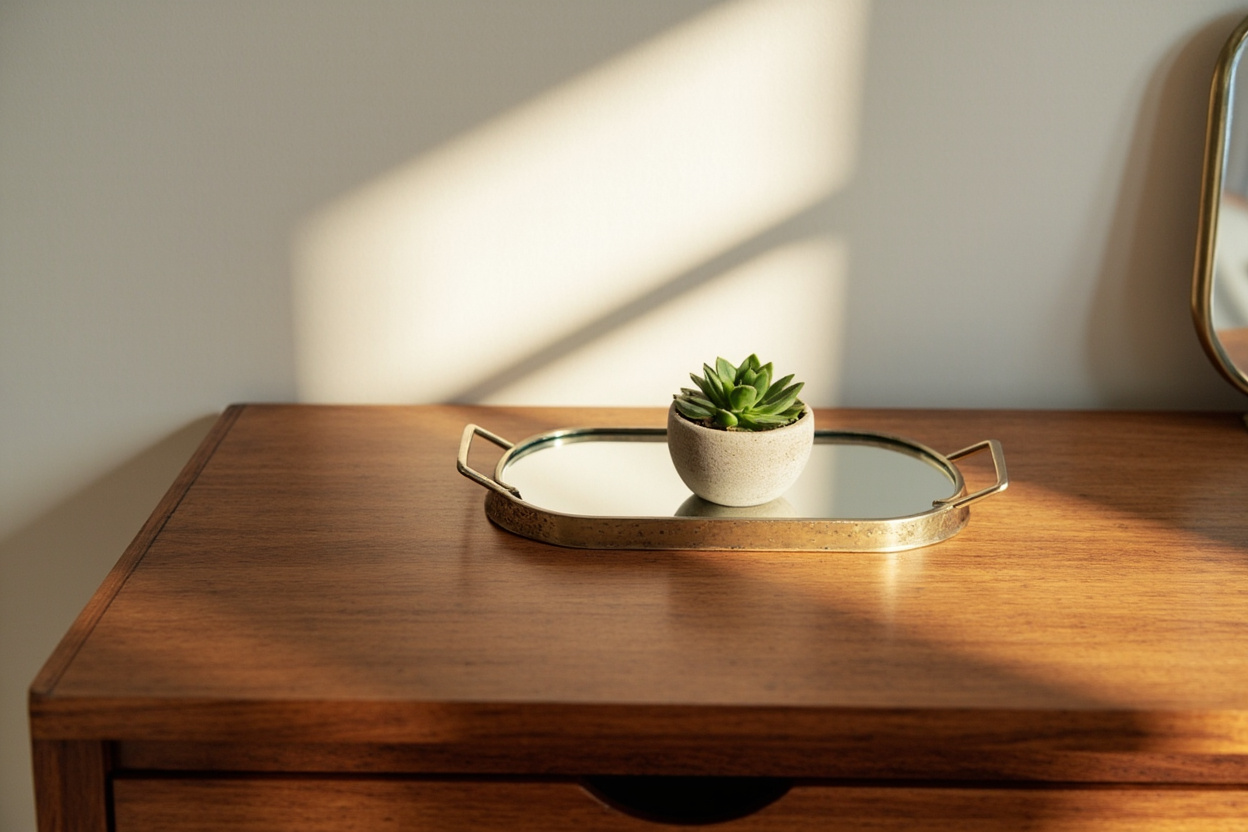
The flat-surface rule from the bedroom hub is simple: dresser top holds a mirror tray + one decorative item, nothing else. Everything else migrates to the drawer or the Relocate quadrant.
Why so strict? Dresser tops are the visible signal — what you see when you walk in the door. A clean dresser top with a single tray and one plant makes the whole bedroom feel calmer instantly.
Step 6: Tackle under-bed storage (20 minutes)
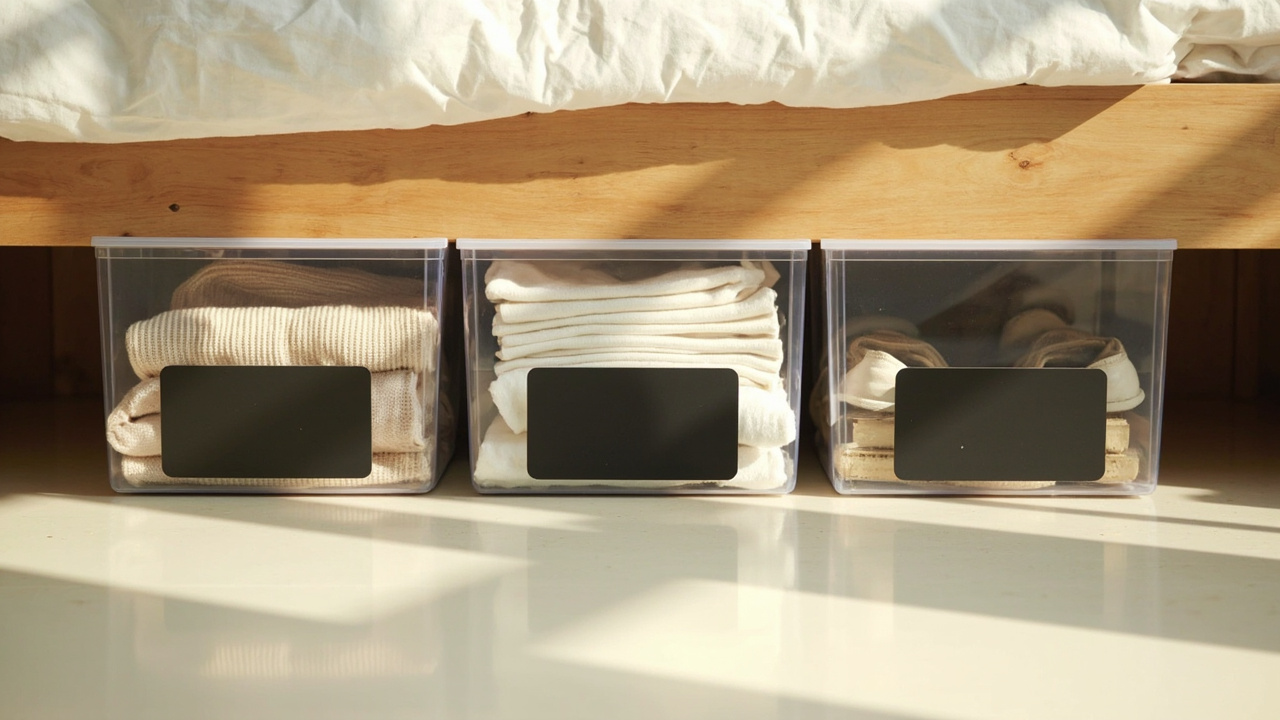
Pull every bin out from under the bed. Open each one. Apply the 3-zone rule from our under-bed storage guide: seasonal clothes, spare linens, shoes. Anything not in those three categories comes out and gets re-sorted.
This is also where most people discover the “mystery bin” problem — a bin you shoved under the bed 18 months ago and haven’t opened since. Open it now. The clear vs opaque bins tradeoff is worth understanding before you reload: clear bins prevent the 6-month mystery-bin cycle because you can see what’s inside without pulling the bin out.
Step 7: Wipe down empty surfaces (15 minutes)
Only possible when zones are empty. Wipe the dresser, nightstand, shelves, and baseboards. This is the moment most declutter guides skip — and the one that makes the result feel different from “I just moved piles around.”
A fresh wipe-down also confirms whether the 9-step system worked: a surface that wipes clean in two passes is genuinely empty. Sticky rings or forgotten items mean that zone needs a second pass.
The Glad 13-gallon foot-pedal trash can earns its keep here — the foot pedal keeps hands clean during repeated reaches into the trash quadrant. Pair it with the Hefty 30-gallon bags from Step 1.
Step 8: Return Keep items by zone with labels (30 minutes)
Put everything back by zone, not by category. Clothes go back to the closet, linens to the under-bed bin, shoes to their bin, electronics to the nightstand drawer. Label every bin that doesn’t have an obvious purpose.
ONUPGO chalkboard labels handle this in 30 seconds per bin — the chalkboard surface rewrites when zones change (winter/summer swap), and a 180-piece set covers every bin plus extras. Our how-to-label-anything guide covers the broader labeling system.
Step 9: Schedule donation drop-off before you stop (2 minutes)
Open your phone. Schedule the donation drop-off right now, before you close the laptop and forget. Donations left in the corner for two weeks become part of the room again — and you’ll have to re-decide each item in three weeks, exactly the decision fatigue the 9-step system exists to avoid.
The schedule-it-before-you-stop rule is the same one our declutter-fast guide enforces. If the pickup is on the calendar before you finish, the bins leave the house. If it’s not, they’re still there on day 14 wondering where they belong.
Bedroom-Specific Category Rules
Three categories have bedroom-specific failure modes the generic declutter-fast system doesn’t fully cover.
Clothes (the 12-month rule + the seasonal trap)
Two failure modes show up repeatedly. First, keeping clothes you “might wear again someday” — apply the 12-month rule strictly. Second, keeping off-season clothes in the main closet where they take up half the rod — those go to under-bed storage in labeled bins. Our KonMari spark-joy filter is an alternative for ambiguous items, but for bedroom clothes, the date-based rule is faster and less emotional.
Nightstand (function-first)
The nightstand got its own deep-dive in nightstand essentials. Short version: lamp + sleep aid + charger only, everything else migrates the same night. Don’t accumulate a “temporary” pile — temporary piles are how bedrooms regress in 30 days.
Surfaces and electronics
Dresser top + floor + bedside = three decision points. Phones, chargers, papers from other rooms, half-empty water glasses, books that belong elsewhere — if it doesn’t serve sleep, dressing, or reading, it migrates tonight. The kitchen’s spice organization guide principle applies: small-item zones need labeled homes, not “I’ll put it back later” intentions.
Common Mistakes
Five patterns stall most bedroom declutters:
-
Trying to declutter the whole house in one weekend. Decision fatigue sets in after 90 minutes. Time-box to 3 hours max per session, and split the bedroom across two days if needed.
-
Sorting by item type instead of by zone. “I’ll do all my t-shirts” forces you to walk between rooms 40 times. Sort by zone — this dresser, then that closet — so each area is fully done before moving on. The same zone-vs-item rule applies to the broader declutter-fast system.
-
Opaque bins under the bed. The most common 1-star Amazon complaint on under-bed bins is the “mystery bin” problem — you shove it under the bed, can’t see what’s inside, and forget it exists. Buy clear plastic bins instead. Our clear vs opaque bins guide covers the visibility tradeoff.
-
Donating without scheduling the drop-off. Donations left in the corner for two weeks become part of the room again. Schedule drop-off in your calendar before you stop — same logic as the declutter-fast system.
-
Skipping the label step. “I’ll remember what’s in this bin” is the lie everyone tells on day one. By week three the bin is opaque again. Use chalkboard labels — 30 seconds per bin prevents the re-clutter cycle.
The 5-Minute Nightly Reset
The 9-step system gets the bedroom to zero clutter on day one. The reset is what keeps it there for the next 365 days. Three rules, five minutes total, every night before brushing teeth:
- Put clothes back in the hamper — not the chair, not the bed.
- Clear the nightstand surface back to lamp + sleep aid + charger only.
- Reset the bed — pull up the comforter, fluff the pillows, return the one book you read.
Pair this with the one-in-one-out rule for clothes: every new shirt forces one old shirt to leave. Add the 2-minute rule: if an item can return to its real home in under two minutes, do it tonight. Otherwise it goes in the Relocate quadrant for the next weekend session.
Five minutes a night absorbs small-item accumulation before it becomes weekend cleanup.
For the room-level overview and related checklists, see the bedroom hub, the declutter-fast system, and the KonMari method. Zone-specific deep-dives live in under-bed storage and nightstand essentials. The same checklist pattern applies to other rooms — see the pantry checklist and the clear vs opaque bins guide.