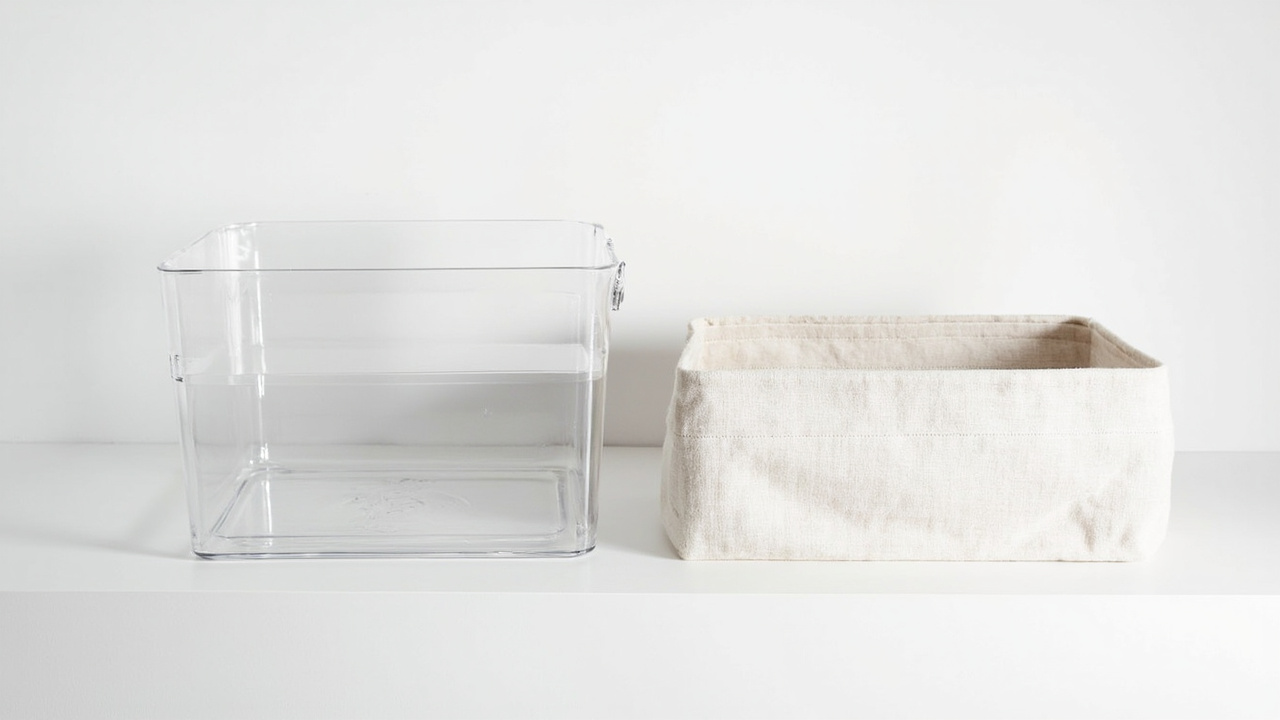
Clear Bins vs Opaque Bins: Which to Choose by Room
The visibility decision is the most underappreciated choice in home organization. Pick the wrong direction and you either spend 10 minutes hunting for things (too opaque) or live with constant visual clutter (too clear). This guide matches bin type to room so you make the right call first time.
For broader storage material decisions, see our storage bin buying guide and plastic vs fabric bins comparison.
The Core Tradeoff
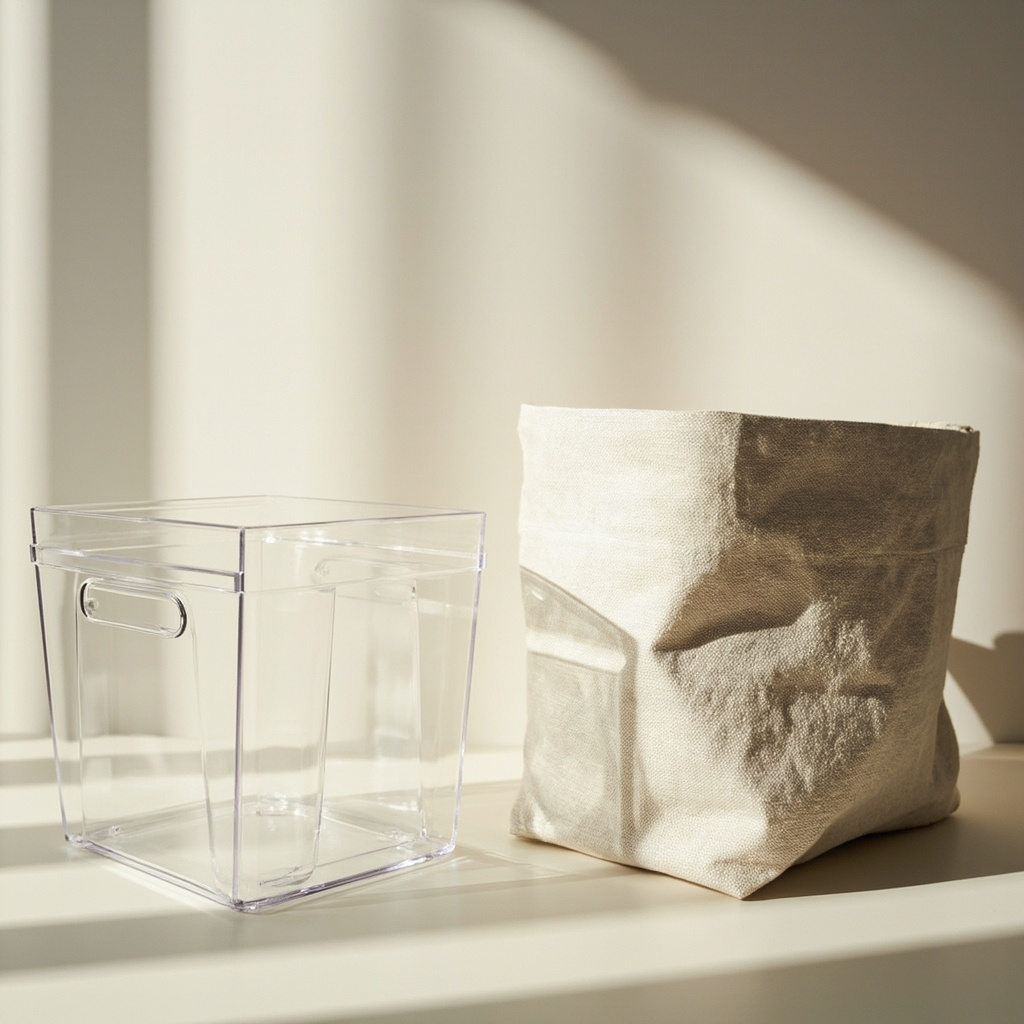
Visibility has a price: what you can see, you must keep clean. The tradeoffs:
Clear bins show contents immediately. Pro: no hunting, faster meal prep, less food waste. Con: requires visual discipline, contents must be aesthetically acceptable.
Opaque bins hide contents completely. Pro: visual calm, hides imperfect storage. Con: requires labeling, slower retrieval, items forgotten in back.
The decision rule: choose clear if the contents are uniform and well-organized, opaque if contents vary in size/color or you don’t trust future-you to maintain order.
For room-specific application, see our kitchen pantry guide and pantry checklist — both lean toward clear for food visibility. For a faster whole-house pass, the declutter fast system helps you triage which rooms deserve clear vs opaque first.
Room-by-Room Recommendations
Kitchen Pantry: Clear (Mostly)
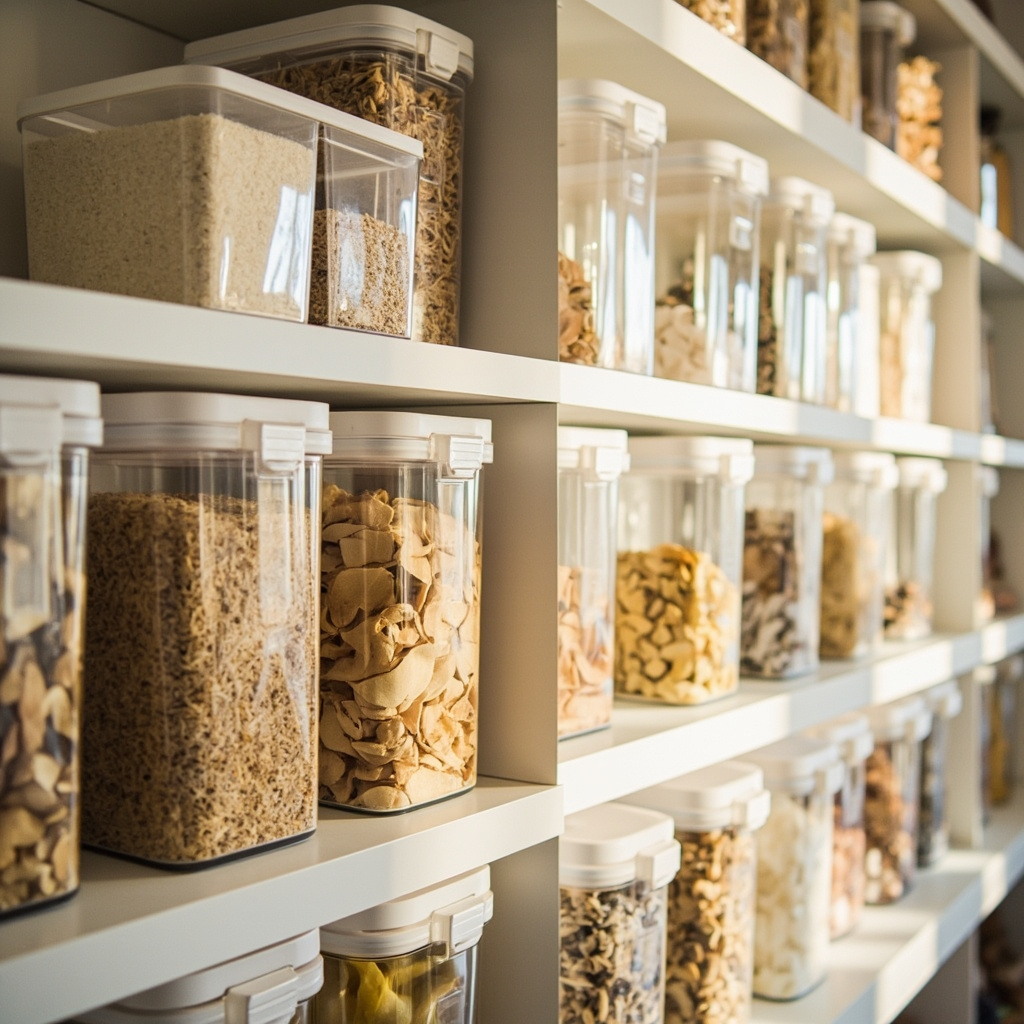
Pantry items are mostly uniform in shape (canned goods, dry goods bags). Clear bins let you see what’s left before you shop. Use clear bins for daily-use zones (baking, breakfast, snacks) and opaque for back-stock or rarely-used appliances.
The iDESIGN clear bins fit standard pantry shelves and stack cleanly. For our full pantry system, see the kitchen pantry guide.
Refrigerator and Freezer: Clear (Always)
Fridge storage requires visibility — you need to see what’s about to expire. Clear bins for produce, deli, and leftovers. Opaque bins in the fridge make food disappear and waste increases.
Closet (Clothing): Opaque (Mostly)
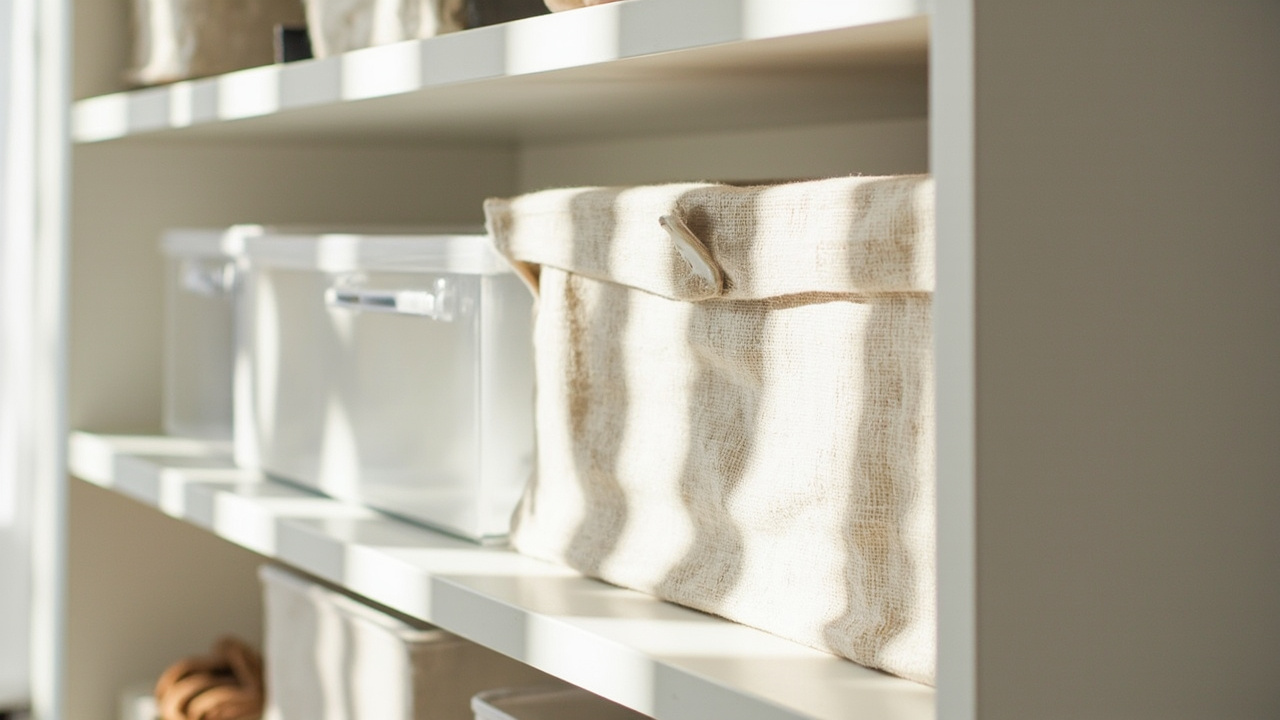
Closets store soft goods — clothing, shoes, bags — that vary in color and shape. Opaque fabric bins hide the variation and create visual calm. Use clear only for items you want to display (handbag collection, shoe display).
For deeper closet system decisions, see our closet organization hub. For a visual-calm approach to decluttering clothing before you choose bin types, see our KonMari method guide.
Bedroom (Under-Bed, Nightstand): Opaque
Under-bed storage benefits from being hidden. Items there are out-of-season or backup. Opaque bins prevent the under-bed area from looking like visual clutter when you glance across the room.
Bathroom: Clear for Daily, Opaque for Backup
Vanity and under-sink storage split. Daily-use items (toothbrush, soap, daily skincare) earn clear containers so you can see and reach them. Backup stock (extra toilet paper, refill bottles) goes in opaque bins out of sight.
Kids’ Rooms: Clear (Mandatory)
Kids can’t read labels reliably and won’t remember where things are. Clear bins let them identify toys, art supplies, and clothes independently. The 5-minute cleanup that parents want to teach requires visual accessibility.
Garage and Utility: Opaque
Garages store tools, sports equipment, and seasonal items. Opaque bins keep the space looking tidy from the outside. Use clear only for items you genuinely need to identify quickly (batteries, light bulbs, command strips).
Office and Craft: Mixed by Frequency
Office supplies and craft materials split by use frequency. Clear for active projects (current craft work, weekly paperwork), opaque for archive storage (old tax docs, finished craft kits).
Common Mistakes to Avoid
- All clear everywhere — your home becomes a visual catalog of every possession. Exhausting to look at.
- All opaque everywhere — you spend hours per week hunting for things because nothing is findable.
- Clear bins with mismatched contents — visible chaos is worse than hidden chaos.
- Opaque bins without labels — what’s in the bin becomes a mystery you solve every time you open it.
- Mixing bin materials in one zone — visual inconsistency reads as clutter regardless of contents.
For a holistic approach to clearing visual chaos before you choose bin types, see our declutter fast system.
When to Upgrade From One to the Other
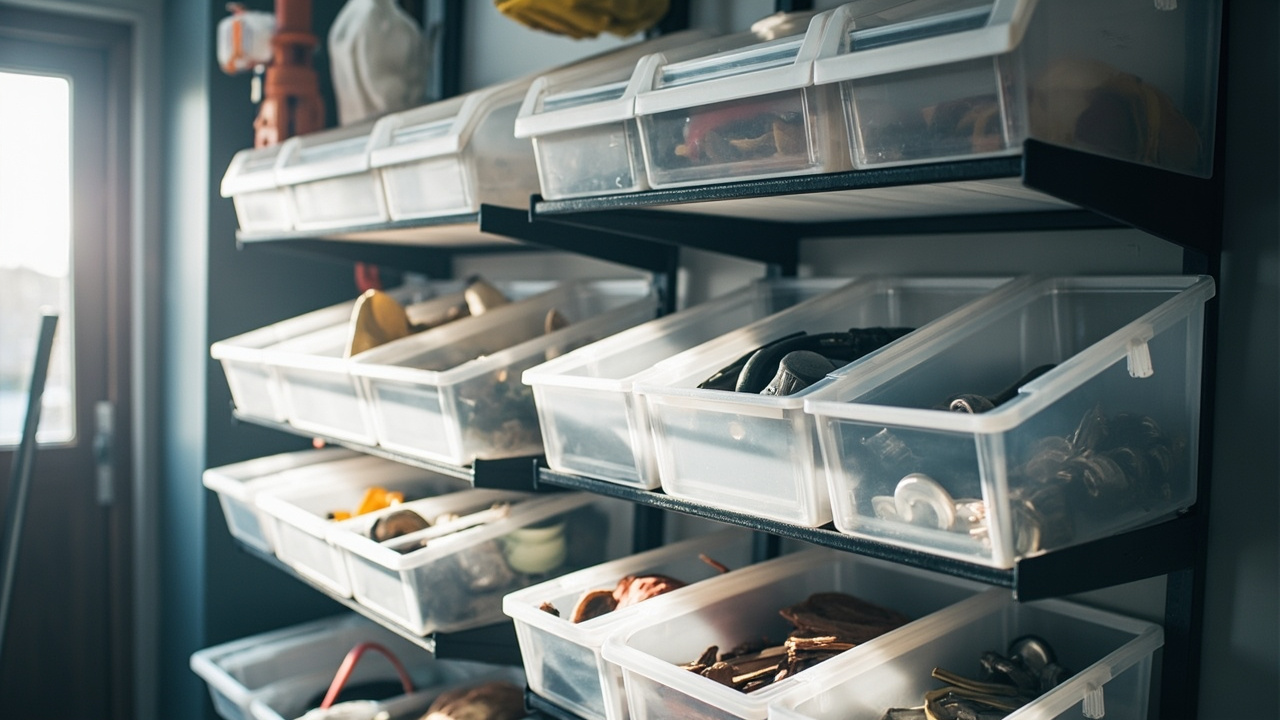
You can switch directions as your habits change. Three signals it’s time to upgrade from opaque to clear:
- You forget what you stored and re-buy duplicates.
- You open the bin, dig through, and put items back messily.
- Items expire before you use them.
Three signals it’s time to downgrade from clear to opaque:
- You find yourself embarrassed by visible clutter.
- The bin contents vary too much in color/size to look tidy.
- The space is meant to be calm (bedroom, meditation room, guest space).
Decision Tree
Start: Where does this bin live?
│
├─ Pantry / Fridge / Kids → Clear
├─ Closet / Under-bed → Opaque
├─ Bathroom → Mixed (clear daily, opaque backup)
├─ Garage / Utility → Opaque
└─ Office / Craft → Mixed by frequency
Practical Examples Across the Home
Three real-world combinations illustrate the tradeoff in action.
Example 1: Pantry + Bedroom Split
A household with a kitchen pantry full of dry goods and a small bedroom closet often ends up with clear bins in the pantry (so food is visible and expiry-checkable) and opaque fabric bins in the bedroom (so clothing folds stay dust-free). The visibility question is decided by use frequency: pantry items rotate weekly, clothing rotates seasonally. Visibility matters most where items rotate faster.
Example 2: Home Office + Craft Room
A craft room and home office are both visibility-sensitive spaces. Active projects (current paperwork, half-finished knitting) sit in clear bins on the desk. Archived materials (old tax returns, completed craft kits) sit in opaque bins on a high shelf. Our plastic vs fabric bins guide walks through material tradeoffs for these use cases.
Example 3: Garage + Mudroom
Garages and mudrooms are chaos zones by default. Opaque bins dominate because garages store long-tail items — old paint, holiday decor, sports gear — that you don’t want to look at daily. Clear bins work only for the 5 to 10 items you actually reach for (work gloves, gardening shears). The storage bin buying guide helps size bins for these zones.
When Clear Wins Across the Board
Three household types benefit from clear everywhere: (1) families with young children, where visibility teaches cleanup habits; (2) people with memory or executive-function challenges, where hiding anything creates a search cost; (3) very small apartments (under 600 sq ft), where every bin’s contents need to be visible to avoid buying duplicates. For most other households, the clear/opaque mix described above outperforms.
Conclusion
The clear-vs-opaque decision is about your relationship to the contents, not the contents themselves. If you trust yourself to maintain visible order, clear bins save time. If you don’t (yet), opaque bins create breathing room while you build the habit.
For material-level decisions (plastic vs fabric vs metal), see our storage bin buying guide and plastic vs fabric comparison. For pantry-specific use, our kitchen pantry guide covers the full zone system. For a faster whole-house decluttering pass before you decide which bin type fits each zone, see our declutter fast system. For bedroom zones that lean opaque under-bed and closet storage, our bedroom hub walks through opaque-friendly storage furniture.
Three More Bins Worth Considering
For opaque closet zones, the Homsorout 6-pack fabric bins covers bedroom and closet storage under $30 per pack. For visible living areas, the SIXDOVE woven baskets work as hybrid bins — open weave shows some content, fabric liner hides the rest. For pantry produce and produce bins, the Sorbus 3-tier wire basket keeps fruit ventilated and visible.