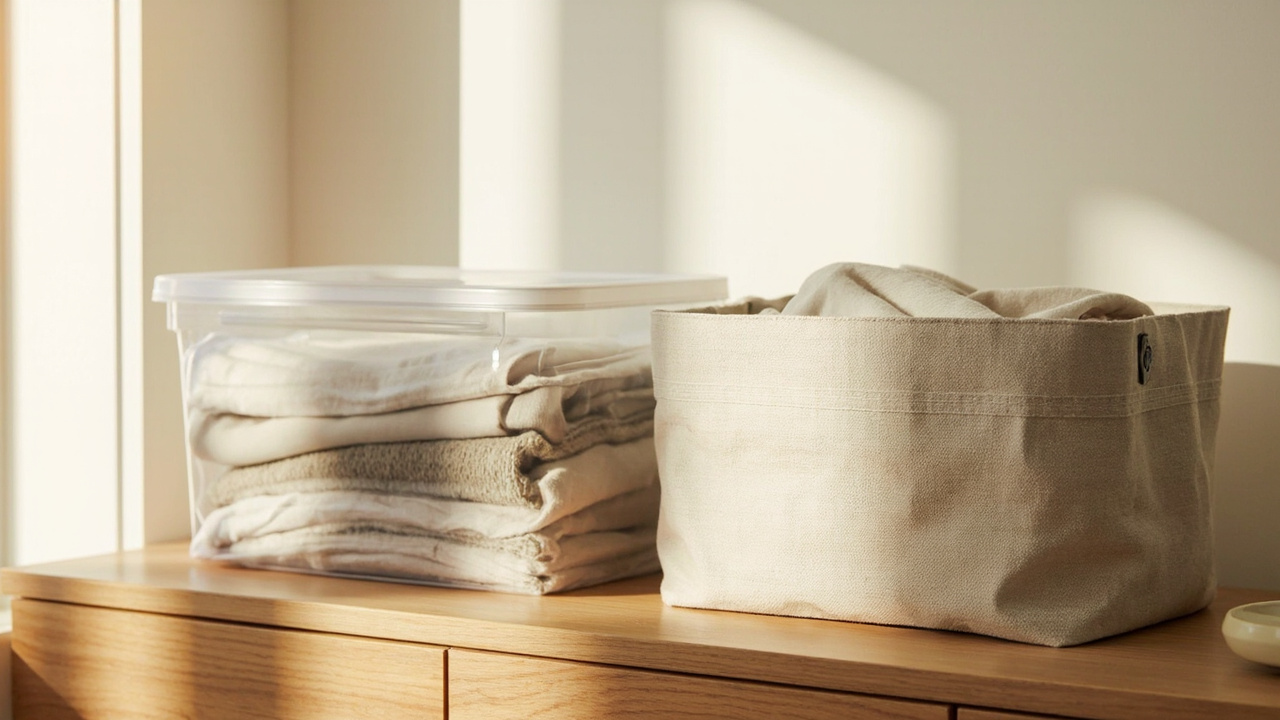
Plastic Bins vs Fabric Bins: Material Comparison by Room
The plastic-vs-fabric decision shapes how long your storage system lasts and how easy it is to maintain. Pick wrong and you either replace bins every 2 years (fabric in humid spaces) or live with industrial-looking plastic in your bedroom (plastic in living spaces). This guide matches material to room.
For the broader storage buying framework, see our storage bin buying guide. For visibility decisions, see our clear vs opaque bins comparison.
The Core Differences
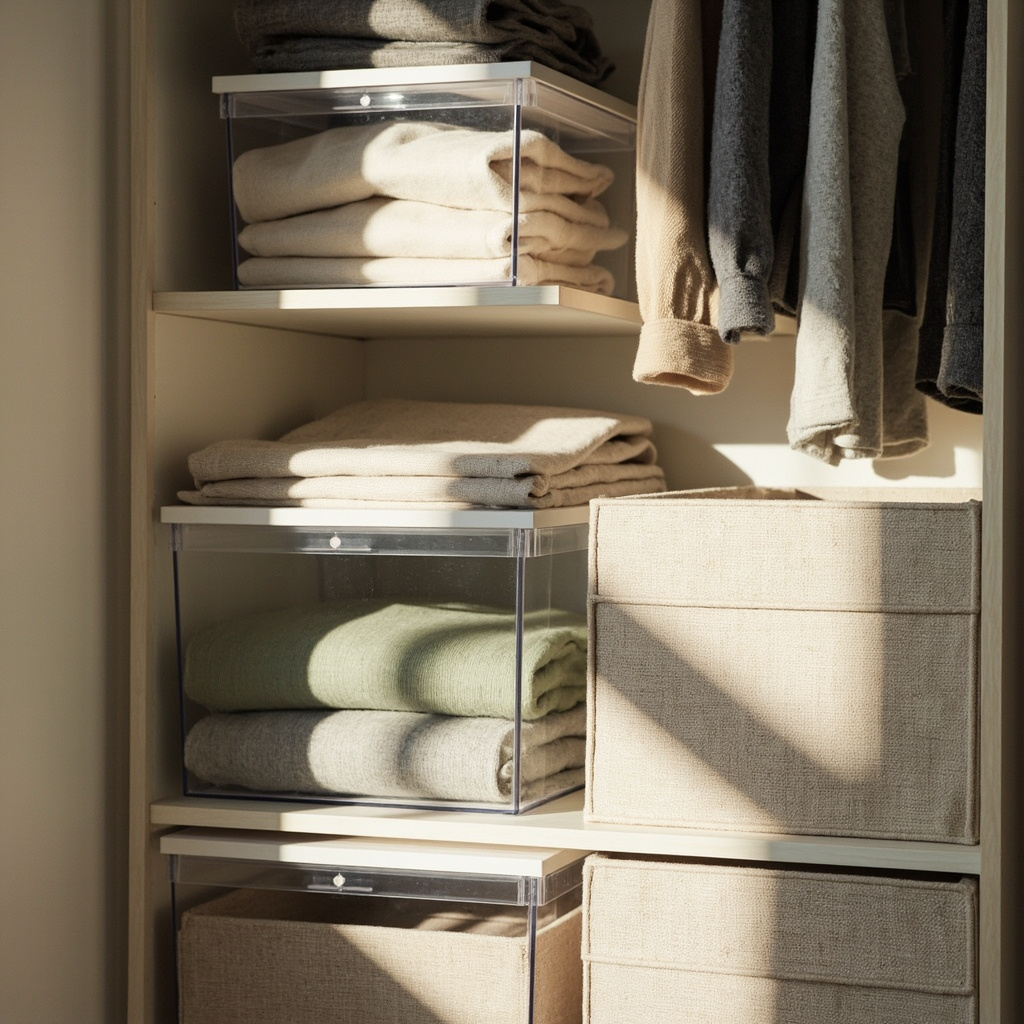
Plastic Bins
Pros:
- Easy to clean (wipe with damp cloth)
- Stackable (rigid walls)
- Transparent options for visibility
- Pest-resistant
- Long lifespan (5–10 years)
- Affordable ($10–$30 for standard sizes)
Cons:
- Less aesthetic for living spaces
- Can stain or yellow over time
- Harder to recycle at end-of-life
- Industrial look
Fabric Bins
Pros:
- Soft, foldable (storage when not in use)
- Aesthetic for bedrooms and living rooms
- Lightweight
- Often have handles for easy retrieval
Cons:
- Hard to clean (spot-clean only)
- Absorbs moisture and odors
- Can harbor mold in humid climates
- Shorter lifespan (2–5 years)
- Less stackable when full
Room-by-Room Recommendations
Kitchen Pantry: Plastic
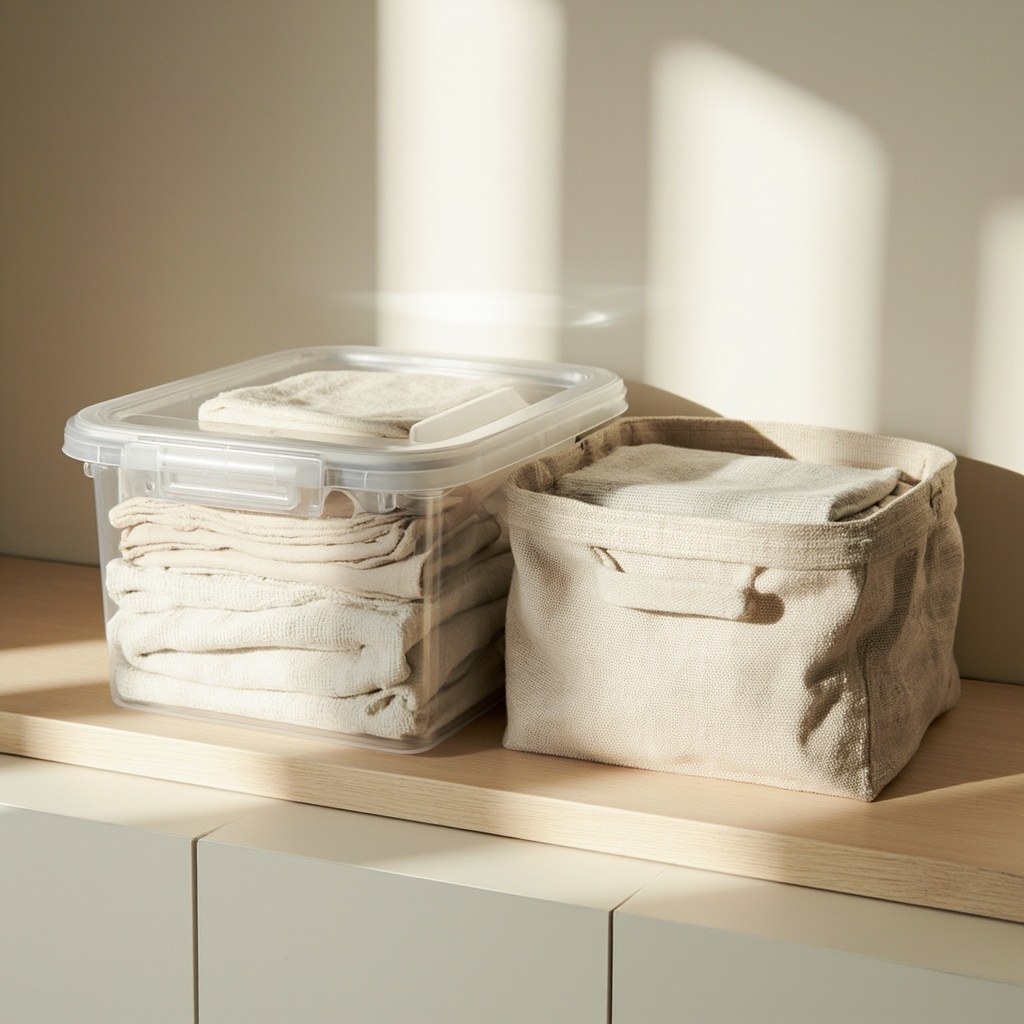
Pantry storage requires hygiene, spill resistance, and visibility. Plastic wins on all three. The mDesign stackable bins are a reliable pantry choice.
For our full pantry system, see the kitchen pantry guide.
Refrigerator and Freezer: Plastic
Fridge storage must handle spills, condensation, and frequent cleaning. Plastic only — fabric would mold within months. The iDESIGN clear bins work well for fridge and freezer.
Bathroom: Plastic (Always)
Bathroom humidity destroys fabric. Plastic is the only safe choice for under-sink and vanity storage. Acrylic is the premium option for visible counters.
Closet (Clothing): Fabric (Mostly)
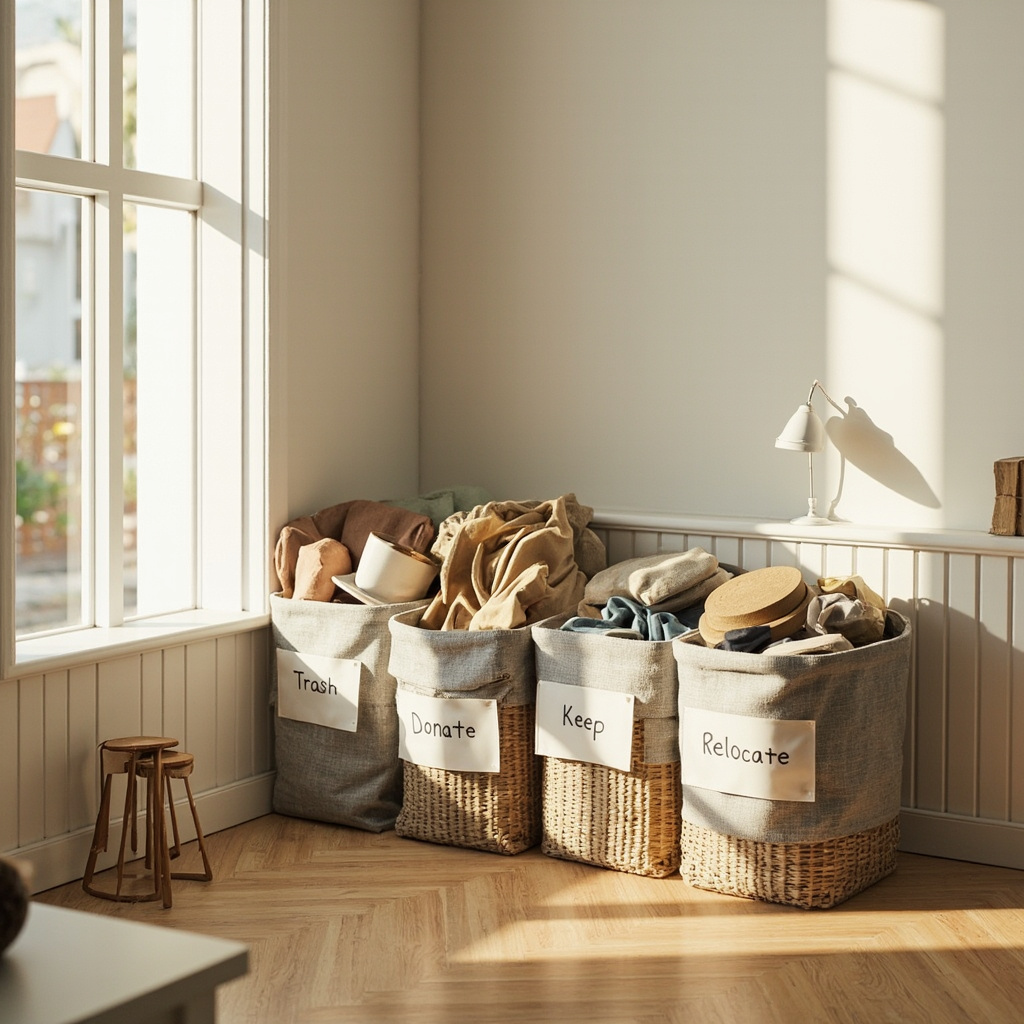
Closets store soft goods — clothing, linens, blankets — that vary in color and shape. Fabric bins create visual calm and protect fabrics from dust. The DECOMOMO foldable bins work for closet and bedroom storage.
Use plastic only for items that need extra protection (off-season wool, items at risk of moth damage).
Bedroom (Under-Bed, Nightstand): Fabric
Under-bed and nightstand storage favors fabric for noise reduction (plastic scrapes on floors) and visual calm. Fabric bins don’t look out of place in a bedroom.
Kids’ Rooms: Plastic (Mandatory)
Kids spill things. Fabric bins absorb spills and create mold risk. Plastic is the only safe choice. Bonus: kids can see through clear plastic bins and find toys independently.
Living Room (Visible Storage): Fabric
Open shelving in living rooms — baskets of blankets, magazines, remotes — favors fabric for aesthetic warmth. Plastic in these spaces reads as cold and industrial.
Garage: Plastic (Heavy-Duty) or Metal
Garage storage needs durability over aesthetics. Heavy-duty plastic or metal bins resist pests, moisture, and rough handling. Fabric fails in most garages within 1–2 years.
Office and Craft: Mixed
Office and craft storage splits by item type. Plastic for active projects (clear visibility, easy to clean). Fabric for archive storage (less frequently accessed, soft materials).
Decision Tree
Start: What room will the bin live in?
│
├─ Kitchen / Bathroom / Garage → Plastic
├─ Closet / Bedroom (soft goods) → Fabric
├─ Kids' room → Plastic (always)
├─ Living room (visible) → Fabric
└─ Office / Craft → Mixed by item type
When to Break the Rules
Three situations where the typical rule inverts:
- High-end living room display — even if storing soft goods, premium acrylic or sealed wood can be worth the cost for visual impact.
- Sentimental items — wedding dress, baby clothes, heirlooms deserve archival-quality plastic bins with desiccant packs.
- Pest-prone climates — fabric in a garage or basement attracts mice and moths. Use plastic even if aesthetics would suggest fabric.
Three Real-World Setups
Three common combinations illustrate how plastic and fabric play together.
Setup 1: Pantry-Heavy Home
A cooking-focused household keeps 70 percent plastic bins (kitchen pantry zones, fridge overflow, spice storage) and 30 percent fabric (under-sink backup, linen closet). The kitchen pantry guide walks through pantry zone setup with plastic as the default. For the fabric side, bedroom zones cover under-bed and closet storage where fabric wins.
Setup 2: Family with Young Kids
Kid zones mandate plastic — clear so kids can find things, durable so they survive handling, washable for spills. Adult zones (closet, bedroom, home office) lean fabric for visual calm. The clear vs opaque comparison explains how material and visibility interact.
Setup 3: Minimalist Apartment
A 600 sq ft apartment often ends up 50/50 — fabric bins under furniture for soft goods (sweaters, linens, off-season clothing), plastic bins in the kitchen and bathroom. The declutter fast system helps you triage what to keep before you buy bins at all.
Hybrid Strategies
Most homes use both materials strategically. A common pattern:
- Kitchen: 100% plastic
- Bathroom: 100% plastic
- Bedroom closet: 80% fabric, 20% plastic (off-season items)
- Living room: 100% fabric (baskets on shelves)
- Garage: 100% plastic or metal
This 60/40 fabric-plastic split is common in homes that prioritize both function and aesthetics.
Where Fabric Wins: Specific Setups
For closet and bedroom soft-goods storage, the Homsorout 6-pack fabric bins offer handles, foldability, and a uniform look. Under the bed, the Budding Joy 90L under-bed containers fit 6-inch clearances and hold bulky items. For visible living-room storage where you want warmth, the SIXDOVE woven baskets blend with most decor.
Common Mistakes to Avoid
- All plastic everywhere — your bedroom looks like a warehouse.
- Fabric in humid rooms — bathroom fabric bins develop mold within months.
- Plastic in visible living spaces — destroys the aesthetic of your living room.
- Cheap plastic in kitchens — thin walls flex, crack, and stain within 2 years.
- No liner in fabric bins — kids’ clothes, pet items, gym wear stain the fabric permanently.
Conclusion
Plastic and fabric bins serve different rooms. Match material to room conditions and contents, not aesthetics alone. Plastic wins where hygiene and durability matter most (kitchen, bathroom, garage). Fabric wins where softness and visual calm matter most (bedroom, closet, living room).
For more decision frameworks, see our storage bin buying guide and clear vs opaque bins comparison. For room-specific systems, our kitchen pantry guide and KonMari method provide the broader organizing context.
Quick Material Cheat Sheet
The fastest way to choose is by room: kitchen and bathroom default to plastic (clear plastic if contents are uniform, opaque if you want visual calm in a guest bathroom). Bedroom and closet default to fabric for soft goods and visual calm. Garage and outdoor storage default to plastic for pest resistance and durability. Kids’ rooms always default to clear plastic — durability and visibility both matter. For pantry zones inside the kitchen, our pantry checklist and small kitchen organization cover bin selection zone-by-zone with material recommendations specific to each zone.