Declutter Fast: The 4-Quadrant System for One-Day Decluttering
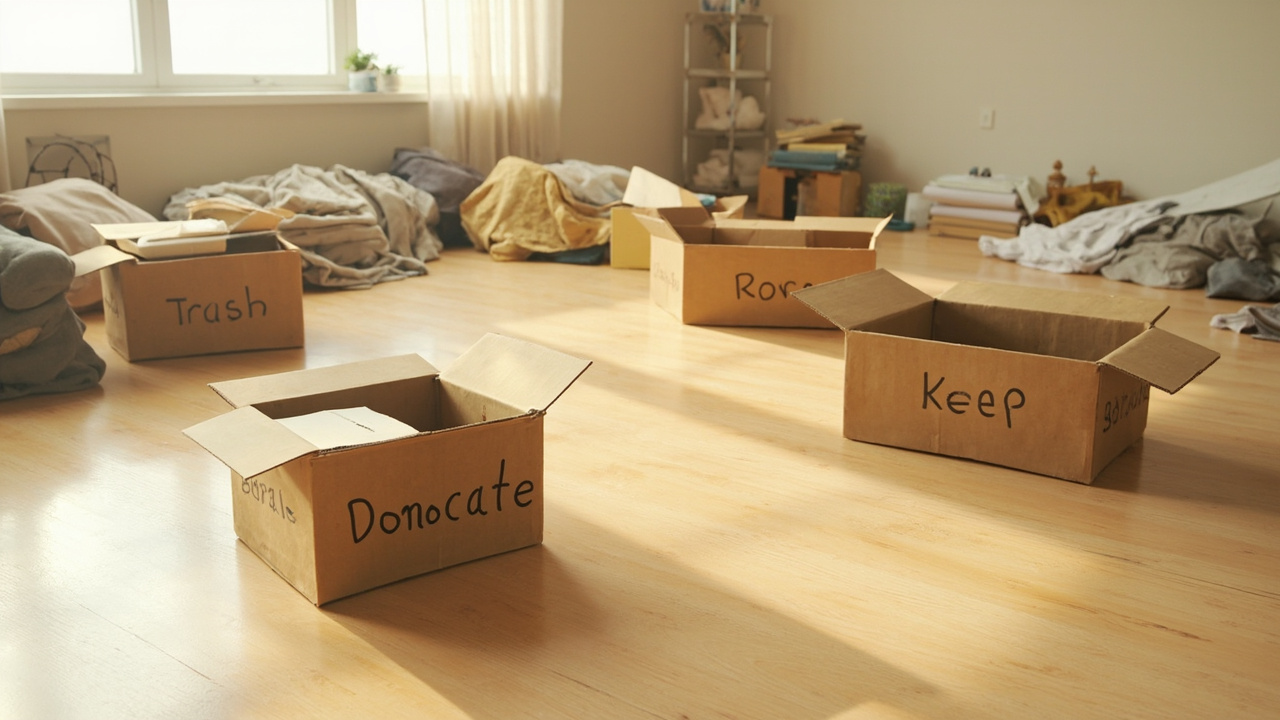
Most decluttering guides take 30 days or longer. Some people need that pace. Most don’t. The 4-Quadrant system is for people who want a room done in one afternoon — pull everything out, sort into 4 categories, put back what’s worth keeping, donate or trash the rest.
For the broader philosophy behind this method, see our KonMari method guide and our kitchen pantry checklist for a room-specific example.
Why One-Day Works (And Slow Doesn’t)
Slow decluttering projects fail because decision fatigue sets in after 60–90 minutes. By the time you’ve touched 200 items, you can’t make good decisions anymore. Most “30-day declutter” challenges stall on day 4.
The 4-Quadrant system counters decision fatigue with three design choices:
- Four categories, not endless ones — your brain can’t agonize when there are only 4 places to put something.
- Time-boxed sessions — a 3-hour timer forces decisions and prevents perfectionism.
- Visible progress — full donation bins and empty shelves motivate more than abstract goals.
The 4 Quadrants Explained

Set up four bins, boxes, or fabric storage bins before you start. Label them clearly.
Quadrant 1: Trash
Anything broken, expired, or unusable. Trash bags for actual garbage, recycling bin for paper/glass/plastic. Don’t deliberate — when in doubt, trash.
Quadrant 2: Donate
Working items you haven’t used in 6+ months. Apply the 12-month rule strictly for clothing. Pre-stage in the donation bin the night before drop-off.
Quadrant 3: Keep
Items you use at least monthly or that have clear practical purpose. This is your post-declutter inventory.
Quadrant 4: Relocate
Items that belong in another room. Most rooms discover 10–20 percent of items here on first pass — cleaning supplies under bathroom sinks, pet items in kitchens, books in bedrooms.
Quadrant Setup Tools
For the Trash quadrant, pair the Hefty 30-gallon heavy-duty trash bags with the Glad 13-gallon foot-pedal trash can for hands-free disposal while sorting. The foot pedal keeps your hands clean when reaching into the Trash quadrant repeatedly during a 3-hour session.
Per-Room Timing Guide
| Room | Time | Difficulty | Special Considerations |
|---|---|---|---|
| Bathroom | 1–2 hours | Easy | Trash old toiletries aggressively |
| Bedroom closet | 1–2 hours | Medium | 12-month clothing rule |
| Kitchen pantry | 2–3 hours | Medium | Expiry dates matter |
| Kitchen cabinets | 2–3 hours | Medium | Combine with pantry pass |
| Living room | 2–3 hours | Easy | Sentimental items slow you down |
| Home office | 2–4 hours | Hard | Paper piles are dense |
| Garage | 4–8 hours | Hard | Split into multiple sessions |
| Basement/Attic | 6+ hours | Hard | Emotional weight — consider help |
For kitchen-specific decluttering, our pantry checklist walks through the kitchen version of this system step by step. For spice and small-item decluttering within the kitchen, our spice organization guide applies the 4-Quadrant system to spice zones. For small kitchens where counter and cabinet space is tight, our small kitchen organization guide helps you combine decluttering with space-maximizing solutions.
The 5-Step Process
Step 1: Set up quadrants (5 minutes)
Place 4 labeled bins in the center of the room. Put on music or a podcast. Set a 3-hour timer.
Step 2: Pull everything out (10–30 minutes)
Take every item out of the main storage zone. Don’t sort yet — just remove. Countertops, shelves, drawers. Place items on the floor in piles by zone if the room is large.
Step 3: Sort into quadrants (60–120 minutes)
Touch each item once. Decide: Trash, Donate, Keep, or Relocate. Don’t second-guess. The 4-quadrant system prevents “where does this go?” paralysis.
For items you’re keeping, use chalkboard labels to mark zones for return placement.
Step 4: Wipe down empty shelves (10–20 minutes)
With everything out, clean the empty shelves. This is the moment you can only get during a full pull-out declutter.
Step 5: Return Keep items by zone (20–40 minutes)
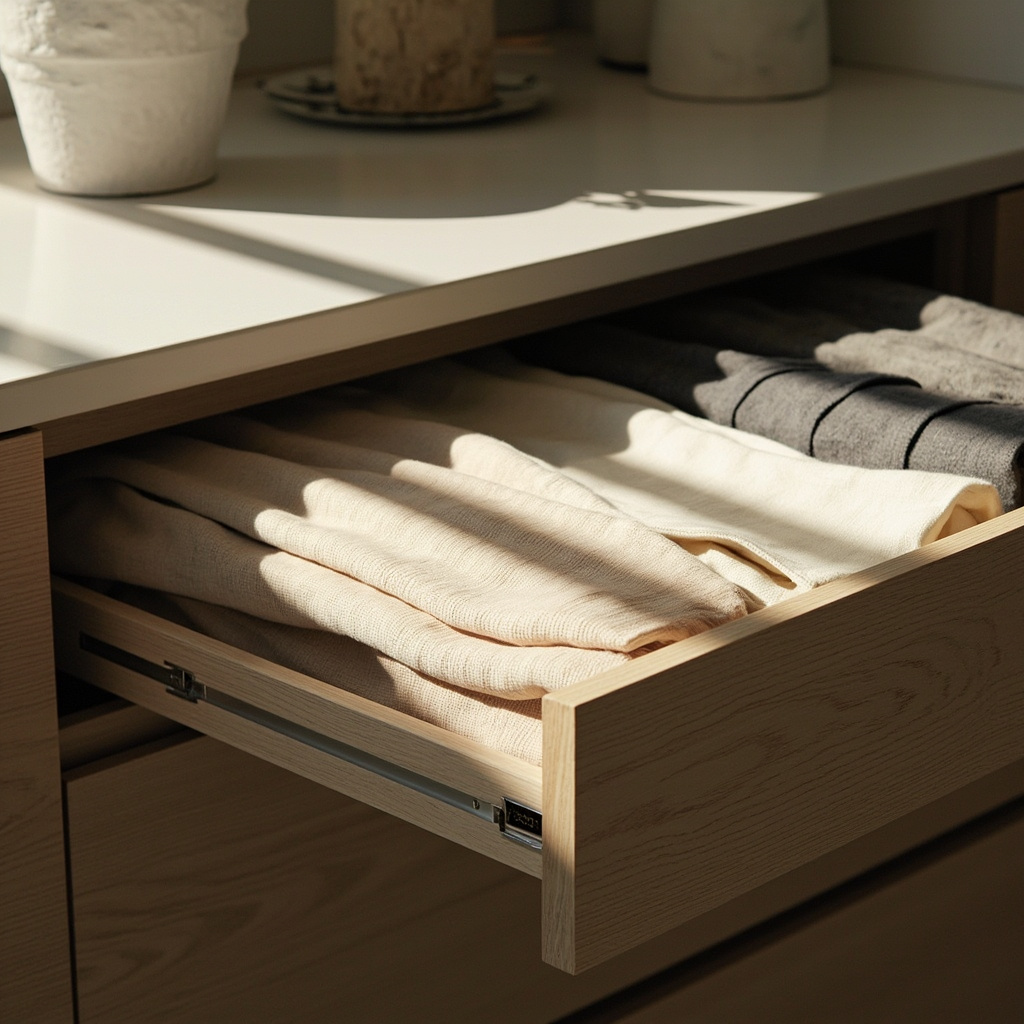
Put Keep items back, organized by zone. The KonMari method provides a deeper framework for this final step — vertical folding, sub-categorization, and “does it spark joy” filtering.
For rooms where the Relocate quadrant is large, the Moforoco 9-Tier over-door organizer can absorb overflow items.

What to Do With the Donate Bin
Most people fill the donation bin and then let it sit for weeks. Three rules to actually get it out of your house:
- Schedule drop-off the day you declutter — put it in your calendar before you start.
- Pre-stage the night before — keep the bin by the front door.
- Use a fabric bin with handles — easier to carry than boxes. The DECOMOMO bins collapse for storage between sessions.
Most donation centers accept clothing, housewares, small furniture, and electronics. National chains like Goodwill and Salvation Army have zip-code lookup tools.

Maintaining the System
After your one-day declutter, schedule 30-minute monthly maintenance sessions:
- Walk every room with a trash bag
- Put strays back in their zones
- Process incoming items before they accumulate
The 4-Quadrant system becomes a habit: every new item gets sorted into Trash/Donate/Keep/Relocate as it enters your home, not months later when it joins a pile.
For ongoing bin selection as you build zones, our storage bin buying guide helps you match bin type to zone, and our clear vs opaque comparison walks through the visibility decision. For closet-specific application, our closet hub extends the 4-Quadrant system to clothing zones.
Common Mistakes to Avoid
- Trying to declutter the whole house in one session — decision fatigue sets in fast. One room per session.
- Sentimental items in the main sort — set them aside in a separate box. Address after the main sort.
- Donating broken items — donation centers reject broken goods. Trash or recycle them.
- Keeping “just in case” items — the 6-month rule exists for a reason. Trust it.
- No drop-off plan — a donation bin sitting in your garage is a deferred decision, not progress.

Constraint Guide
- if you live alone → schedule one room per weekend. 8 rooms = 2 months.
- if you live with family → declutter common spaces together. Personal items (closets, drawers) solo.
- if you’re downsizing → consider professional estate-sale help for high-value items.
- if you have limited mobility → declutter one shelf or drawer per session instead of whole rooms.
- if you’re moving soon → declutter before packing. 30 percent less to move.
- if you have hoarding tendencies → work with a professional organizer or therapist. The 4-Quadrant system alone may not be enough.
Conclusion
The 4-Quadrant system works because it matches how your brain makes decisions under time pressure. Four categories, three hours, visible progress. Repeat per room until done.
For room-specific application, our kitchen pantry checklist and kitchen pantry guide walk through kitchen decluttering. For the philosophy behind what to keep, see our KonMari method guide. For the budgeting side of organization