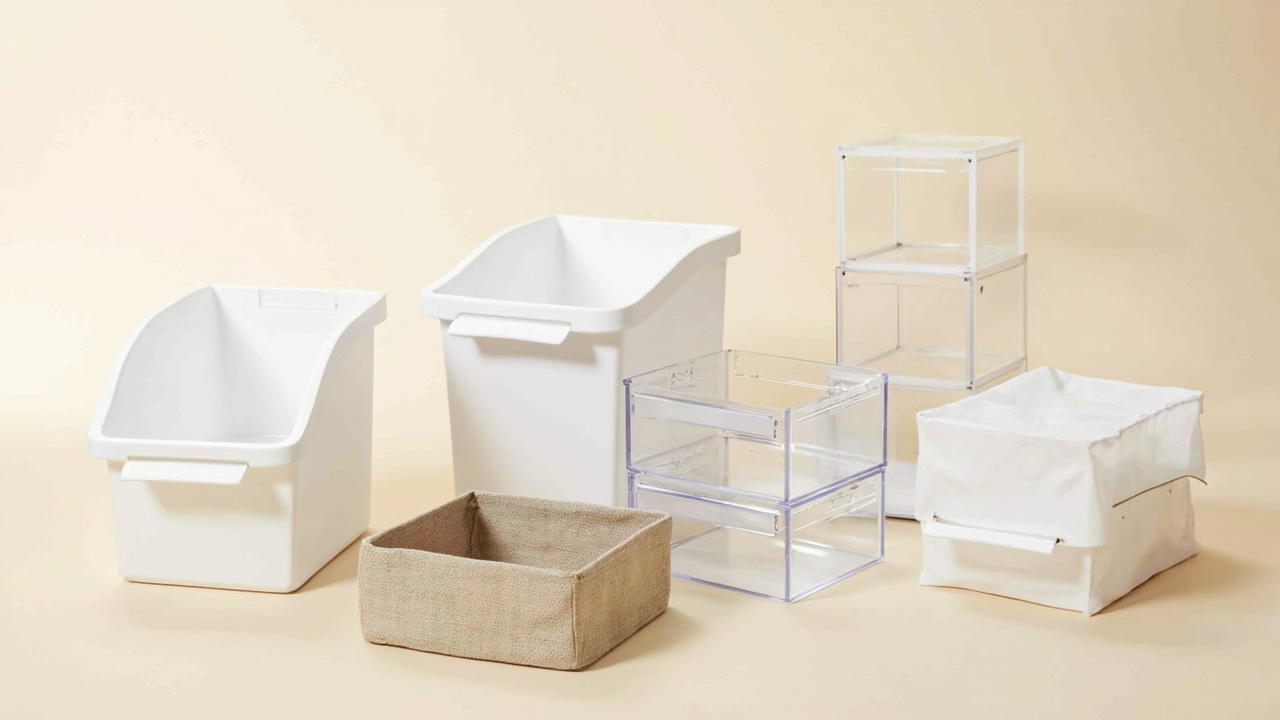
How to Choose Storage Bins: The 5-Factor Framework
Most bin-buying guides start with product recommendations. This one starts with measurement. The single biggest reason people buy bins they don’t use: they buy before measuring. Spend 10 minutes with a tape measure and you will save $50 to $200 on returns and replacements.
This guide walks through the 5 factors that actually matter — Material, Size, Visibility, Stackability, Durability — then matches each factor to room-specific recommendations.
Step 0: Measure First (10 Minutes)
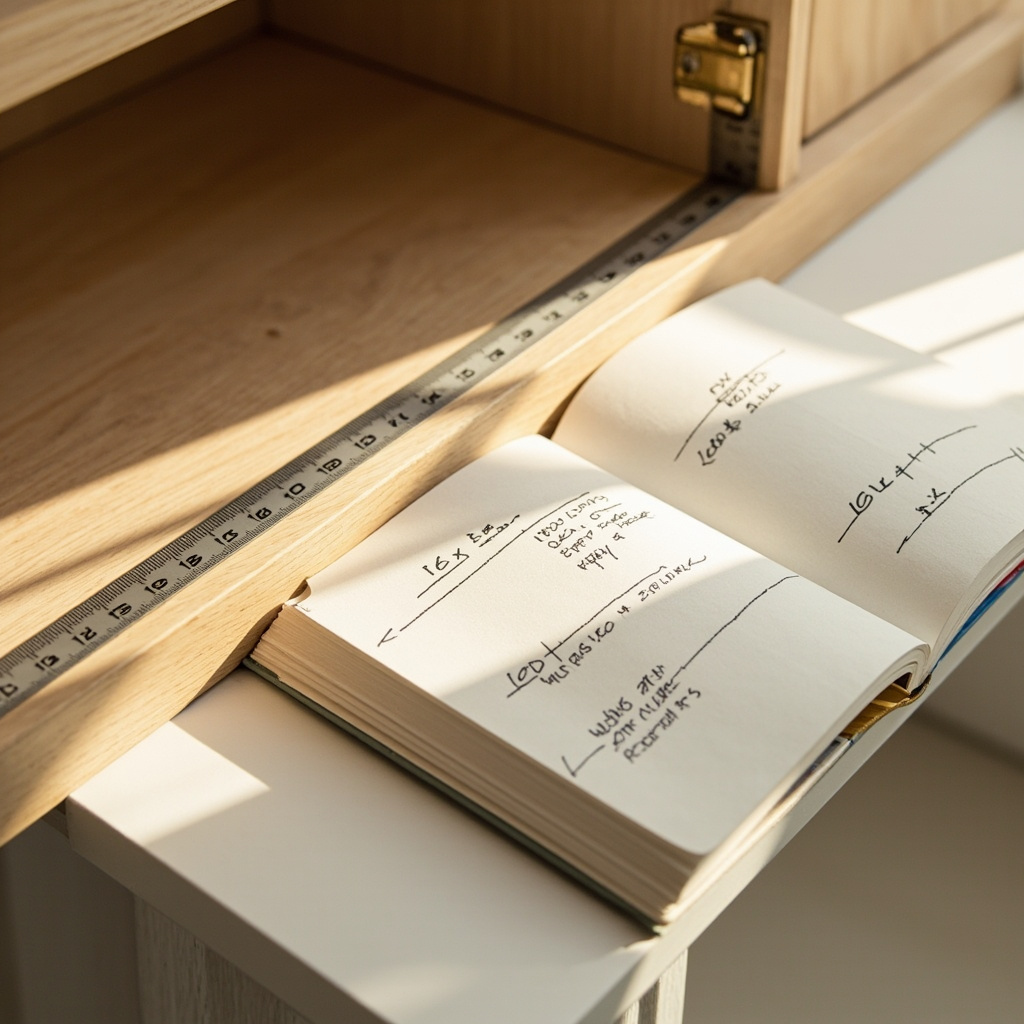
Before browsing products, write down:
- Shelf width (left-to-right) in inches
- Shelf depth (front-to-back) in inches
- Height between shelves (top of lower shelf to bottom of upper shelf)
For each shelf you’ll organize. Multiply by the number of shelves. Now you know the maximum bin dimensions per shelf.
Add 1 to 2 inches of clearance per dimension. A 10-inch-deep shelf needs bins no deeper than 8 inches, or they won’t slide in and out cleanly.
For pantry-specific setup, see our kitchen pantry guide. For small kitchens, our small kitchen organization guide covers door and cabinet measurements.
Factor 1: Material
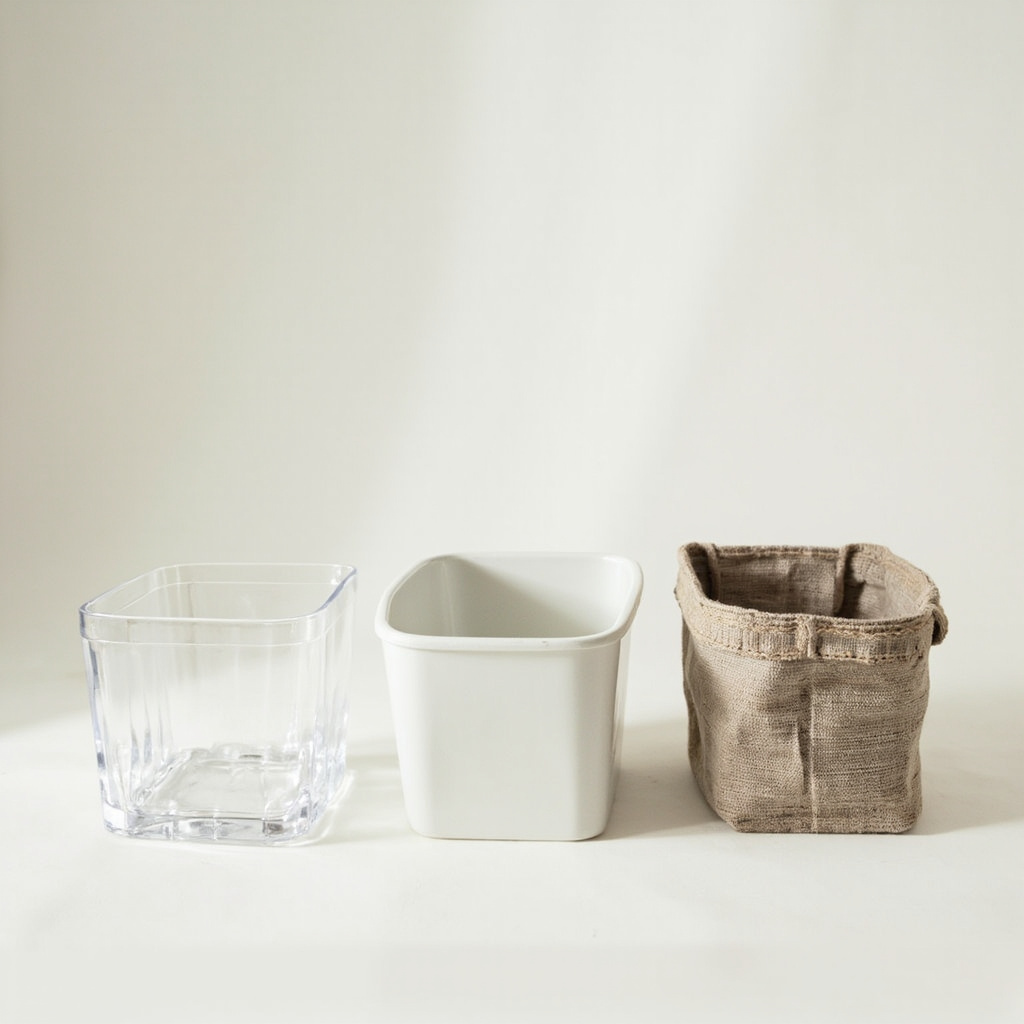
Material affects hygiene, weight, durability, and cost.
Plastic — most popular for kitchens, bathrooms, and food storage. Easy to clean, transparent options available, lightweight. Drawbacks: can stain, less aesthetic for visible living spaces.
Acrylic — premium plastic with glass-like clarity. Higher cost, more rigid, scratch-resistant. Best for visible counters or open shelving.
Fabric — soft, foldable, lightweight. Best for clothing, linens, soft goods. Drawbacks: harder to clean, can harbor moisture.
Metal — durable, fire-resistant, premium look. Best for garages, utility rooms, industrial spaces. Drawbacks: heavy, can rust if wet.
Wood/Bamboo — aesthetic, sustainable, sturdy. Best for visible display storage (living room, entryway). Drawbacks: heavier, may need sealing for wet areas.
For a detailed material comparison, see our plastic vs fabric bins guide.
Factor 2: Size
Size is where most buyers go wrong. Three rules:
- Match bin height to shelf clearance — leave 1 to 2 inches above for finger access.
- Match bin width to “fill rate” — a half-full wide bin wastes space; a too-narrow bin looks messy.
- Within a zone, match bin dimensions — different sizes within one zone reads as clutter.
The mDesign stackable bins come in matched sets (same footprint, different heights) so you can size up or down within a zone.
Factor 3: Visibility
Clear vs opaque is the most underappreciated decision. For room-by-room guidance, see our clear vs opaque bins guide.
Quick rule: clear for daily-use zones where you reach in often. Opaque for back-stock and visual-calm spaces.
Factor 4: Stackability
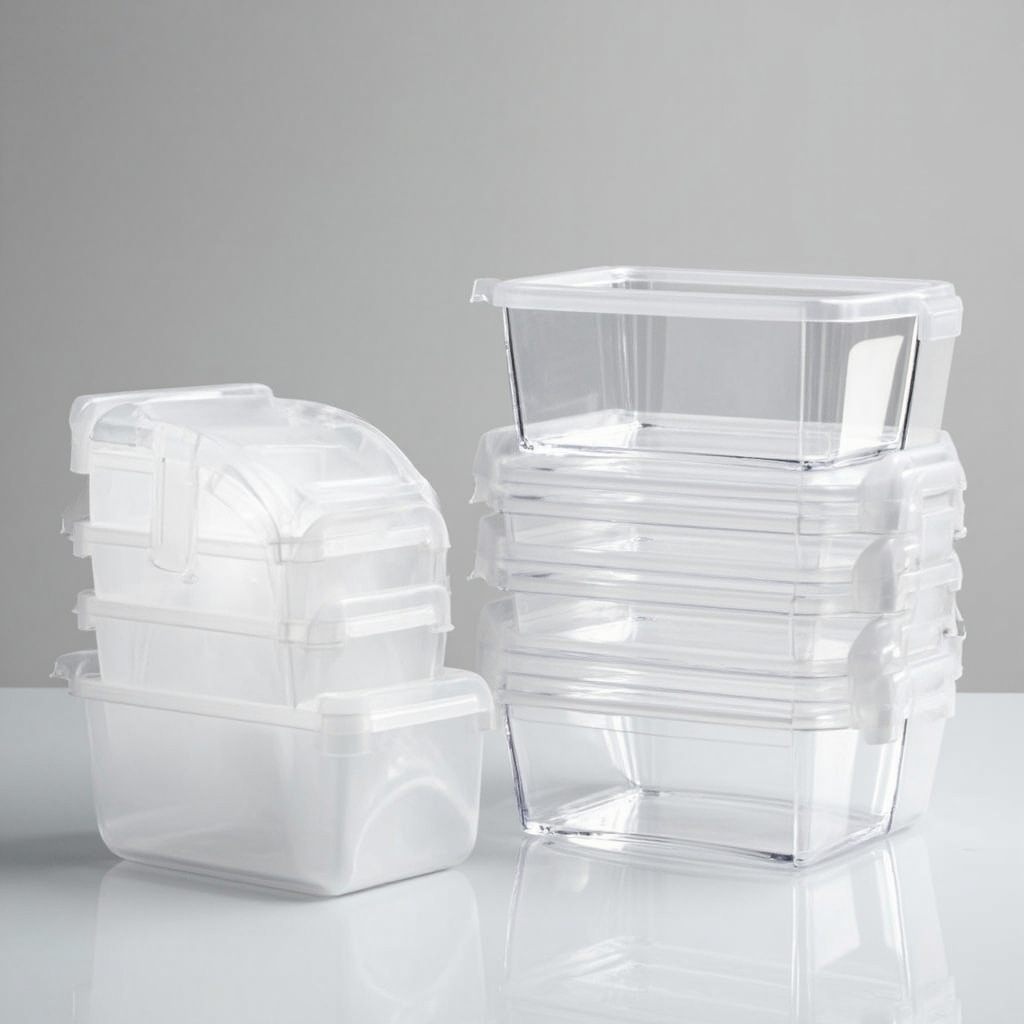
Stackable bins reclaim vertical space. The mDesign stackable bins nest when empty and stack when full — they take up the same footprint whether you’re storing 1 or 5.
For cans specifically, a tiered rack like the SimpleHouseware can rack prevents avalanche retrieval.
Factor 5: Durability
Durability shows up in three ways:
- Wall thickness — thin plastic bins flex and crack; thick ones last 5+ years.
- Hinge quality — if the bin has a lid, the hinge breaks first.
- Edge finishing — rough edges catch and tear; smooth edges last.
A cheap $8 bin and a $25 bin look similar in photos. The $25 bin typically has 2x the wall thickness and survives 5+ years of weekly use. Buy cheap for back-stock, premium for daily-use.
Quick Decision Matrix
| Zone | Material | Visibility | Size | Stack | Durability |
|---|---|---|---|---|---|
| Pantry (daily) | Plastic | Clear | Medium | High | High |
| Pantry (back-stock) | Plastic | Opaque | Large | Medium | Medium |
| Fridge | Plastic | Clear | Small/Medium | High | High |
| Closet (clothing) | Fabric | Opaque | Large | Medium | Medium |
| Bathroom (vanity) | Plastic/Acrylic | Clear | Small | High | High |
| Bathroom (under-sink) | Plastic | Mixed | Medium | Medium | High |
| Kids’ room | Plastic | Clear | Medium | Medium | High |
| Garage | Metal/Plastic | Opaque | Large | Medium | High |
| Office | Plastic | Clear | Small/Medium | High | Medium |
5 Key Factors for Specific Room Use
Kitchens
The kitchen is the most demanding space. Daily-use bins need to handle spills, humidity, and frequent cleaning. The iDESIGN clear bins work for fridge and pantry daily zones. For over-door storage in small kitchens, the Moforoco 9-Tier organizer handles heavier loads.
Bathrooms
Bathroom storage needs humidity resistance. Plastic and acrylic win over fabric. Match bin size to vanity depth — measure first, then buy.
Closets
Closet storage favors fabric for soft goods (clothing, linens). The DECOMOMO foldable bins are a reliable choice for closet and bedroom use.
Garage and Utility
Garage storage needs durability over aesthetics. Metal or heavy-duty plastic. Opaque (you don’t want to see the chaos).
Bedrooms (Under-Bed and Nightstand)
Bedroom bins prioritize visual calm and softness. Fabric or felt-lined bins slide under beds, holding off-season clothing, linens, or sentimental items. Match bin height to under-bed clearance (most beds have 6 to 10 inches of usable space). Our KonMari method guide covers how to declutter bedroom items before deciding what bin fits them.
Kids’ Rooms and Playrooms
Kids’ room bins take more abuse than any other zone. Choose plastic (washable, durable, often chewed). Match size to child height — bins at child level teach cleanup habits. Clear plastic works best so kids can find their toys. For broader toy-room organization, see our declutter fast system which covers rapid toy triage.
Home Office and Craft Rooms
Office and craft storage splits by item type: paper goods in clear plastic (so you see what’s archived), fabric and yarn in opaque fabric (so the variety doesn’t read as clutter). Measure drawer depth before buying — many office organizers assume a 15-inch drawer depth that older desks don’t have. For room-specific application, our pantry checklist uses the same factor framework for kitchen zones.
Labeling: The 6th Factor People Forget
No bin system survives without labels. Without labels, contents become a mystery you solve every retrieval. The ONUPGO chalkboard labels let you re-label as your zones evolve (rice becomes lentils, toys become craft supplies).
Common Mistakes to Avoid
- Buying before measuring — returns cost time and shipping. Always measure first.
- Choosing aesthetic over function — pretty wicker baskets in a pantry trap food residue and smell.
- All the same size — uniform sizing wastes space when zones have different capacity needs.
- No labels — unlabelled bins become mystery boxes within 3 months.
- Ignoring humidity — bathroom and kitchen bins need plastic or sealed materials, not fabric.
Constraint Guide
- if you rent and cannot drill walls → choose freestanding stackable bins instead of mounted systems.
- if your shelves are non-standard depth → measure carefully and order online (in-store selection is limited).
- if you live in a humid climate → avoid fabric in kitchens and bathrooms; sealed plastic is mandatory.
- if you have kids → choose bins with rounded edges and no small parts.
- if you cook weekly in bulk → invest in 5–10 gallon airtight bins like the mDesign Plastic Stackable Food Storage Bins for bulk storage.
- if you follow a specialty diet → use color-coded labels to separate allergen-free zones.
Conclusion
Storage bin selection is about measurement first, then matching 5 factors to your room’s needs. The framework above — Material, Size, Visibility, Stackability, Durability — applies to any room and any budget.
For room-specific deep dives, see our kitchen pantry guide, small kitchen guide, clear vs opaque comparison, and plastic vs fabric comparison. For broader organization philosophy, our KonMari method guide and declutter fast system help with the underlying decisions.
Budget Tiers: What to Expect at Each Price Point
Storage bin pricing falls into three tiers, each with predictable tradeoffs.
Budget Tier (Under $20 for a 12-Pack)
Cheap plastic bins work for low-stakes storage: garage overflow, kids’ toys, cleaning supplies. They yellow within 2 years, crack under heavy loads, and lids warp in heat. Buy cheap when contents are disposable or replaceable. For pantry use, our kitchen pantry guide recommends mid-tier for daily zones.
Mid-Tier ($20 to $50 per Bin)
Mid-tier plastic and fabric bins last 5 to 10 years. Lids fit cleanly, materials resist warping, and they look acceptable in visible spaces. This is the sweet spot for most homes. A pantry might need 6 to 8 mid-tier bins total ($120 to $400). Compare specific products in our plastic vs fabric comparison.
Premium Tier ($50+ per Bin)
Premium bins (acrylic, sealed wood, archival plastic) earn their price in three cases: (1) visible living-room storage where aesthetics dominate, (2) archival storage for sentimental items, (3) commercial-grade use in workshops or mudrooms. For most home use, premium isn’t worth the cost. For a visual organization philosophy that prioritizes premium bins in visible zones, see our bedroom hub and KonMari method.
Specialty Bins by Use Case
For bathrooms and under-sink zones where humidity matters, the Vtopmart stackable drawers work as pull-out bins without retrofitting cabinets. For industrial or modern aesthetic, the GoldOrcle wire mesh baskets handle visible pantry and closet zones. For under-bed soft goods, the Budding Joy 90L under-bed containers hold sweaters, linens, and off-season clothing. For closet verticals, a BOOMIBOO hanging organizer adds 5 shelves to any standard rod.