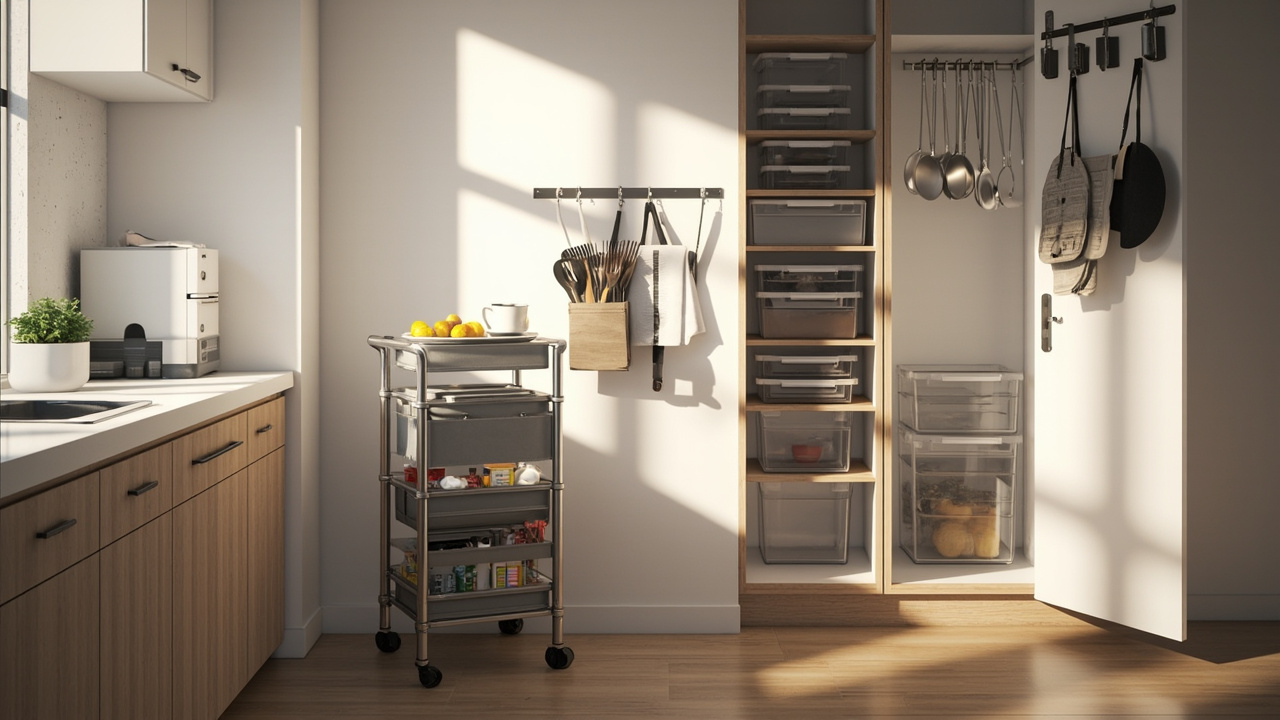
Small Kitchen Organization: 10 Storage Solutions for Tight Spaces
Small kitchens force creativity. Without a walk-in pantry or full wall of cabinets, you have to make every surface — door, wall, counter, cabinet interior, and even ceiling — work harder. This guide covers the 10 storage solutions that solve small-kitchen problems, ranked by impact per dollar.
For kitchens that do have a pantry, our kitchen pantry organization guide covers zone-based systems. This guide is specifically for apartments, condos, and tiny kitchens under 60 square feet of floor space.
Why Small Kitchens Need a Different System
Most organization guides assume you have a pantry. If you don’t, the standard “zone your pantry” advice falls apart immediately. Small kitchens need to:
- Reclaim vertical space (doors, walls, ceiling)
- Use mobile storage that can move between rooms
- Decant aggressively to fit more in less space
- Limit countertop items to daily-use only
The decluttering fast system helps you cut items before you organize them. Combined with the KonMari method for what to keep, this small-kitchen approach solves 90 percent of apartment kitchen pain.
Solution 1: Over-the-Door Organizer (Highest Impact)
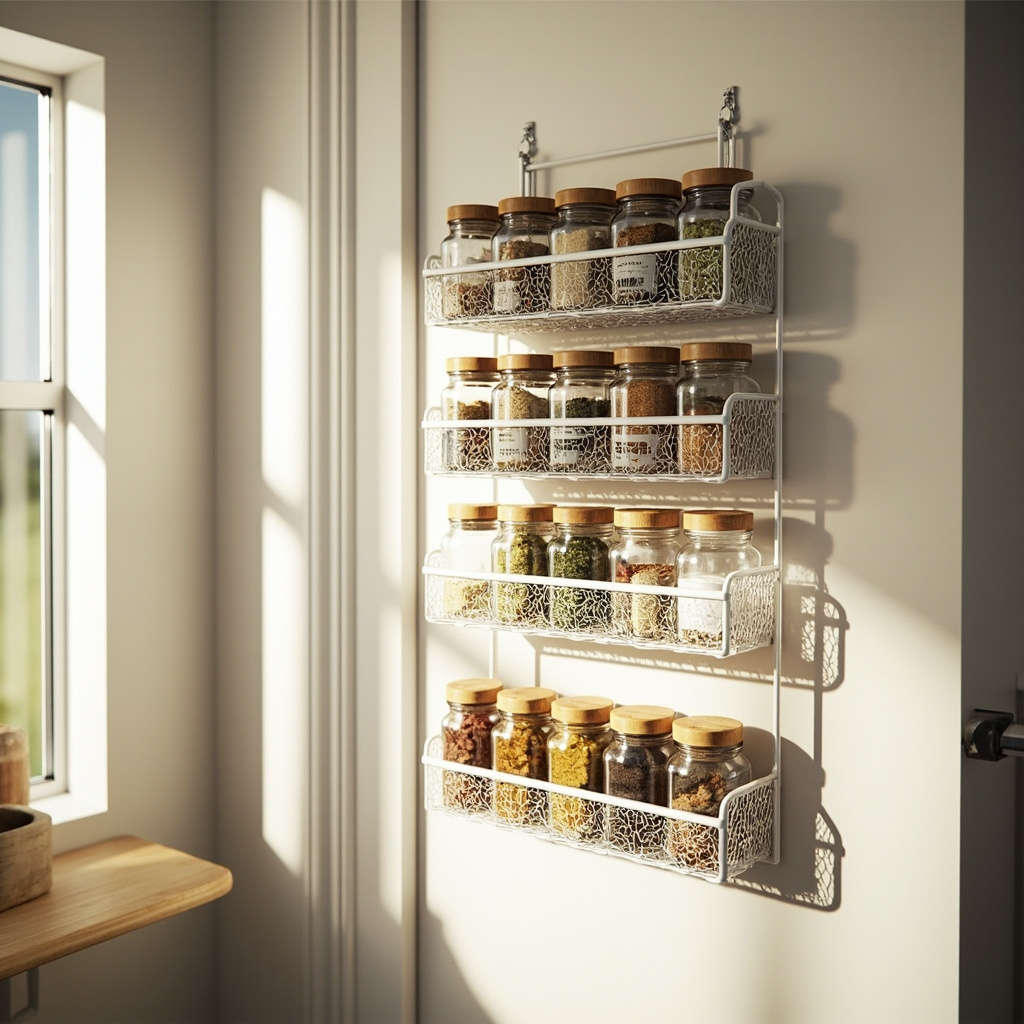
An over-the-door organizer reclaims 6 to 12 square feet of vertical storage. Most apartment doors have 80 vertical inches of unused space — that’s a full pantry’s worth of shelving if you mount a tiered rack.
The Moforoco 9-Tier Over-the-Door Pantry Organizer handles up to 30 pounds of cans, jars, and spice bottles. Best use: store items you reach for weekly but don’t want on the counter.
When to Use This Solution
Over-the-door organizers work best in apartments where the door opens inward (most kitchens). Avoid mounting heavy items (canned goods stack) on doors that open to exterior walls in cold climates — temperature swings warp cheap plastic. For renters who can’t drill, magnetic spice racks that mount on the side of the fridge work as a substitute.
Solution 2: Rolling Storage Cart (Portable Pantry)
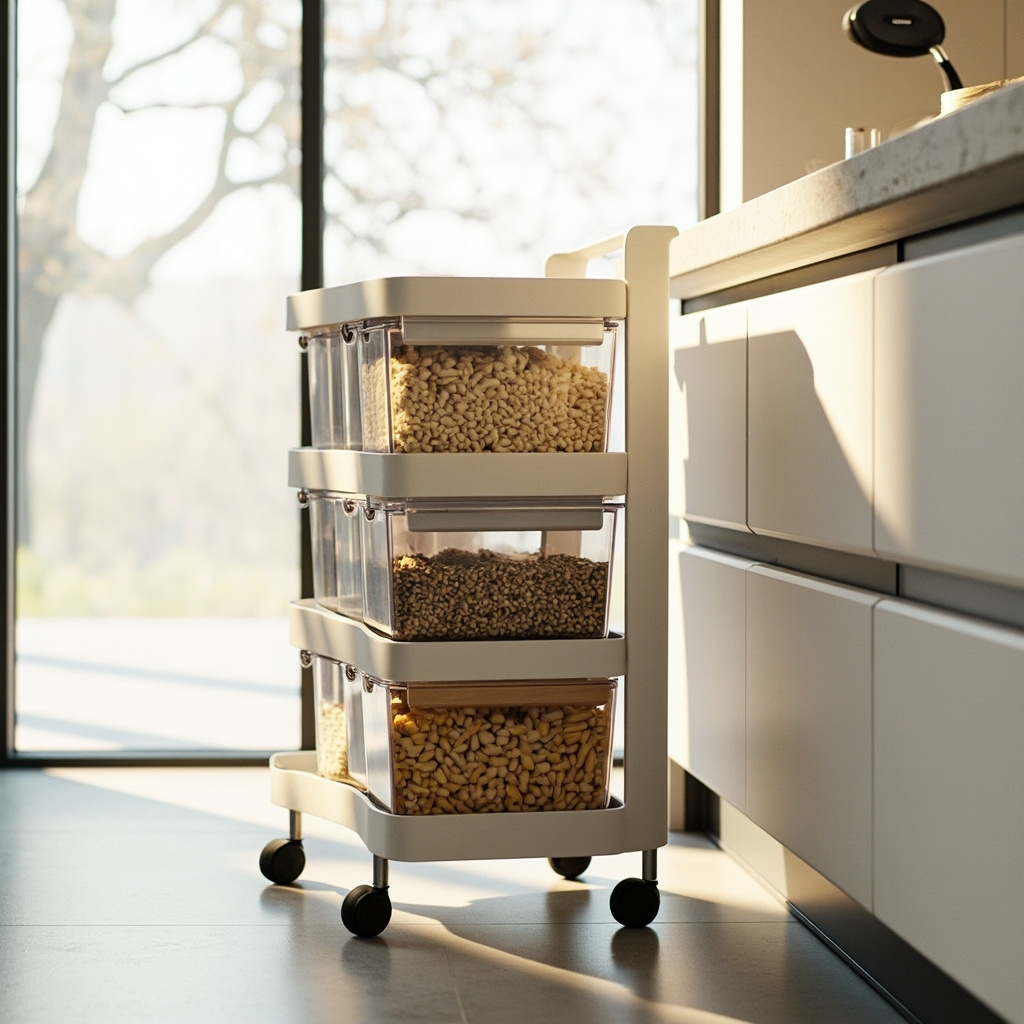
When you can’t build a pantry, you can roll one in. A 3-tier rolling cart fits behind a sofa, in a hallway nook, or beside the fridge. The Honey-Can-Do Rolling Cart holds roughly the volume of two paper grocery bags.
The mobility matters: roll it out for cooking, roll it back for guests. Pair each tier with reusable chalkboard labels to track what’s on each shelf.
Solution 3: Stackable Cabinet Bins
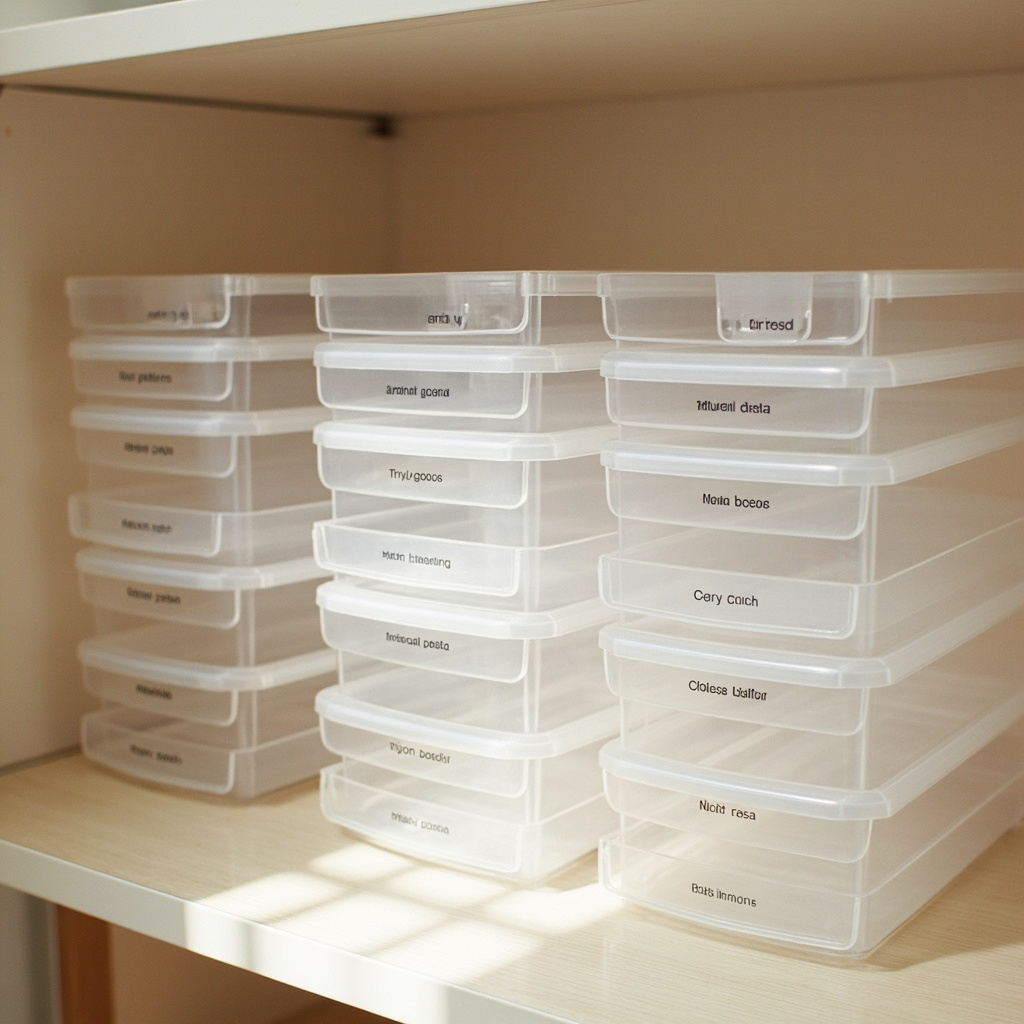
Cabinet shelves waste 30 to 50 percent of vertical space above the top item. Stackable bins reclaim that. The mDesign stackable bins nest when empty and stack when full, doubling usable cabinet volume.
For container selection criteria, our storage bin buying guide walks through the 5 factors. The clear vs opaque comparison helps decide which visibility level fits your cabinet style.
Choosing the Right Stackable Bin
Look for bins with a 1 to 2 inch front lip to keep items contained when you pull one out. Avoid bins taller than 6 inches — they waste vertical space. The same bins work as pantry checklist zone containers in your main pantry.
Solution 4: Wall-Mounted Rail Systems
A 24-inch wall rail mounted above the counter holds utensils, small pots, and herbs. Most apartment leases allow adhesive-mounted rails that don’t damage drywall. Cost: $15–30. Benefit: frees 2 to 4 square feet of drawer and counter space.
Solution 5: Magnetic Knife Strip
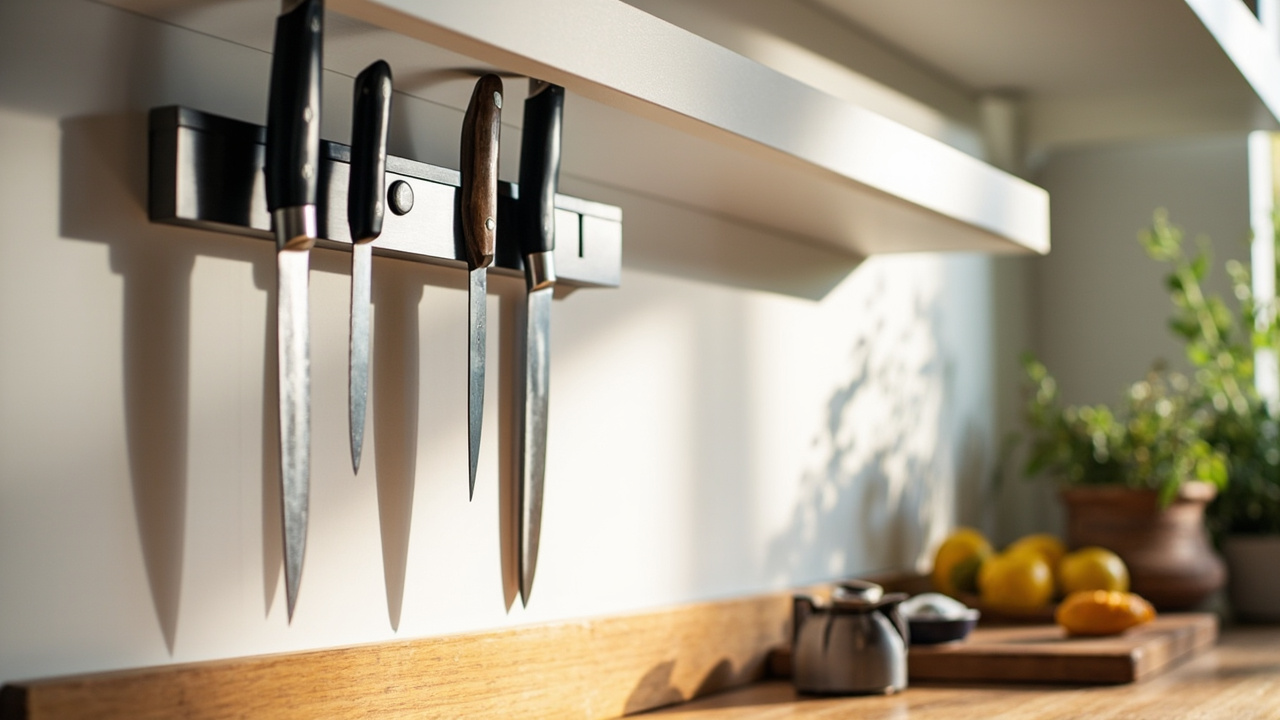
Counter-top knife blocks take 8 by 12 inches of prime real estate. A wall-mounted magnetic strip holds 6 to 10 knives in the same footprint as a single chef’s knife. Cost: $25–40. Bonus: keeps knives sharper than blocks do.
Installation Tips
Mount the strip at eye level or just below — children should not reach it. Use a stud finder or hollow-wall anchors rated for 25 pounds. Magnetic strips also hold small metal items like spice tins, scissors, and measuring spoons, doubling your use case.
Solution 6: Over-Cabinet Shelf Risers
These attach over existing cabinet doors and add a second shelf above the cabinet’s existing one. Best for storing items you rarely reach (holiday platters, special-occasion glasses). Cost: $20–35 per riser.
Solution 7: Under-Sink Tension Rods
A $5 tension rod mounted horizontally under the sink holds spray bottles by their trigger. Frees the cabinet floor for bins. Combine with our under-sink organization guide for the full under-sink system.
Solution 8: Tiered Shelf Risers Inside Cabinets
Inside a cabinet, a tiered riser creates two usable levels from one. Best for spices, canned goods, and condiments. Pair with our spice organization guide for spice-specific setup.
Choosing a Tiered Riser
Match the riser width to your cabinet interior (most are 12 to 16 inches). For spices, choose a 2-step riser. For canned goods, choose a single-tier riser with a high front lip. Visibility from above matters more than vertical stacking for spice organization.
Solution 9: Drawer Dividers (Adjustable)
Adjustable bamboo or plastic drawer dividers fit utensils, gadgets, and tools into the exact drawer shape. Cost: $15–25 for a 12-piece set. Most apartments have 2 to 4 drawers that benefit from divider reorganization.
Solution 10: Ceiling-Mounted Pot Rack
If you have 8+ inches of clearance between your head and the ceiling above the counter, a ceiling-mounted pot rack stores 6 to 10 pots in otherwise-dead airspace. Cost: $30–60. Skip if you have low ceilings or rental restrictions.
More Tools for Small Kitchens
A YASONIC 3-tier rolling cart provides 9 cubic feet of mobile storage for under $30. For knife storage without counter space, a HOSHANHO magnetic knife strip holds 8-10 knives vertically. Inside drawers, bamboo drawer dividers customize any drawer to fit utensils. For overhead airspace, a ceiling pot rack hangs 8-12 pots within dead ceiling space. To add a hidden drawer under existing shelves, the Joseph Joseph under-shelf drawer mounts without tools.
Common Mistakes to Avoid
- Buying organizers before decluttering — measure and declutter first, every time.
- Ignoring door/wall/ceiling space — these three zones add 20+ square feet of storage most apartments waste.
- Using decorative bins over functional ones — clear bins win in small kitchens because you can’t waste time hunting for things.
- Skipping the rolling cart — mobile storage is the single best substitute for a missing pantry.
- Trying to fit a “normal” kitchen system — small kitchens need different rules, especially the 80 percent clear counter rule.
Constraint Guide
- if you cannot drill walls → use adhesive hooks (3M Command) and tension rods only.
- if your ceiling is under 8 feet → skip the pot rack; use cabinet risers and door organizers instead.
- if you share the kitchen with roommates → label everything and use mobile storage you can wheel to your room.
- if you cook for one → cut your dry goods stock to 1-week supply, not 1-month. Smaller quantities = less cabinet clutter.
- if your kitchen has no windows → use light-colored bins to brighten the space visually.
- if you move frequently → favor mobile carts and freestanding units over wall-mounted anything.
Conclusion
Small kitchen organization is not about cramming more in — it’s about distributing smarter across every available surface. The 10 solutions above, applied in priority order (door → cart → cabinet bins → walls → ceiling), will fit a 2-week grocery haul in a 50-square-foot apartment kitchen.
Pair this guide with the full kitchen pantry system for kitchens with at least some pantry space, and our kitchen organization hub for every zone of your kitchen.