How to Choose Shelf Organizers: The 5-Factor Framework
The most common reason people return shelf organizers: they buy before measuring. Spend 10 minutes with a tape measure and the rest of the decision falls into place.
The wrong shelf organizer creates two problems at once. A flimsy wire rack sags under cookbooks within months. A solid wood cube system looks great in photos but costs $300 and takes four hours to assemble — for a closet you might rearrange next year. The right shelf organizer matches the room, the weight, and the items you’ll store on it.
This guide walks through the 5 factors that actually matter — Material, Size, Visibility, Stackability, Durability — then matches each factor to room-specific recommendations and picks that work.
Measure First: The 10-Minute Pre-Buy Workflow
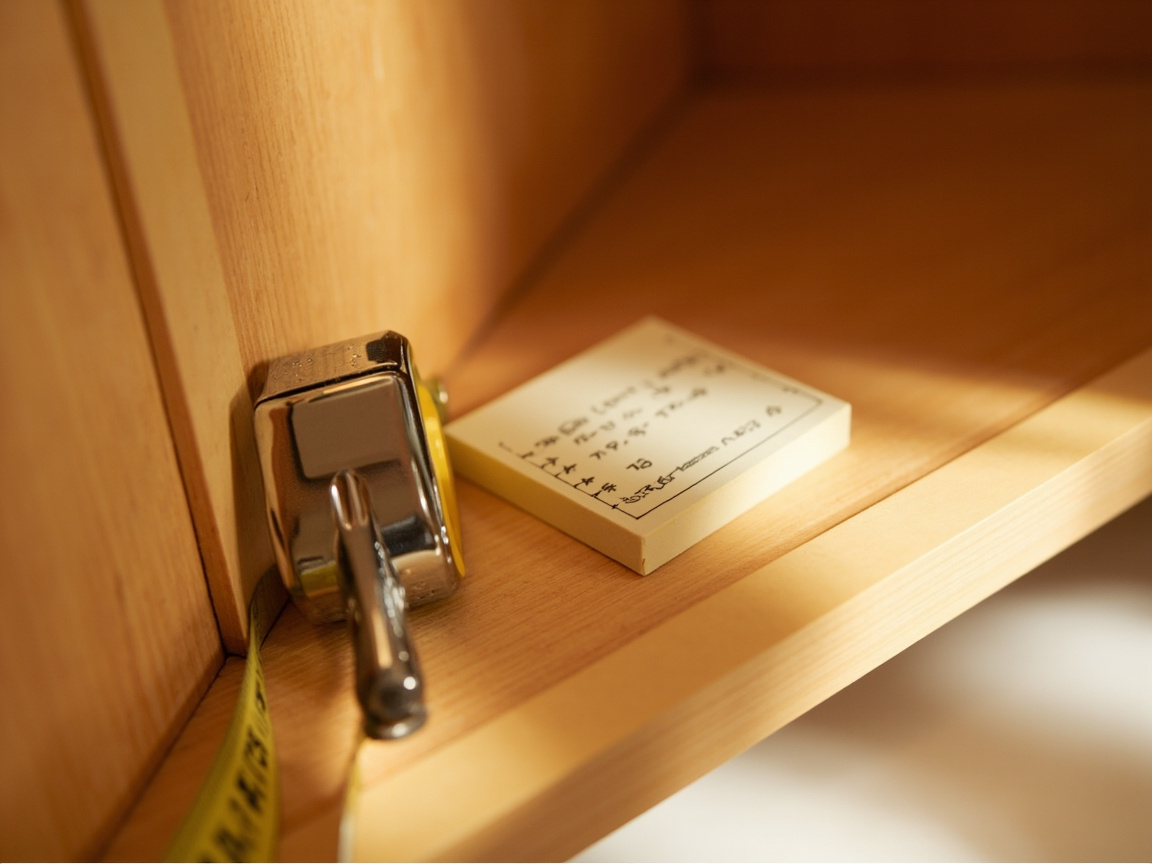
Before browsing Amazon, write down four numbers for each shelf you’ll organize:
- Shelf width (left to right) in inches
- Shelf depth (front to back) in inches
- Height between shelves (top of lower shelf to bottom of upper shelf)
- Weight you’ll put on the shelf (light = linens, heavy = books, very heavy = tools)
Now apply three rules:
- Subtract 1 to 2 inches per dimension for finger access. A 12-inch-deep shelf needs organizers no deeper than 10 inches.
- Match shelf weight rating to your items. Cheap wire cube shelves rated for 10 to 15 lbs per cube will fail under hardcover books. For heavy items, choose wood or reinforced metal.
- Check for obstructions. Drawer faces, hinges, doors, and outlet boxes all reduce usable shelf space. Measure twice.
For pantry-specific setup, see our kitchen pantry guide. For measuring a closet or small cabinet, our small kitchen organization guide covers similar small-space shelf logic.
Pre-declutter before measuring. Removing items you’ll never use means you may need fewer shelves than you think — the KonMari method guide walks through deciding what sparks joy, and our decluttering before organizing system covers rapid triage.
Types of Shelf Organizers

Five categories cover roughly 95% of what’s sold on Amazon. Each fits a different shelf scenario.
Stackable Countertop Shelves
Free-standing sets (2-pack to 6-pack) that raise items on your counter or in cabinets. Best for spices, canned goods, and cosmetics. The SONGMICS 4-piece stackable set doubles as a spice rack and works for renters — no drilling required. Drawbacks: limited weight capacity, take counter space.
Wire Cube Storage (Modular)
Standard 12-inch cube wire grids that stack vertically (Amazon Basics, ClosetMaid, IKEA Kallax alternatives). The Amazon Basics 6-Cube Wire Grid accepts both 6-cube and 12-cube add-ons — same footprint, expand later. Drawbacks: wire can snag delicate fabrics; weight limits per cube.
Expandable and Adjustable Shelving
Spring-tension or screw-mounted shelves that expand to fit cabinet widths (typically 11 to 19 inches). Best for under-sink, awkward cabinets, or rental kitchens. The X-cosrack expandable shelves adjust to fit non-standard cabinet heights where fixed-size shelves fail. Drawbacks: limited to lightweight items.
Shelf Dividers
Clear acrylic or metal dividers that snap onto existing shelves to create vertical sections. The OMGelic 11-inch tall clear dividers separate purses, sweaters, and folded clothes on closet shelves without taking any shelf space. Drawbacks: don’t add storage, just organize existing space.
Over-the-Door and Hanging Shelves
Suspended shelves that hang over doors or inside closets. Best for bathrooms, laundry rooms, and small closets with limited floor space. Drawbacks: door-swing interference, limited weight capacity.
How to Choose: 5 Key Factors
We evaluate every shelf organizer using 5 factors. Skip any one and you’ll likely regret the purchase within a year.
Factor 1: Material
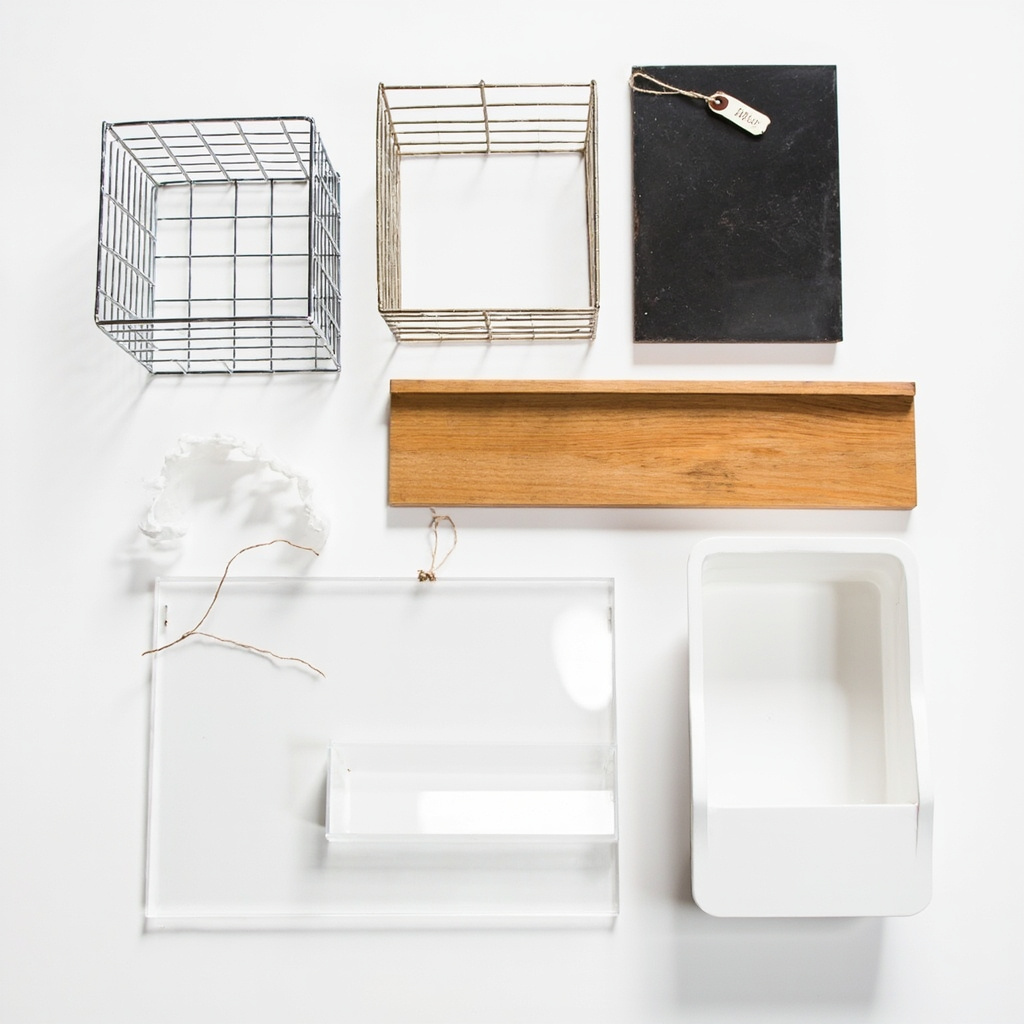
Material drives price, durability, and aesthetic. Wire wins for visibility and ventilation (great for shoes, linens). Bamboo or solid wood wins for visible living spaces. Powder-coated metal wins for heavy items and damp areas. Plastic wins for bathroom moisture.
The same material principles apply whether you’re organizing shelves or bins — our plastic vs fabric bins guide covers material science in detail, and our storage bin buying guide covers the full framework.
Factor 2: Size and Fit
The most common mistake is buying before measuring. Match organizer dimensions to shelf dimensions minus 1 to 2 inches clearance per side. For non-standard shelves, modular cube systems let you combine 6-cube and 12-cube units. For narrow cabinets, expandable shelves adapt.
If your shelf is wider than 36 inches, plan for two or more smaller organizers rather than one oversized one. Oversized shelves flex and sag; smaller units stay rigid and last longer.
Factor 3: Visibility
Clear vs opaque changes how you use the shelf. Open wire cubes work for items you reach for daily — you see what’s there without pulling each bin out. Opaque wood cubes work for back-stock and visual-calm spaces.
The decision tree is the same one we use for bins: see our clear vs opaque bins guide for the full visibility framework, then apply it to shelves.
Factor 4: Stackability and Modularity

Stackable shelves reclaim vertical space. Modular systems let you reconfigure as needs change. For bookshelf-heavy setups, modular cube beats fixed-shelf because you can add cubes as your collection grows.
The Amazon Basics 6-Cube Wire Grid accepts both 6-cube and 12-cube add-ons — same footprint, expand later.
Factor 5: Durability and Weight Capacity
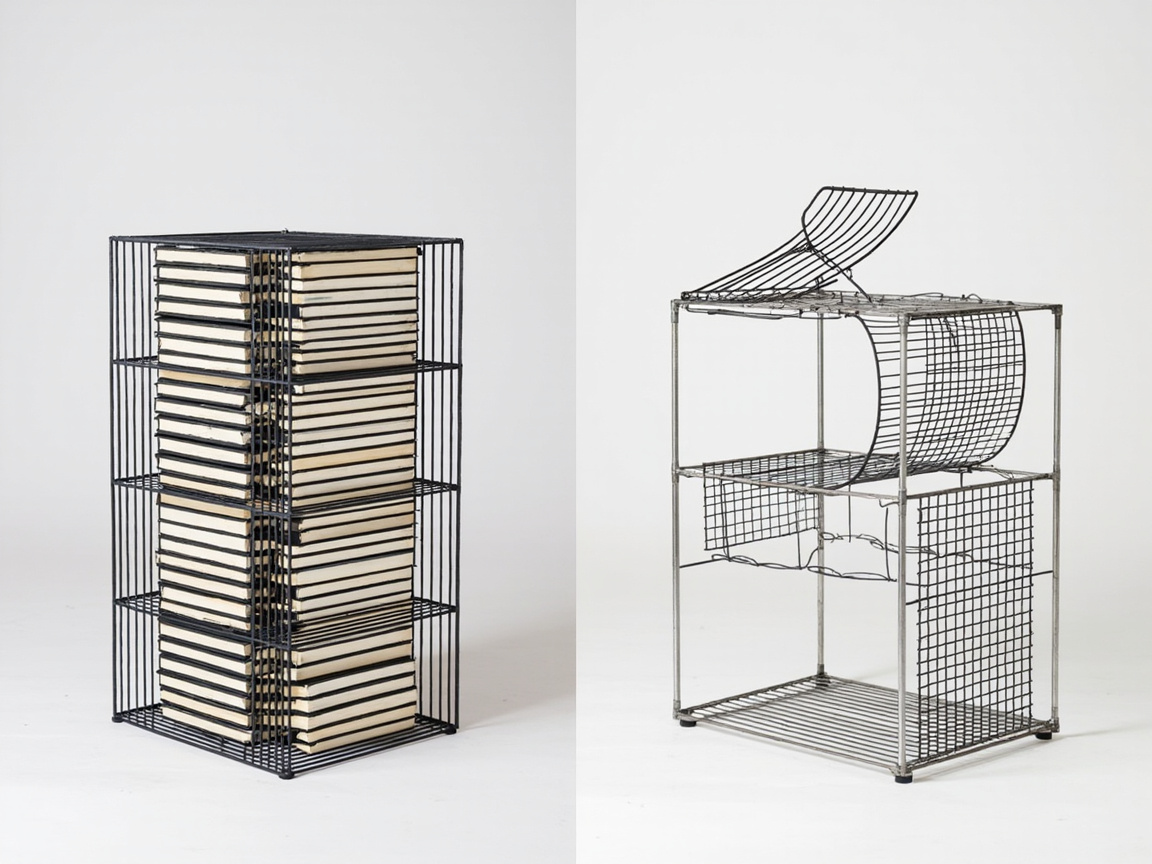
Three durability signals matter:
- Wire thickness — thicker wire holds 30+ lbs per cube; thin wire sags under books.
- Frame construction — welded beats snap-together beats friction-fit every time.
- Edge finishing — smooth welds last; rough edges snag clothing and skin.
For bookshelves holding hardcovers, weight rating is the #1 spec. The Amazon Basics wire cube is rated for 30 lbs per cube and handles book weight reliably — thin-wire alternatives commonly sag under hardcover book loads.
Room-by-Room Recommendations
Kitchen — Countertops and Cabinets

Stackable counter shelves for spices, canned goods, and small appliances. Metal risers for cabinet shelves holding dishes. The SONGMICS 2-pack value set is the budget pick for a single cabinet at $13. For deeper pantry context — counter, cabinet, and pantry door organization — see our kitchen pantry guide.
Pantry — Wire Shelving and Tiered Racks
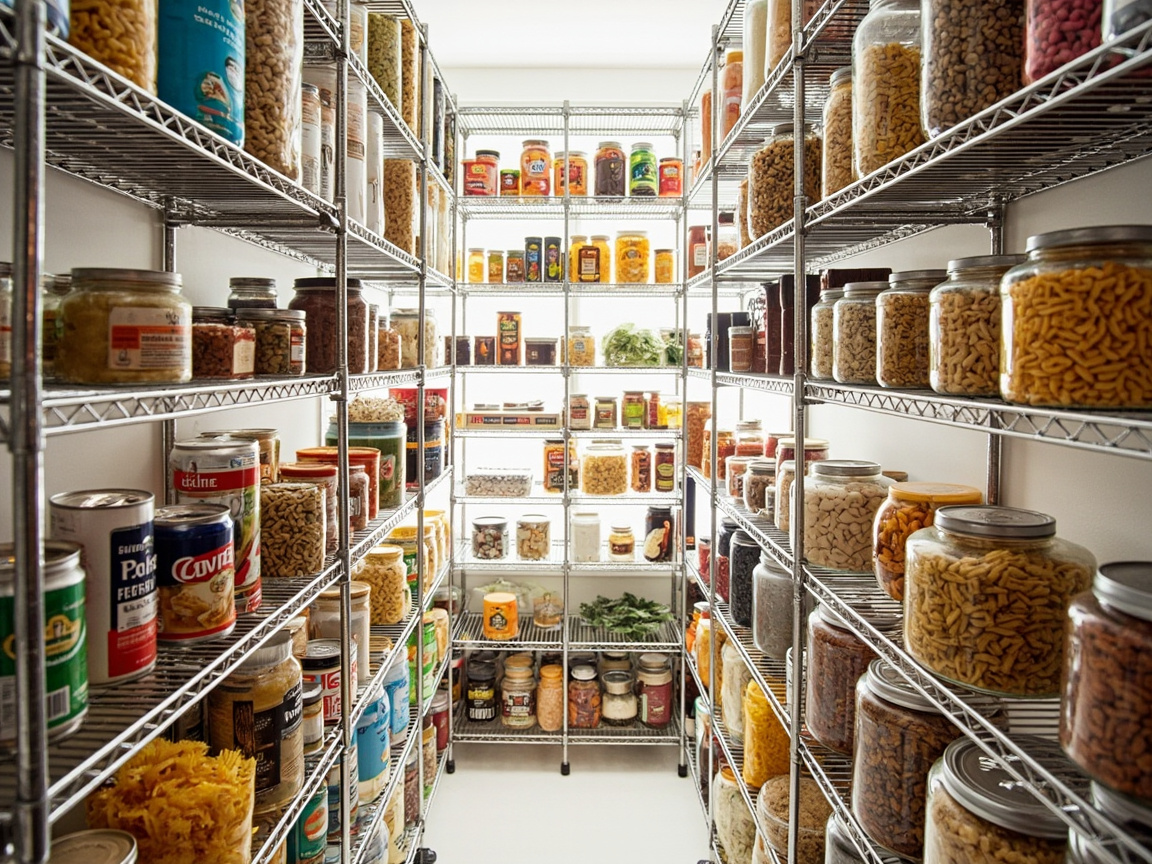
Wire shelving for cans (allows airflow, prevents avalanche). Tiered racks for spices. The Amazon Basics stackable metal risers bring powder-coated steel at $17 — resists moisture and stacks two tiers high for cans and dry goods. Our pantry organization checklist covers the full pantry setup from shelf to labels.
Closet — Cube Storage and Dividers
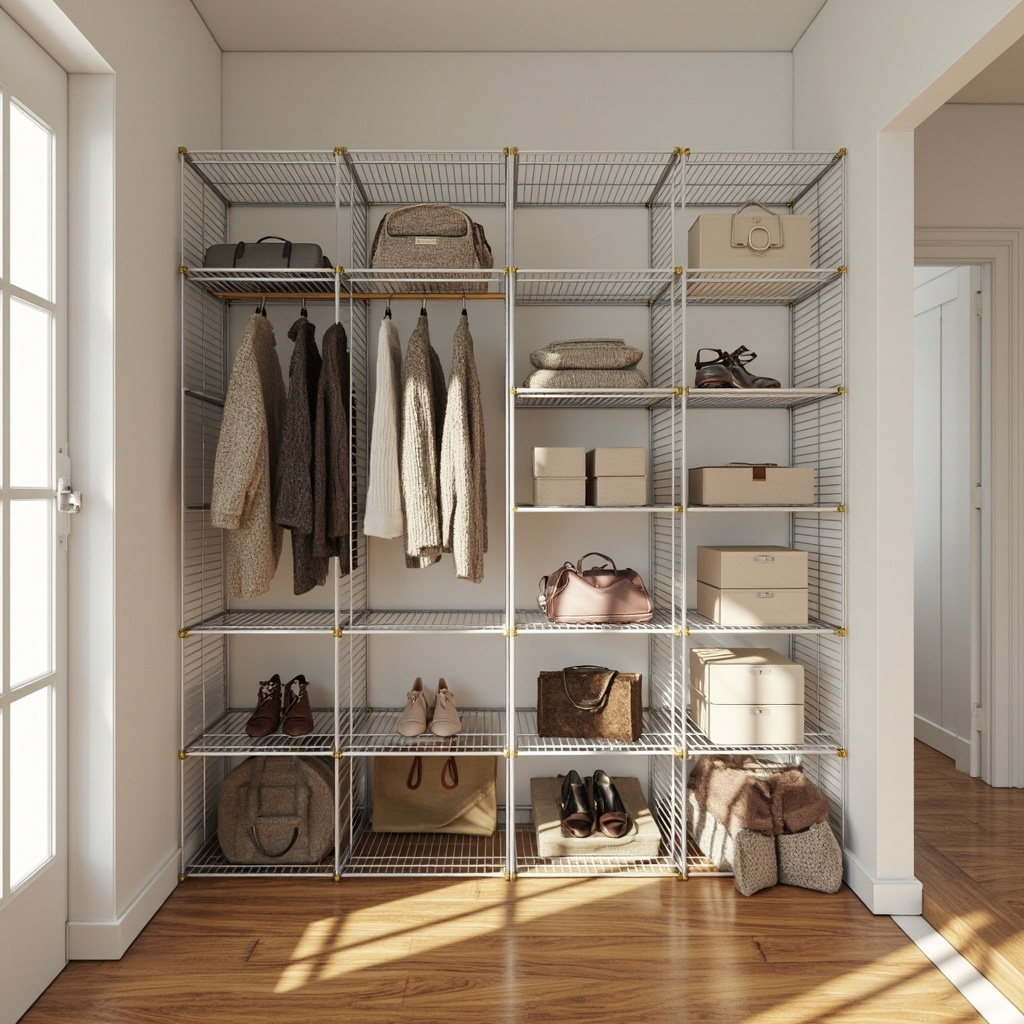
Modular wire cubes (6 or 12) for folded clothes, shoes, handbags. Shelf dividers for separating handbag collections. The OMGelic 6-pack tall shelf dividers at 11 inches tall separate handbags, sweaters, and purses without taking any shelf space.
For the cube-vs-traditional-closet decision, see our [wire cube vs wood closet system comparison] which covers the trade-offs in depth.
Bathroom — Over-the-Door and Tiered

Over-the-door shelves for toiletries and towels. Tiered corner shelves for small bathrooms. Skip wood or bamboo in bathrooms — the moisture warps them within 6 to 12 months. Powder-coated metal or plastic is the right call.
Small-space shelf logic transfers between rooms — the small kitchen organization guide covers the same “fit more vertical storage in less footprint” thinking that applies to cramped bathroom setups.
Bedroom and Living Room — Cube Storage and Display
Wire cubes for bedroom storage. Solid wood cubes for living room display. For the labeling step that completes any shelf system — shelf-edge labels, bin labels, cube markers — our [labeling system guide] covers the full bin-and-shelf labeling workflow.
Common Mistakes to Avoid
Five mistakes show up consistently across Reddit organizing threads, Amazon 1-star reviews, and editorial listicles:
- Buying shelf organizers before measuring — cited in Reddit r/Homeorganization as the #1 return reason. Without shelf measurements minus 1 to 2 inches of clearance, the organizer either doesn’t fit or wastes vertical space.
- Ignoring weight capacity — wire cube under books — owner reviews on wire cube shelves consistently cite “sagging under books” as the top complaint. Wire cubes rated 10 to 15 lbs per cube will visibly bow within weeks of holding hardcovers; check the spec sheet before buying.
- Choosing aesthetic bamboo over function for damp areas — owner reviews on bamboo shelf organizers consistently cite “warped in bathroom” and “moldy after 6 months.” In bathrooms, basements, and outdoor kitchens, choose powder-coated metal or plastic instead.
- Mixing too many sizes within one closet or wall — even when each shelf piece works individually, mixing 6-cube, 12-cube, and stackable counter shelves looks cluttered. NYT Wirecutter’s closet organizing guide consistently recommends 1 to 3 sizes per wall, with matched heights within zones.
- Overloading stackable counter shelves — owner reviews on stackable counter shelf sets cite “collapsed under weight” and “tipped over” as common complaints. The set looks stable empty but tips when fully loaded with cans, oils, and appliances — always check the manufacturer’s stated weight limit.
Constraint Guide: Pick by Situation
Five if-then branches to pick the right shelf organizer in under 60 seconds:
- If your space is damp (bathroom, basement, garage, outdoor kitchen) → use powder-coated metal or plastic, avoid wood and bamboo (warps within 6 to 12 months).
- If you store hardcover books, tools, or canned goods (over 15 lbs per shelf) → use wire cube systems with 30+ lb per cube rating or solid wood, avoid thin wire (10 to 15 lb rating).
- If you rent and cannot drill into walls → use modular wire cubes (no-tool assembly) or stackable counter shelves (free-standing); avoid wall-mounted systems.
- If you store clothes, linens, or towels (light, voluminous) → use open wire cubes or ventilated metal risers, avoid closed wood or solid plastic (traps moisture and mildew).
- If the shelf is in a visible living space (kitchen island, entryway, living room) → use solid wood cube systems or premium metal with clean lines; avoid industrial wire cube grids in formal spaces.
Recommended Options
Eight products spanning all 5 Key Factors. Each picks one specific use case, not a “best overall.”
For kitchen counters and renters who can’t drill, the SONGMICS 4-piece stackable set at $20 doubles as a spice rack and stacks 2 to 4 tiers — best when you want multiple counter shelves without mounting hardware.
For single cabinets and small kitchens on a budget, the SONGMICS 2-pack at $13 handles one cabinet or counter zone — minimal footprint, same bamboo aesthetic as the 4-pack.
For non-standard cabinets where shelf depth varies, the X-cosrack expandable shelves at $25 adjust to fit different cabinet heights — best when fixed-size shelves won’t fill the space.
For closet organization with seasonal item rotation, the SNSLXH 5-pack stackable baskets at $40 fold flat when not in use — best for renters who want flexible closet storage.
For living rooms and bedrooms with book or display storage needs, the Amazon Basics 6-Cube Wire Grid at $50 is rated 30+ lbs per cube, no-tool assembly, and accepts 6-cube and 12-cube add-ons — best modular wire system.
For pantry cans, dishes, and dry goods on metal risers, the Amazon Basics stackable metal organizer at $17 brings powder-coated steel that resists kitchen moisture — best for daily-use pantry zones.
For closet purses and sweaters that need shelf dividers, not new shelves, the OMGelic 11-inch tall clear dividers at $22 separate handbags and folded clothes without taking any shelf space — best organizer-only upgrade.
For retail display or whole-closet shelf dividers, the Lineshading 50-piece adjustable dividers at $33 cover 14 to 24 inch depth with a front fence — best 50-pack value.
Closing Notes
Shelf organizer selection comes down to measurement first, then matching 5 factors to the room and the items. The framework — Material, Size, Visibility, Stackability, Durability — applies to any shelf in any room.
For the broader framework applied to bins, see our storage bin buying guide, plastic vs fabric bins comparison, and clear vs opaque bins guide. For the cube-vs-closet-system decision specifically, our [wire cube vs wood closet system comparison] walks through that trade-off. For the labels that complete any shelf system, our [labeling system guide] covers shelf-edge labels, bin markers, and cube tags.
For room-specific shelf context — kitchen, pantry, closet, bathroom, bedroom — follow the room hubs linked throughout this guide.