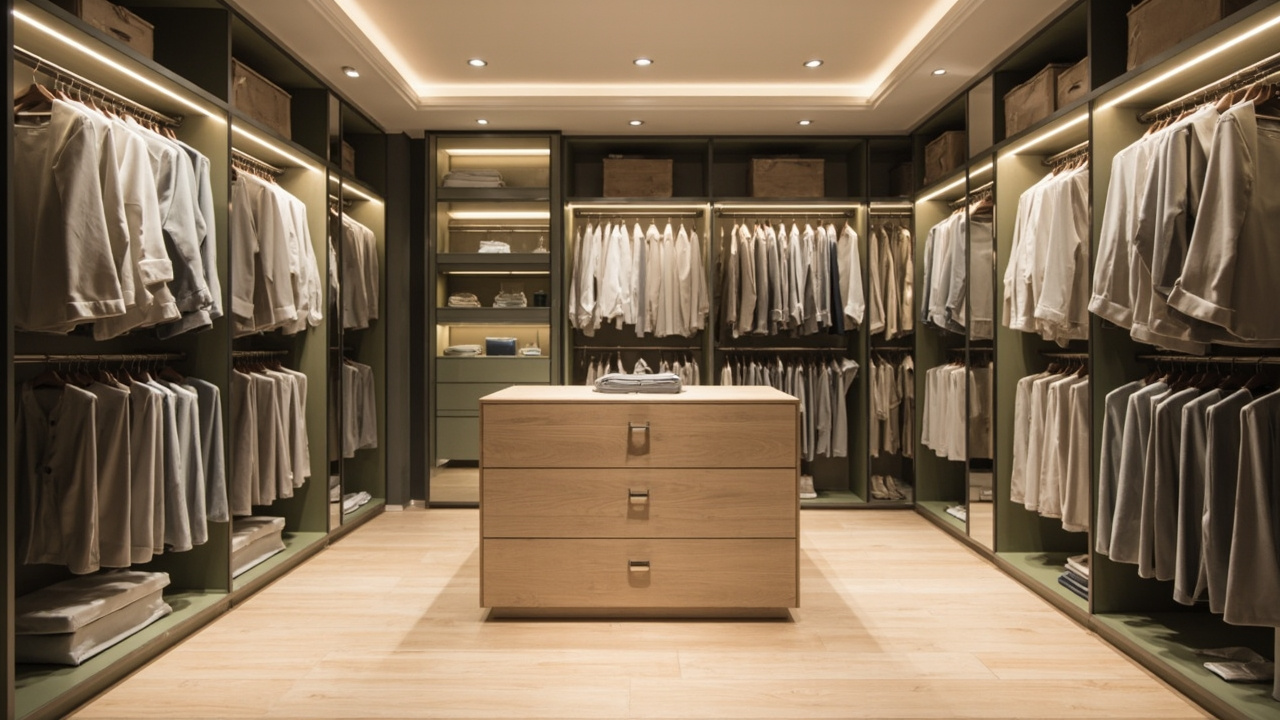
A walk-in closet is the highest-stakes storage zone in most homes. Unlike a reach-in closet (limited depth, single rod), a walk-in can absorb a full wardrobe — but only if the layout supports it. Most walk-ins are 5x5 to 8x10+ square feet, and most owners either over-fill them (no system) or over-build them (modular systems they don’t use 60% of).
This guide covers the 5-step method + 3 layout variants + constraint guide + 6-month maintenance. The general method that powers Step 1 lives in our declutter-fast 4-quadrant system; the broader bedroom context is in our bedroom hub and small-bedroom-organization guide.
Why Walk-Ins Get Messy
Three forces stack against walk-ins that reach-in closets don’t face.
Zoning temptation. The open layout invites everything to live together — pants next to dresses, boxes on the floor, shoes on shelves. Without zones, the closet returns to chaos in 3 weeks.
Storage pressure. Most owners use walk-ins as overflow for the bedroom — linens, luggage, off-season. Adding overflow duties doubles the storage demand. Move overflow to under-bed storage or the linen closet.
Decision fatigue. More visible clothes = more “what should I wear today?” decisions. A zoned closet with velvet hangers cuts morning decisions by 5-10 minutes per day.
What You’ll Need
Five products cover most walk-in organization problems — three mid-ticket (system, rack, trays) and two high-volume low-cost (hangers, double rod).
Modular closet system
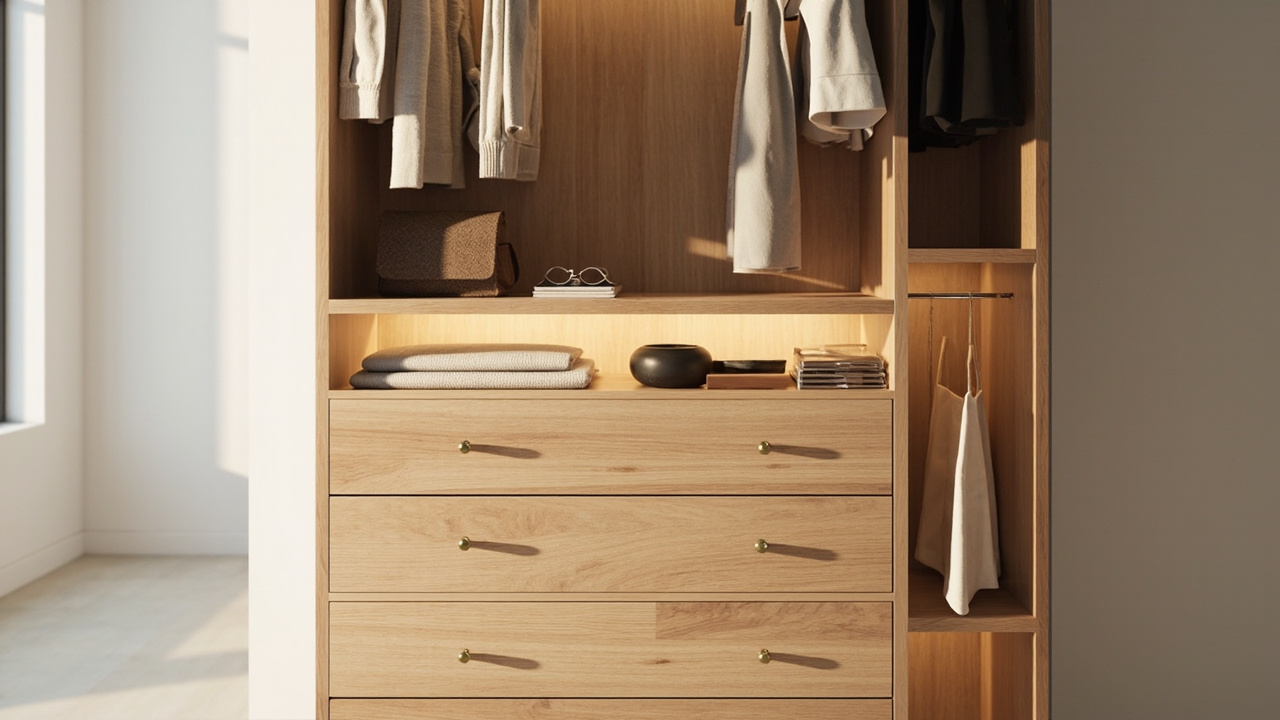
For walk-ins with 4-9 ft ceilings, the Aheaplus 4-9Ft Closet System is the mid-range pick at $169.98 — adjustable wood with 4 drawers + 4 hanging rods + garment tower. Replaces separate dresser + rod + shelf combination, saving ~50% floor space. See our wire-cube-vs-wood-closet-system guide for the modular vs wire cube comparison.
Velvet hangers (50-pack)
A rod upgrade changes everything. The Utopia Home Premium Velvet Hangers 50-pack replaces plastic at a 2:1 ratio — 50 velvet take the same space as 100 plastic. Velvet grips silk/satin; black hides lint.
Wide 3-tier shoe rack
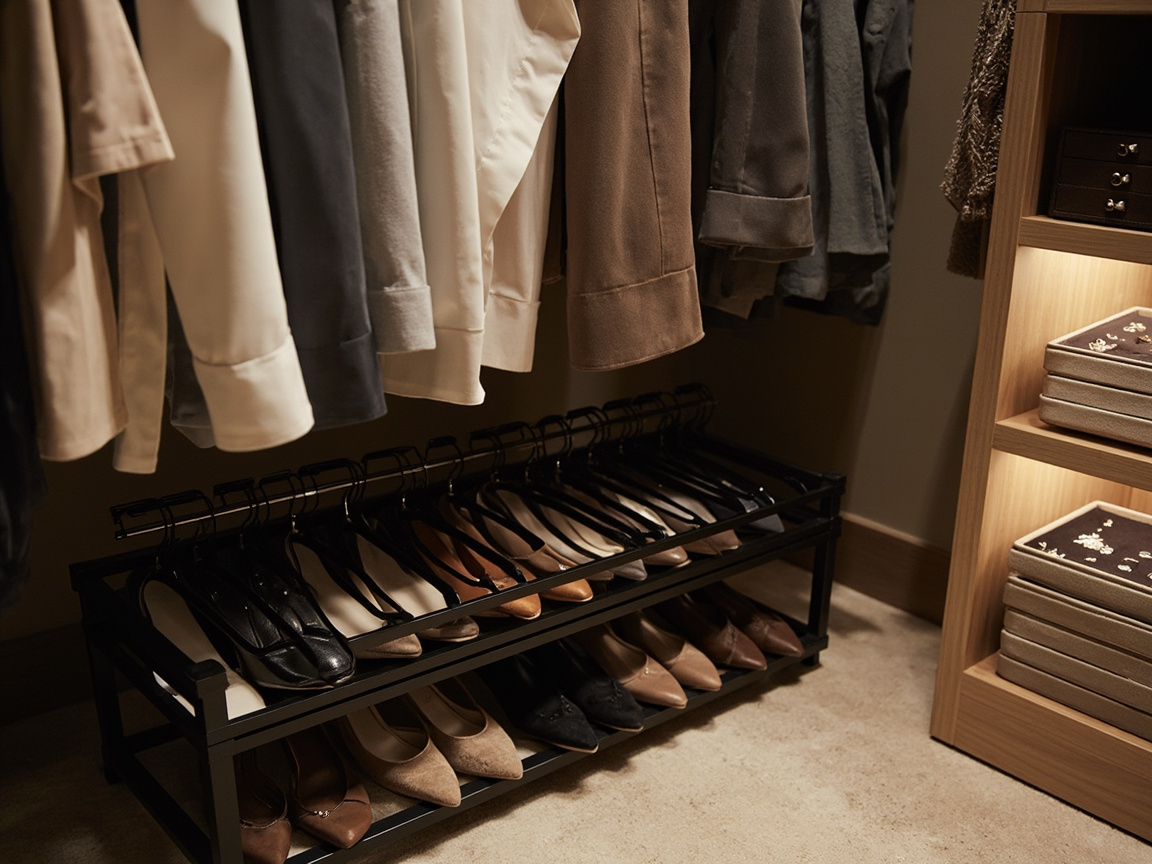
The KEETDY 3-Tier Long Wide Shoe Rack holds 16-20 pairs on a 36-inch footprint. Wider than standard 3-tier racks (12 pairs), making it the best match for walk-in dimensions.
Stackable jewelry drawer trays
The Frebeauty Stackable Velvet Jewelry Trays 9-piece fits system tower drawer inserts or a standalone shelf. Velvet lining protects rings and earrings.
Double closet hanging rod
The STORAGE MANIAC Double Closet Hanging Rod 2-pack hangs from the existing rod, creating a second rod below. Doubles hanging capacity without drilling.
The 5-Step Method
Order matters. Declutter first, then organize.
Step 1: Declutter with the 4-quadrant system
Apply the declutter-fast 4-quadrant system — Trash, Donate, Keep, Relocate. Walk-ins are special because Keep is largest. Add a 5th zone: Sell. Designer, streetwear, and branded items often fund new storage products — check Poshmark or eBay before donating. The KonMari spark-joy filter is a useful tiebreaker.
Step 2: Define zones
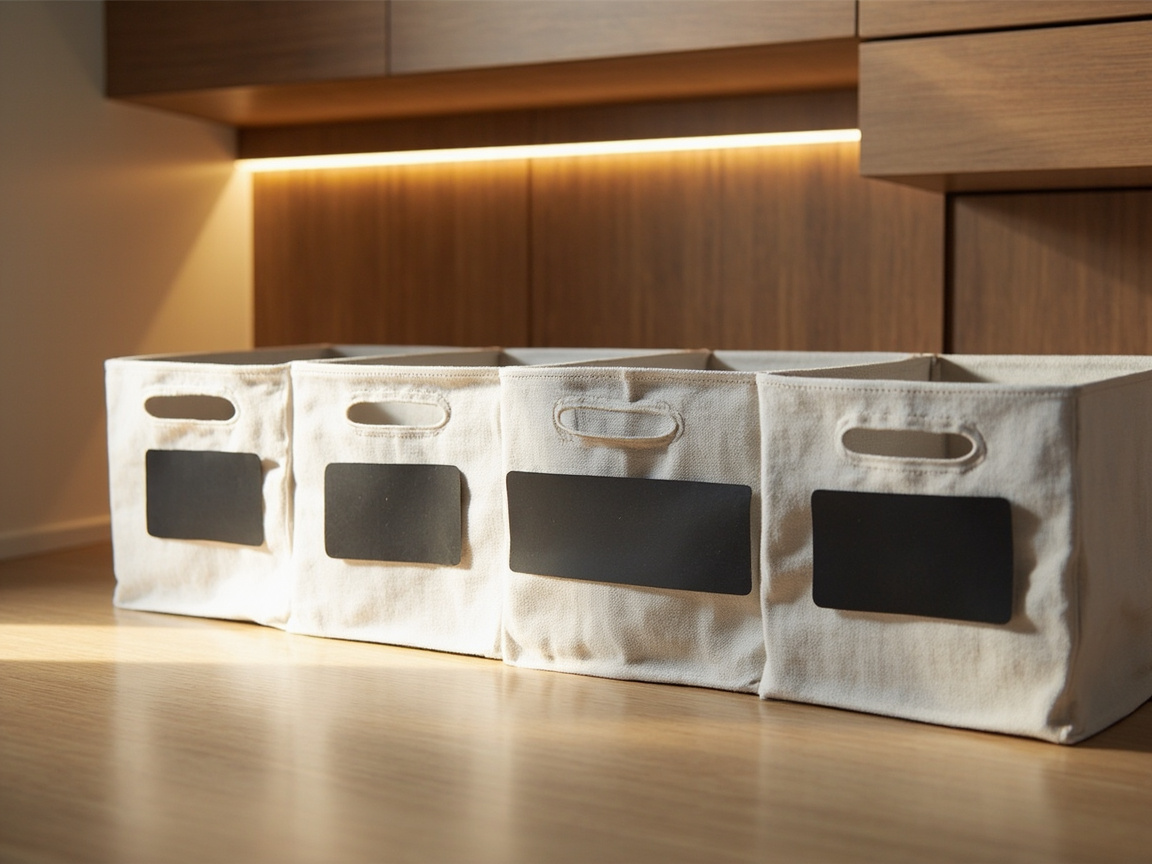
Five zones maximize walk-in storage: hanging (long + short), folded (drawers or shelves), shoes (rack or shelf), accessories (jewelry / belts / scarves), overflow (off-season + linens). Mark each zone with chalkboard labels. For off-season overflow, move it to under-bed storage.
Step 3: Install the system
Two paths: a modular system like the Aheaplus 4-9 ft — adjustable wood tower with drawers; or keep the existing rod + add a double-rod + add shelving separately — cheaper, less uniform look. See our wire-cube-vs-wood-closet-system guide.
Step 4: Place items by zone
Long-hang (dresses, coats) on the back wall. Short-hang (shirts, pants) below — use a double closet rod to double vertical space. Shoes on the KEETDY 3-tier rack along the floor. Folded in system drawers. Jewelry on the velvet tray stack in the tower.
Step 5: Schedule maintenance
Two rituals: the 5-minute weekly reset (clear floor, return items to zone) and the seasonal swap — twice a year, rotate winter/summer to overflow storage. Our bedroom-declutter-checklist covers the swap in detail.
Layout by Closet Size
The differentiator most competitor guides skip: size-specific layouts.
Small (5x5 to 5x7) — single-rod + corner shelf
Single rod on the longest wall + corner floor-to-ceiling shelf tower + small shoe rack on the opposite wall. Skip the double-rod (too cramped for 5 ft width). See our small-bedroom-organization guide for the broader strategy. Storage priority: hanging 60% + folded 30% + shoes 10%.
Mid (6x8 to 7x9) — U-shape with double-rod
Hanging rod on two longer walls (perpendicular to the door) + double-rod on the back wall + shoe rack along one side. The sweet spot for most walk-ins. Double-rod on the back wall doubles hanging capacity. Add an accessory tower if depth allows.
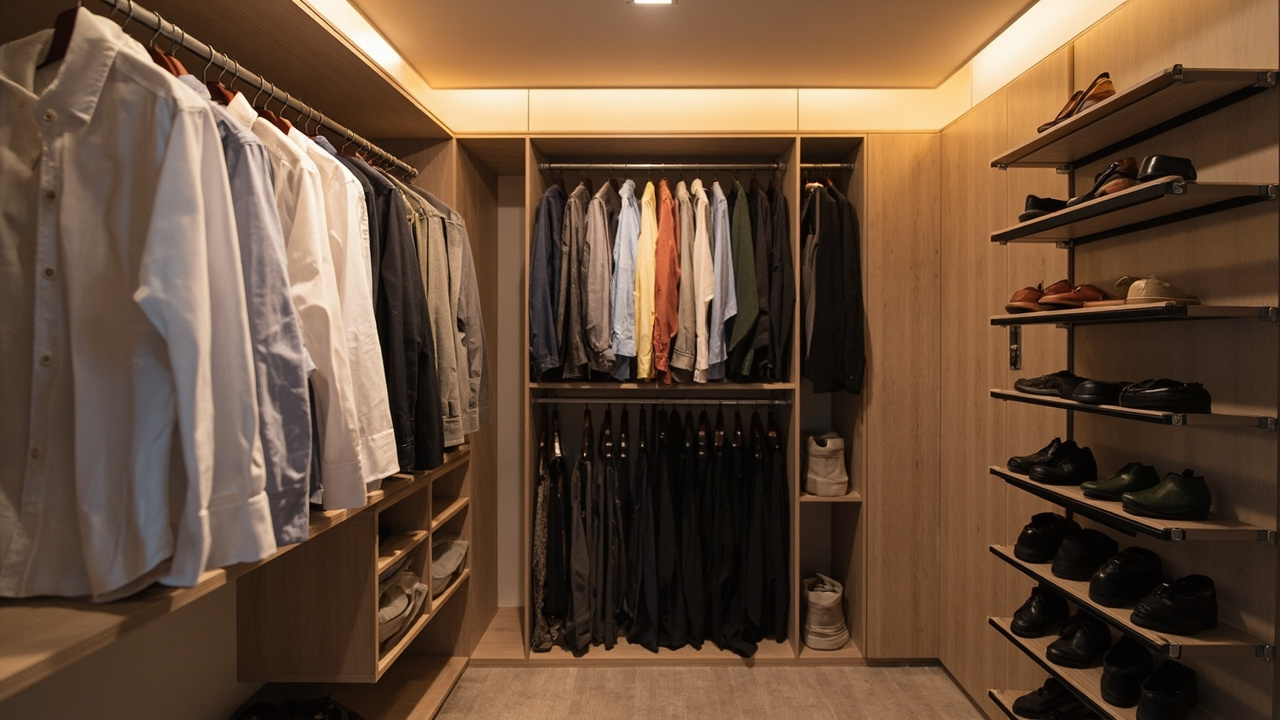
Large (8x10+) — U-shape + center island
Full U-shape (rods on 3 walls) + center island with drawers + bench seating on one side of the door. The island unlocks folded-garment storage + accessory tray space + seating. Our wire-cube-vs-wood-closet-system guide covers system options.
Constraint Guide by Scenario
Four scenarios cover most walk-in constraints.
Renting (no drilling, no permanent install)
If renting, skip wall-mounted rods. Use freestanding modular units like the Aheaplus + tall leaning shelves. The Aheaplus stands on its own base and is removable in 30 minutes when the lease ends.
Budget under $300
If budget is under $300, skip the modular wood system. Buy only: velvet hangers ($17) + double rod ($30) + shoe rack ($32) + jewelry tray ($30) + labels (~$10). Total ~$119. Four products in four zones beats 12 that fight for space.
Existing system already installed (refresh, not replace)
If a system is already installed, keep the rods + add drawer inserts + velvet hangers + double rod + shoe rack. Refresh cost ~$80-150 — a fraction of replacement. See hooks-racks-vertical-storage guide for adding wall hooks.
Shared closet with a partner
If sharing, each person needs a labeled half. Use chalkboard labels on each rod section and drawer row. One partner’s overflow becomes the other’s hidden clutter zone.
Common Mistakes
Five failure patterns in nearly every walk-in that returns to chaos:
-
Buying the system before decluttering. Classic Pinterest fail. Spend $500 on a wood system, then realize 60% is donate/sell. Fix: 4-quadrant first, then measure zones. See declutter-fast.
-
Skipping the seasonal swap. Walk-ins return to chaos at seasonal change — winter coats stay when summer dresses arrive. Fix: swap twice a year, same dates as daylight saving.
-
Wrong rod height. Standard 60-66 inch rod forces dresses to drag. Fix: 70 inches for adults, 55 for kids. Higher rods double long-hang space.
-
All-hang-no-fold. Hanging knits and tees stretches fabric and consumes rod space. Fix: t-shirts + sweaters + jeans go in folded drawers; only dresses, coats, pants-shorts on hangers.
-
Skipping zones for accessories. Without zones, accessories migrate to dresser tops. Fix: velvet tray stack in the tower + wall hooks for bags.
Maintenance: The 6-Month Hold
Three rules for the 6-month hold.
- Weekly 5-minute reset — clear the floor, scan for donation candidates, return items to zone.
- Quarterly 30-minute deep review — re-evaluate each zone. Donate items not used in 3 months.
- Twice-yearly seasonal swap — rotate winter/summer; off-season goes to under-bed storage.
Without the reset, walk-ins return to chaos in 3-4 weeks; with it, the system holds 6+ months.
For closet context, see the closet hub and wire-cube-vs-wood-closet-system for system comparison. For bedroom context, see bedroom hub, under-bed storage, and small-bedroom-organization. For the seasonal swap, see bedroom-declutter-checklist. For ambiguous Keep/Donate, see KonMari method.