Most hanger guides start with product picks. This one starts with a question: what’s hanging in your closet right now? If you’ve got a mix of wire, plastic, and mismatched leftovers from the dry cleaner, you’re wasting rod space and slowly damaging your clothes. The fix isn’t buying 100 of the same hanger — it’s understanding which hanger type fits each garment.
This guide walks through 5 factors that actually matter — Material, Weight Capacity, Space Efficiency, Garment Type, and Durability — then matches each factor to specific closet situations. If you’re also reorganizing your entire closet, pair this with our walk-in closet organization guide or small closet organization guide for the full system.
Why Hanger Choice Matters
Space Efficiency Impact
The wrong hangers waste 30 to 50% of your closet rod space. Standard plastic hangers run about 0.5 inches wide per unit. Velvet slimline hangers measure roughly 0.2 inches — that’s 50% slimmer. On a 48-inch rod, switching from plastic to velvet frees up space for 60 to 80 additional garments without adding a single inch of rod.
Cascading hangers go further: they stack 5 garments vertically in one slot, effectively doubling your vertical capacity. For small closets where every inch counts, this is the fastest way to gain breathing room. Our reach-in closet organization guide covers this in detail.
Garment Damage Prevention
Wire hangers from the dry cleaner aren’t designed for long-term storage. They stretch shoulders out of shape, leave permanent dimples in knitwear, and corrode over time. The narrow contact point concentrates weight on a half-inch strip of fabric — fine for a few days, destructive over months.
Wrong hanger width also distorts structured garments. A suit jacket on a 16-inch plastic hanger will develop shoulder bumps because the hanger is too narrow to support the jacket’s natural shoulder line. Wooden hangers with a wide contoured bar distribute weight across the full shoulder, preventing distortion.
Delicate fabrics — silk, chiffon, fine knits — snag on rough plastic edges and exposed metal clips. Padded satin hangers solve this with a soft, smooth surface.
The 5-Factor Framework
Factor 1 — Material
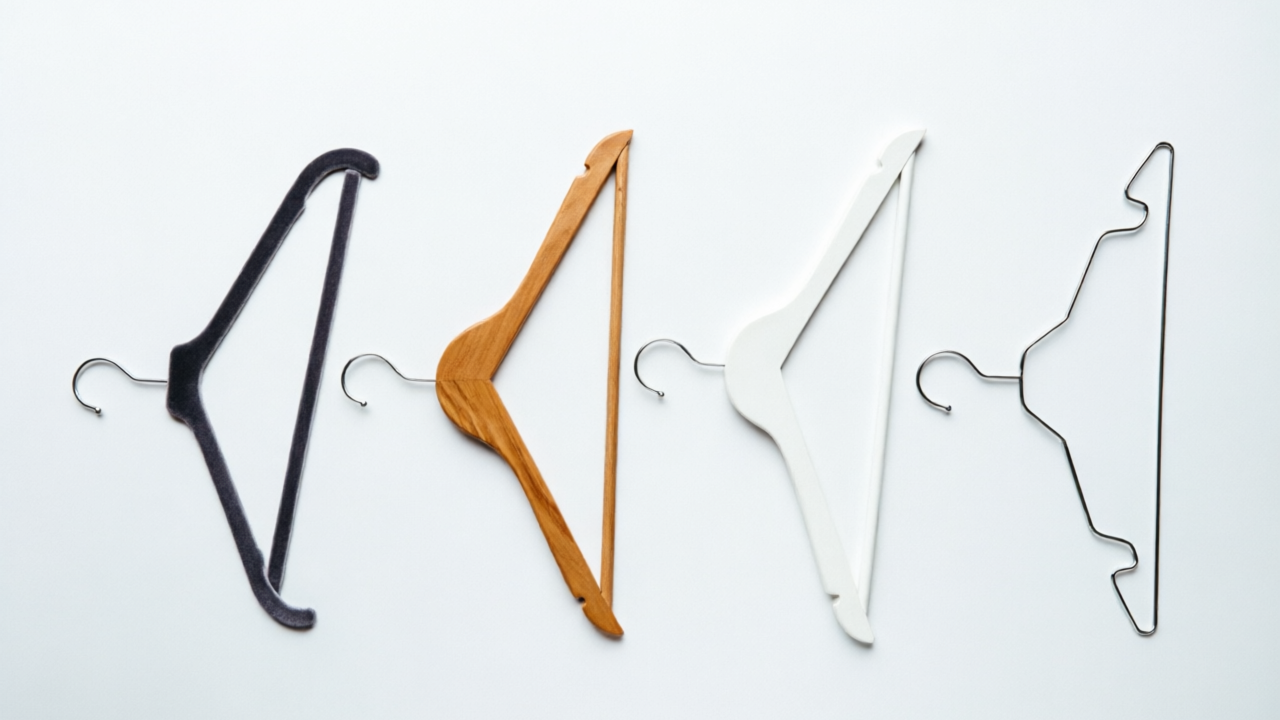
Material drives cost, grip, and lifespan. Here’s how the four main options stack up:
Velvet — non-slip surface that grips slippery fabrics (silk, satin, polyester). Slim profile at about 0.2 inches wide. Won’t stretch shoulders. Drawback: the velvet coating can shed onto light-colored fabrics after 3+ years. Best everyday choice for most closets.
The Utopia Home Velvet Hangers (100-pack) at $31.99 give you enough to standardize a full wardrobe at roughly $0.32 per unit. The shoulder notches hold strappy tops and dresses in place.
Wood — heavy-duty, wide shoulder bar, premium look. Won’t bend or warp under heavy loads. Drawback: bulky (about 1.5 to 2 inches wide), so you can’t fit as many per rod. Best for coats, suits, and structured jackets.
The Utopia Home Wooden Hangers (30-pack) at $27.99 handle winter coats and blazers without bending. The non-slip shoulder bar keeps garments centered.
Plastic — budget-friendly, lightweight, available in tube or flat profiles. Tube hangers are sturdier; flat hangers are slimmer. Drawback: can become brittle and snap under heavy items after 2 to 3 years. Fine for everyday shirts and lightweight items.
The Amazon Basics Space Saving Plastic Hangers at $17.81 are the go-to budget pick — sturdy enough for daily use without the velvet price tag.
Wire — avoid for permanent storage. Wire hangers stretch shoulders, leave marks on knits, and corrode. Keep them only for transporting dry cleaning, then transfer garments to proper hangers within a day or two.
Factor 2 — Weight Capacity
Match the hanger’s load rating to your heaviest garment. Here’s the general breakdown:
- Lightweight (under 1 lb): t-shirts, blouses, dress shirts, lightweight dresses → velvet or plastic
- Medium (1 to 3 lbs): blazers, cardigans, medium jackets, jeans → velvet or wood
- Heavy (3+ lbs): winter coats, heavy suits, leather jackets → wood only
Velvet hangers handle up to about 5 pounds per hanger without issue. Beyond that, the internal wire can bend. Wooden hangers support 10+ pounds easily — a heavy wool overcoat won’t phase them.
Check the manufacturer’s weight rating on the packaging. If it doesn’t list one, assume velvet tops out at 5 pounds and wood at 10+.
Factor 3 — Space Efficiency
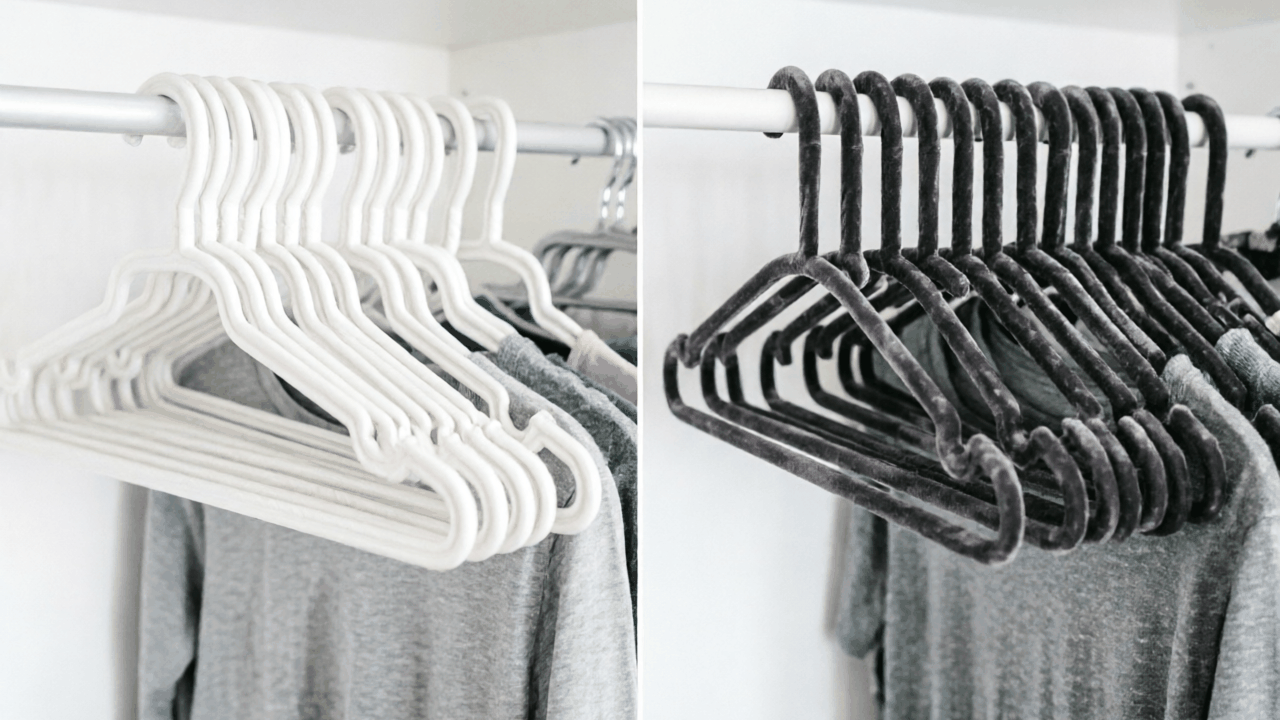
This is where hanger choice affects your daily routine most. The math:
- Standard plastic: ~0.5 inches per hanger
- Velvet slimline: ~0.2 inches per hanger (50% savings)
- Cascading: 5 garments in 1 vertical slot (5x capacity per rod position)
- Wooden: ~1.5 inches per hanger (least efficient for rod density)
To calculate how many hangers your rod holds: divide rod length (inches) by hanger width. A 48-inch rod fits roughly 96 standard plastic hangers, 240 velvet slimlines, or only 32 wooden hangers.
Cascading hangers multiply this further. The HOUSE DAY Cascading Hangers (10-pack) at $9.48 let you hang 5 garments vertically from a single rod hook — that’s 50 garments in the space of 10 standard hangers.
Factor 4 — Garment Type
Different garments need different hanger features. Match the hanger to the clothing:
- Shirts and blouses: velvet slimline with shoulder notches for straps
- Pants and jeans: clip hangers or tier organizers
- Coats and suits: wooden with wide contoured shoulder bar
- Delicates (silk, fine knits): padded satin hangers to prevent snags
- Children’s: sized-down 11-inch hangers (standard 16-inch hangers distort kids’ clothing)
For pants, the NORTHERN BROTHERS Pants Hangers with Clips (20-pack) at $18.84 offer adjustable clips that grip waistbands without creasing. For heavier pants storage, the Magic Pants Tier Hangers (2-pack) at $19.98 stack 5 tiers per hanger, holding 10 pairs of pants in two vertical columns.
For delicate fabrics, the Amber Home Satin Padded Hangers (10-pack) at $24.99 provide a soft padded surface that prevents silk and fine knits from snagging on rough plastic or exposed metal.
Factor 5 — Durability
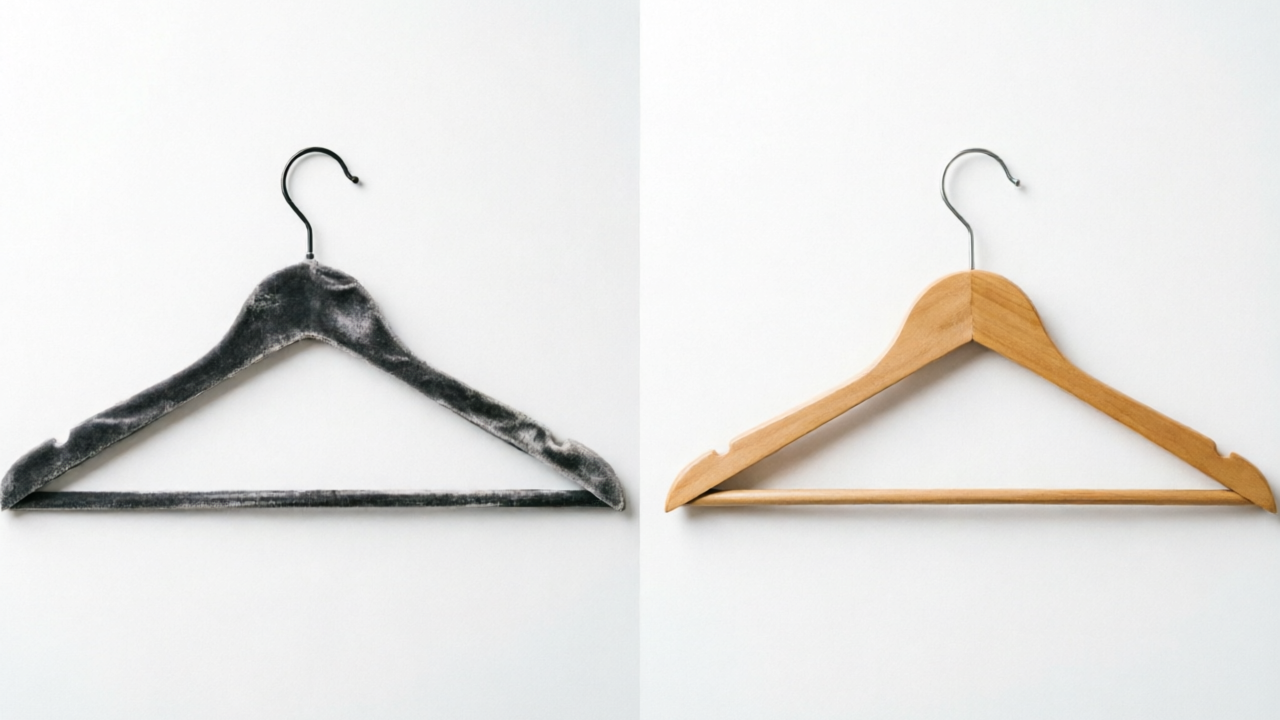
Hangers aren’t a one-time purchase. Plan for replacement cycles:
- Velvet: 3 to 5 years. The velvet nap flattens over time, but the non-slip function usually remains. Premium brands (like Utopia Home) last longer than ultra-cheap alternatives.
- Wood: 10+ years. Wooden hangers are a lifetime investment — the only failure mode is the metal hook loosening, which is repairable.
- Plastic: 2 to 3 years. Budget plastic becomes brittle and snaps at stress points (shoulder joints, hook base). Thicker tube-style plastic lasts longer than thin flat hangers.
Cost-per-year analysis: a $0.32 velvet hanger lasting 4 years costs $0.08/year. A $0.93 wooden hanger lasting 10 years costs $0.09/year. Nearly identical per-year cost, but wood handles heavier loads.
Hanger Types Compared
Velvet vs Plastic
The most common question in closet organization. Quick comparison:
| Feature | Velvet | Plastic |
|---|---|---|
| Width per hanger | ~0.2 inches | ~0.5 inches |
| Non-slip | Yes | No — garments slide off |
| Cost per unit | ~$0.32 | ~$0.25 |
| Lifespan | 3-5 years | 2-3 years |
| Best for | Everyday clothes, slippery fabrics | Budget setups, light items |
Velvet wins on space savings and grip. Plastic wins on upfront cost. Most people who switch to velvet don’t go back — the 50% space savings alone justifies the higher price.
Wood vs Velvet
These aren’t competitors — they’re complements. Use wood for the 10 to 20% of your wardrobe that’s heavy (coats, suits, structured jackets) and velvet for the remaining 80% (shirts, dresses, everyday items). This hybrid approach gives you maximum rod density where you need it and heavy-duty support where garments demand it.
Cascading Hangers
Cascading hangers solve one specific problem: too many lightweight garments, not enough rod. They work best for pants, skirts, scarves, and camisoles. Each tier holds one garment, and the vertical drop means 5 garments occupy the horizontal space of one standard hanger.
The limitation is weight. A fully loaded 5-tier cascading hanger carries 5 to 7 pounds — well within normal rod capacity, but check your closet rod’s bracket strength if you’re loading dozens of these.
Room-by-Room Recommendations
Primary Closet
A well-organized primary closet uses a mix:
- 80% velvet slimline — shirts, blouses, dresses, lightweight jackets
- 15% wooden — coats, suits, blazers with structure
- 5% specialty — clip hangers for pants, tier organizers for bulk storage
Standardize hangers within each section. Mixed hanger types create visual clutter and uneven rod spacing — the closet looks messy even when it’s organized. For a full closet setup guide, see our walk-in closet organization guide.
Children’s Closet
Kids’ clothes need proportionally smaller hangers. Standard 16-inch adult hangers stretch the shoulders of children’s shirts and dresses. Use 11-inch hangers sized for toddlers through pre-teens.
The Utopia Home Kids Hangers (60-pack) at $13.99 provide enough for a full children’s wardrobe at roughly $0.23 per unit. Lower the closet rod to child height if possible — this builds independence in picking and putting away clothes.
Bedroom Closet
For bedroom closets that share space with dressers and storage bins, pair hanger choice with your dresser organization system and under-bed storage. Heavy items that don’t hang well (sweaters, jeans) live folded in drawers; lighter items that wrinkle easily stay on hangers. Our seasonal closet rotation guide walks through swapping winter and summer wardrobes.
Common Mistakes to Avoid
- Mixing hanger types — different widths and materials create uneven spacing and visual clutter. Standardize one type per section (velvet for everyday, wood for heavy items).
- Overloading cascading hangers — exceeding the weight rating bends hooks and damages rods. Stick to 5 lightweight items per cascading unit.
- Hanging heavy sweaters — knitwear stretches under its own weight on any hanger. Fold heavy sweaters in drawers instead.
- Keeping wire hangers — dry cleaner wire hangers distort shoulders and corrode. Transfer garments within 24 hours.
- Ignoring children’s hanger size — adult hangers stretch kids’ clothing out of shape. Use 11-inch hangers for children’s sizes.
Constraint Guide
- if you rent and can’t modify closet hardware → use cascading hangers and over-the-rod organizers that don’t require drilling. See our closet storage solutions guide for renter-friendly options.
- if your closet rod is short (under 36 inches) → prioritize velvet slimline hangers for maximum density. A 36-inch rod holds about 180 velvet hangers versus 72 standard plastic.
- if you store heavy coats and suits → invest in wooden hangers for those specific items. Don’t try to save money with plastic on coats — they’ll bend and damage the garments.
- if you have delicate fabrics (silk, chiffon) → use padded satin hangers. Metal clips and rough plastic edges snag fine weaves.
- if you’re organizing on a tight budget → start with the Amazon Basics plastic hangers for everyday items, then upgrade to velvet as budget allows. Mixed types are fine temporarily — just standardize within each closet section.
- if you’re choosing between closet systems → check our wire cube vs wood closet system comparison before buying hardware that determines hanger compatibility.
Budget Tiers: What to Expect at Each Price Point
Budget Tier (Under $0.30 per Hanger)
Budget hangers ($0.15 to $0.30 per unit) include basic plastic and entry-level velvet. They work for light-duty use but may snap under heavy loads after 1 to 2 years. The Amazon Basics plastic hangers are the strongest budget pick — they won’t win aesthetics awards but they hold up for daily shirts and light jackets.
Mid-Tier ($0.30 to $0.50 per Hanger)
Mid-tier hangers ($0.30 to $0.50 per unit) include quality velvet and basic wooden hangers. This is the sweet spot for most homes — you get non-slip surfaces, slim profiles, and 3 to 5 year lifespans. The Utopia Home velvet 100-pack at $0.32/unit and wooden 30-pack at $0.93/unit both sit in this range.
Premium Tier ($1.00+ per Hanger)
Premium hangers ($1.00+ per unit) include solid hardwood hangers with contoured shoulders, luxury padded satin hangers, and cedar hangers with moth-repellent properties. They last 10+ years and look premium in open closets. For most homes, premium is worth it only for visible display areas or heavy coat storage. If you’re considering cedar specifically, our closet storage solutions guide covers cedar hangers in detail.
How This Fits Your Full Closet System
Hangers are one piece of a complete closet system. Before buying, check your broader storage setup — the right hanger depends on your rod type, shelf configuration, and whether you’re using a wire cube or wood closet system. Our wire cube vs wood closet system comparison breaks down hardware compatibility.
For drawer-based storage alongside hanging space, pair this guide with our how to choose drawer organizers article. And if you’re starting from scratch with a cluttered closet, the KonMari method helps you declutter before investing in hangers — buying hangers for clothes you don’t need is wasted money.
Velvet vs Plastic vs Wood in Real Closets
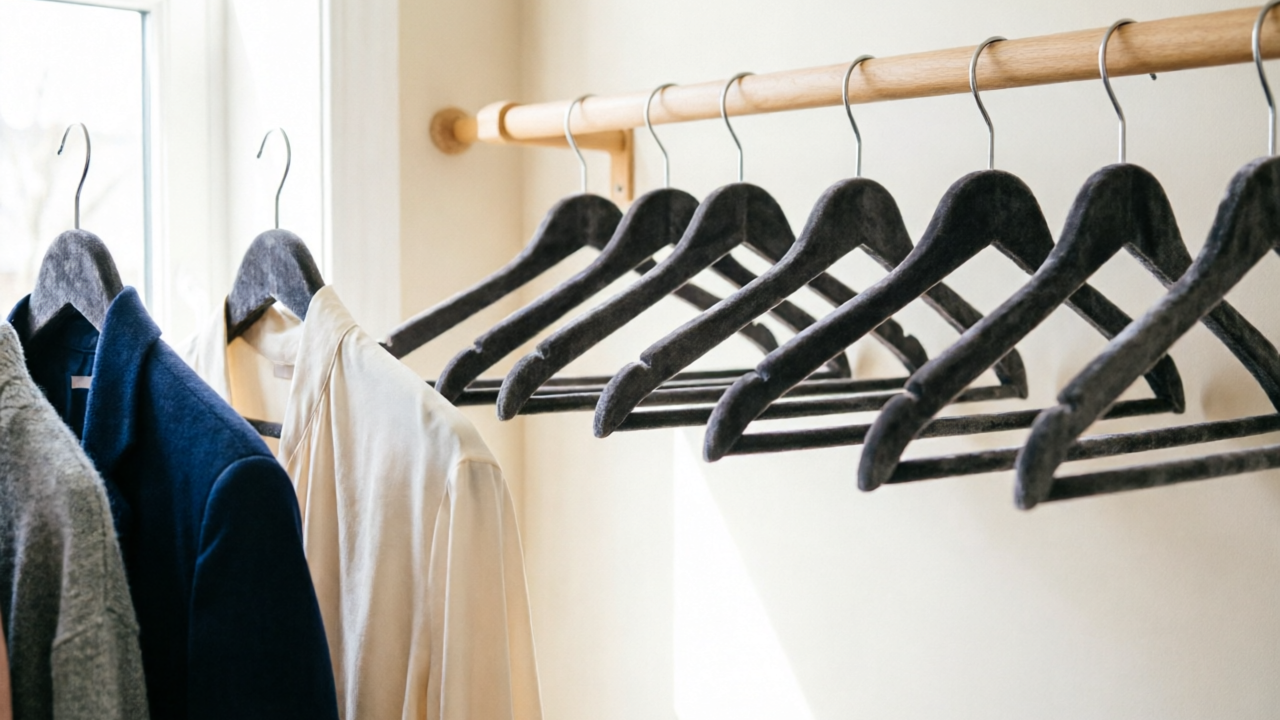
When every hanger type is in one closet, velvet wins density, wood wins heavy coats, and plastic wins budget bulk buys.
Cascading Hangers for Vertical Capacity
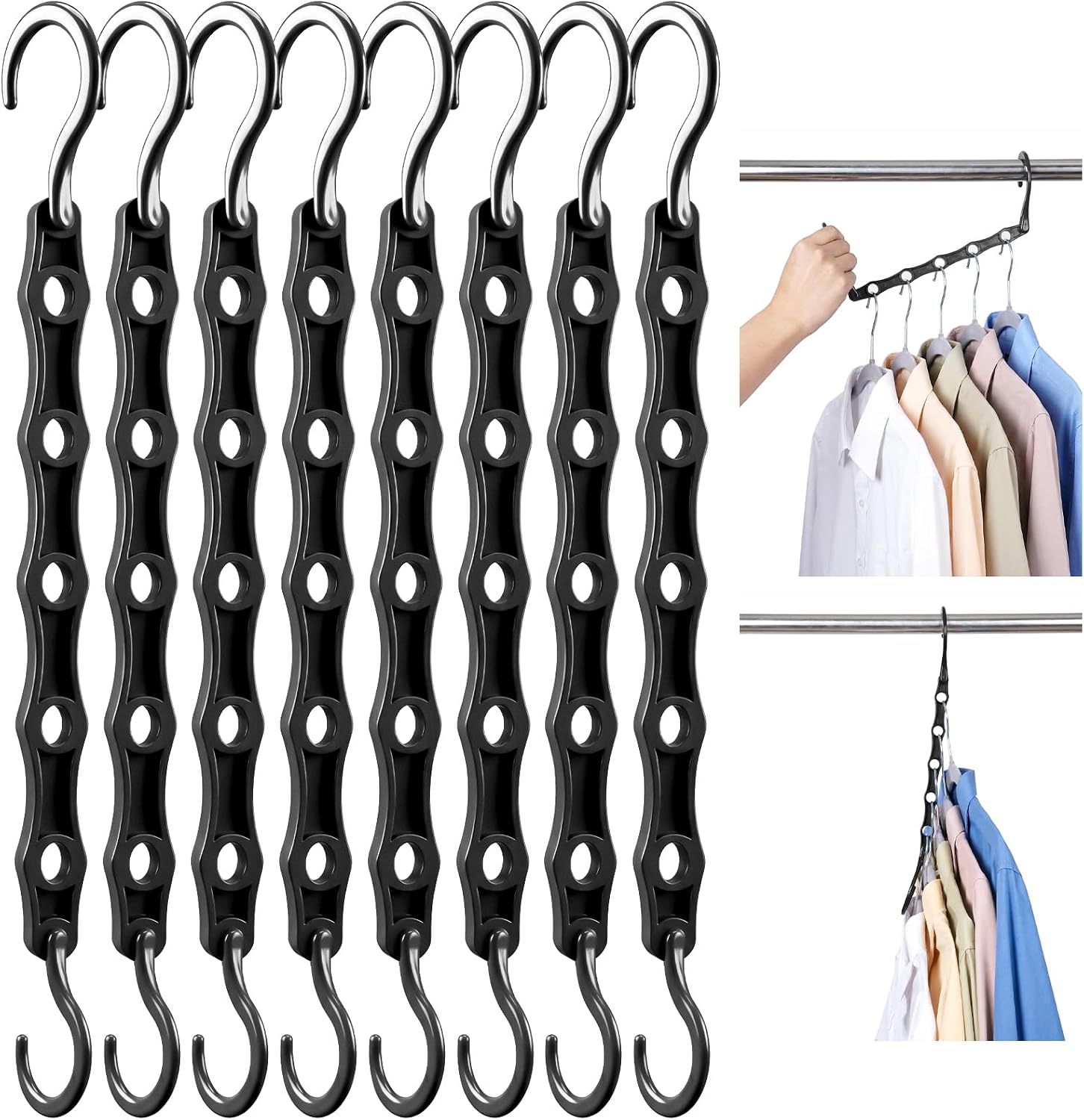
Use cascading hangers only for similar-weight items so the bottom pieces do not stretch.
Pants Clips Without Crease Marks
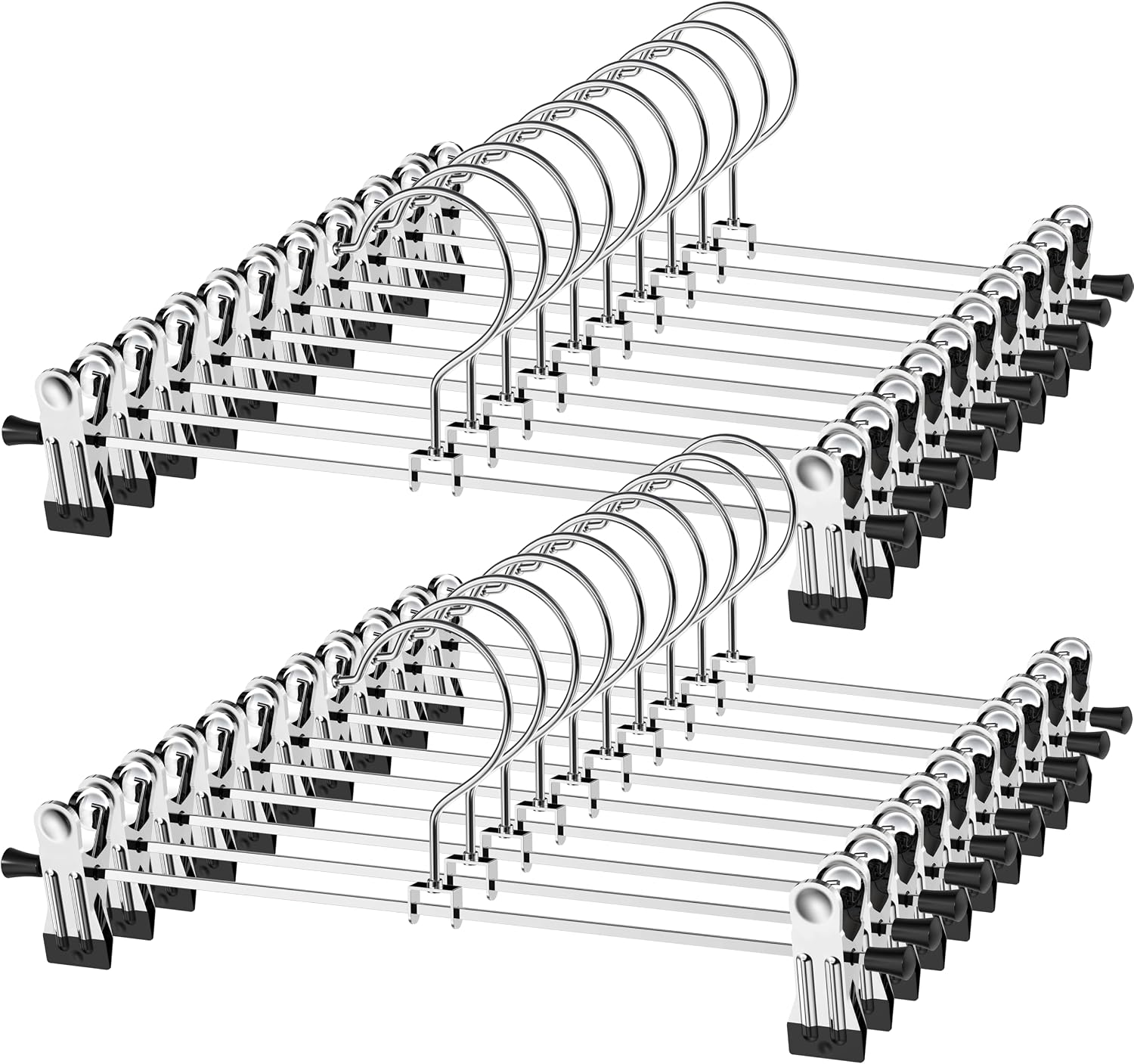
Clip hangers keep folds out of trousers better than folding over a bar hanger.