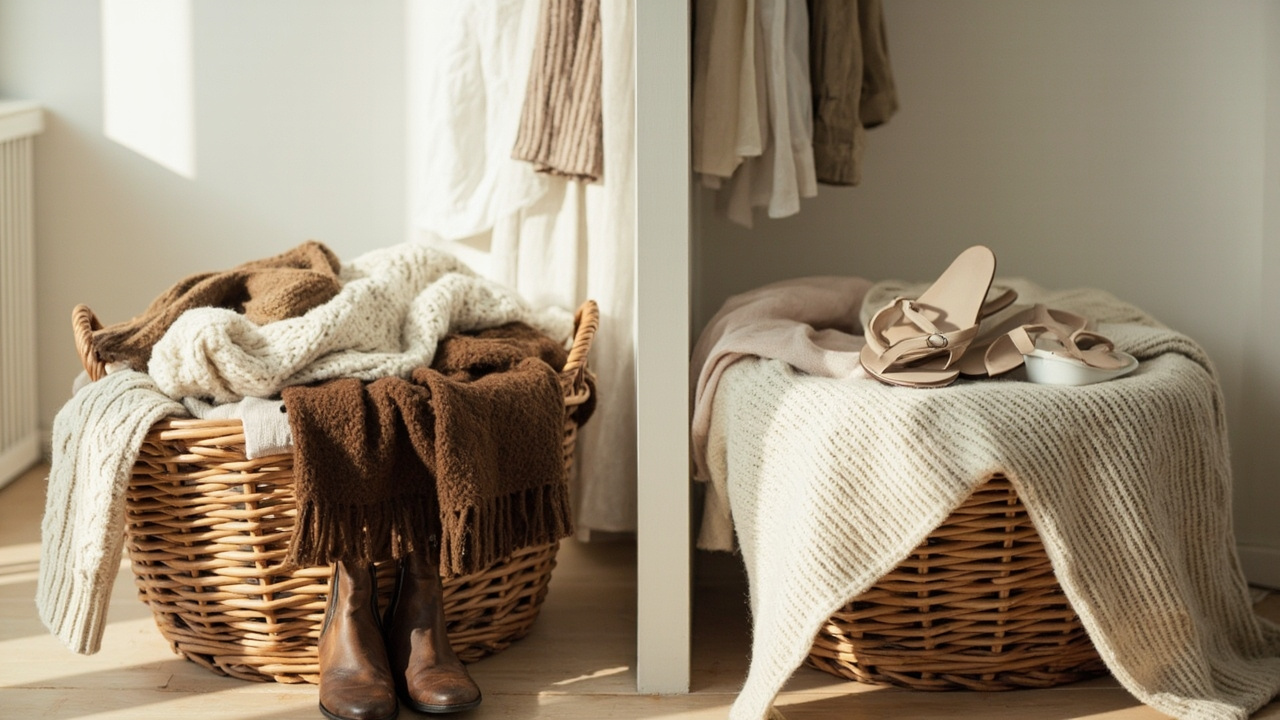
Seasonal closet rotation is the missing piece in most decluttering routines. Owners declutter their closet once, organize it well, then watch it slowly fill back up over 6 months as seasonal items accumulate without a scheduled swap-out. The fix isn’t more decluttering sessions — it’s a recurring twice-yearly rotation that moves out-of-season items out of the active closet.
This guide covers the 6-step rotation method + 4-season breakdown (winter / spring / summer / fall) + storage solutions by space type + a printable quarterly calendar. Sister articles: our bedroom-declutter-checklist covers the one-time 9-step reset that establishes the baseline; this article covers the recurring maintenance.
Why Seasonal Closets Deteriorate
Three forces stack against seasonal organization that don’t affect single-season decluttering.
6-month gap between events. Most owners forget the system between rotations. By the time the second rotation happens, the system has degraded beyond recognition. Set recurring calendar reminders on the daylight saving dates — once set, they self-perpetuate and the rotation never lapses by more than a week.
Garment-type confusion. Winter coats need different storage than summer linen. A single storage solution fails on one or the other. Bulky outerwear needs compression (vacuum bags); knits need breathable cotton bins; suits need hanging garment bags. Mixing storage methods damages garments — leather in plastic yellows, wool in airtight bins grows mildew, suits squashed in vacuum bags lose shape.
Volume mismatch. Winter wardrobe takes 3x the space of summer in most climates. A closet designed for one season can’t hold both at once — which is why the rotation itself (moving items OUT of the active closet) IS the system, not just organizing what’s left. Skipping the swap-out means cramming, which means wrinkled summer linen and damp winter coats sharing the same rod.
What You’ll Need
Three storage product categories cover 95% of seasonal rotation needs.
Vacuum storage bags
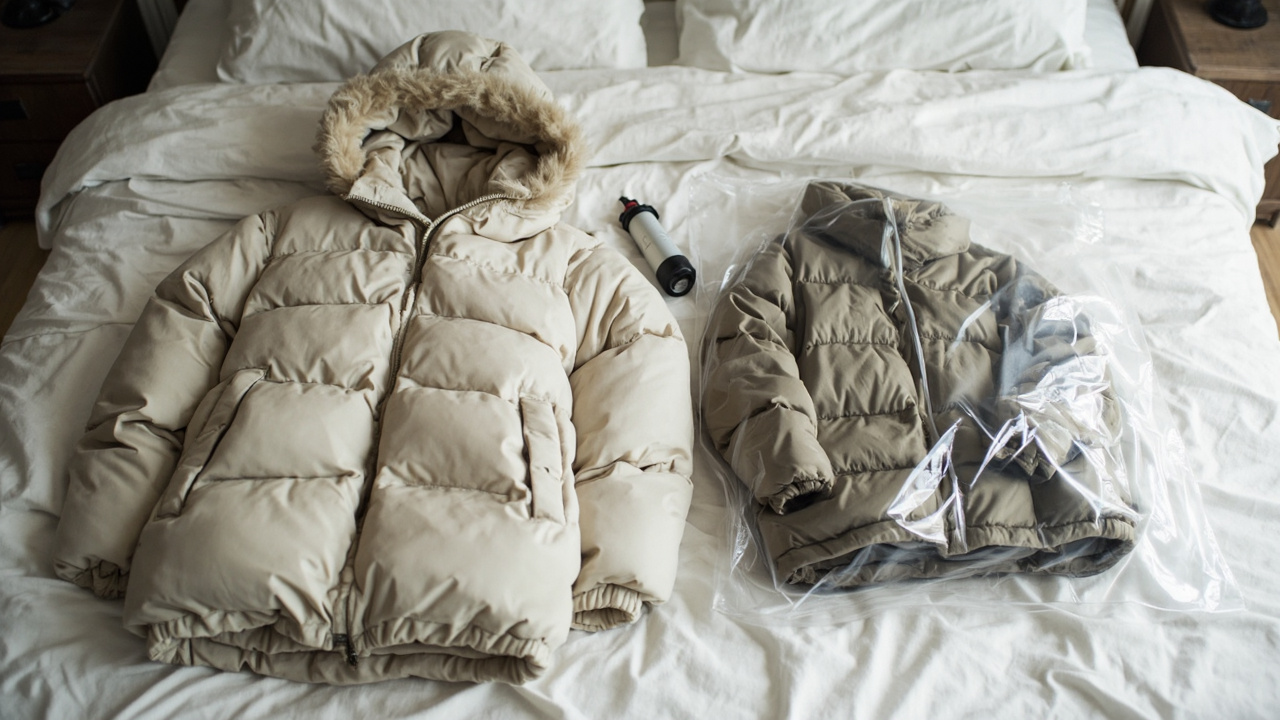
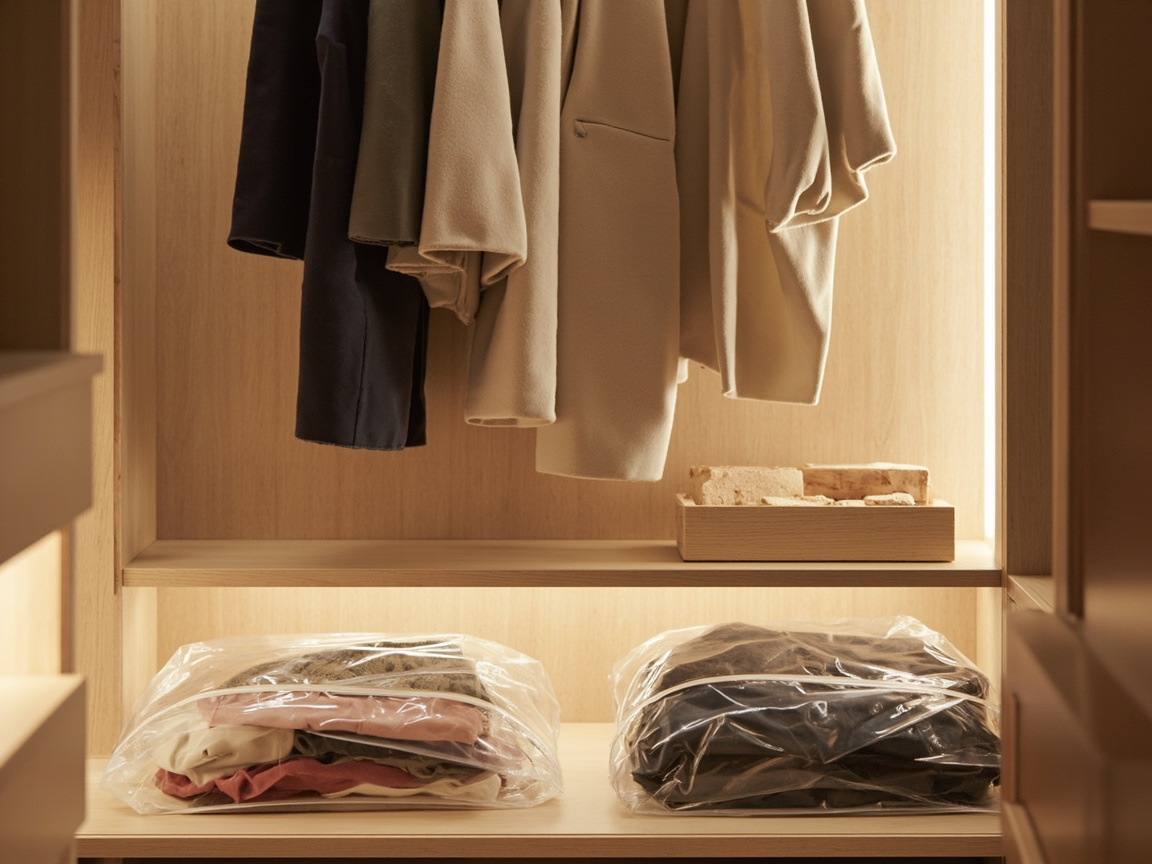
For bulky winter items — puffy coats, comforters, sweaters — the Cozy Essential 20-Combo Vacuum Storage Bags compress to 80% of original size, cutting a winter wardrobe to 1/3 the space. The 20-bag combo covers jackets + comforters + blankets + sweaters in a single $17.79 purchase. Hand pump included — no vacuum cleaner required.
Clear hanging garment bags
For items that should stay hanging — suits, dresses, coats — the LANDNEOO 6-Pack Clear Hanging Garment Bags are 40-inch clear bags with double-side zippers. Clear visibility lets you see what’s inside without opening. Breathable plastic prevents yellowing better than airtight plastic bins.
Cedar blocks for moth protection
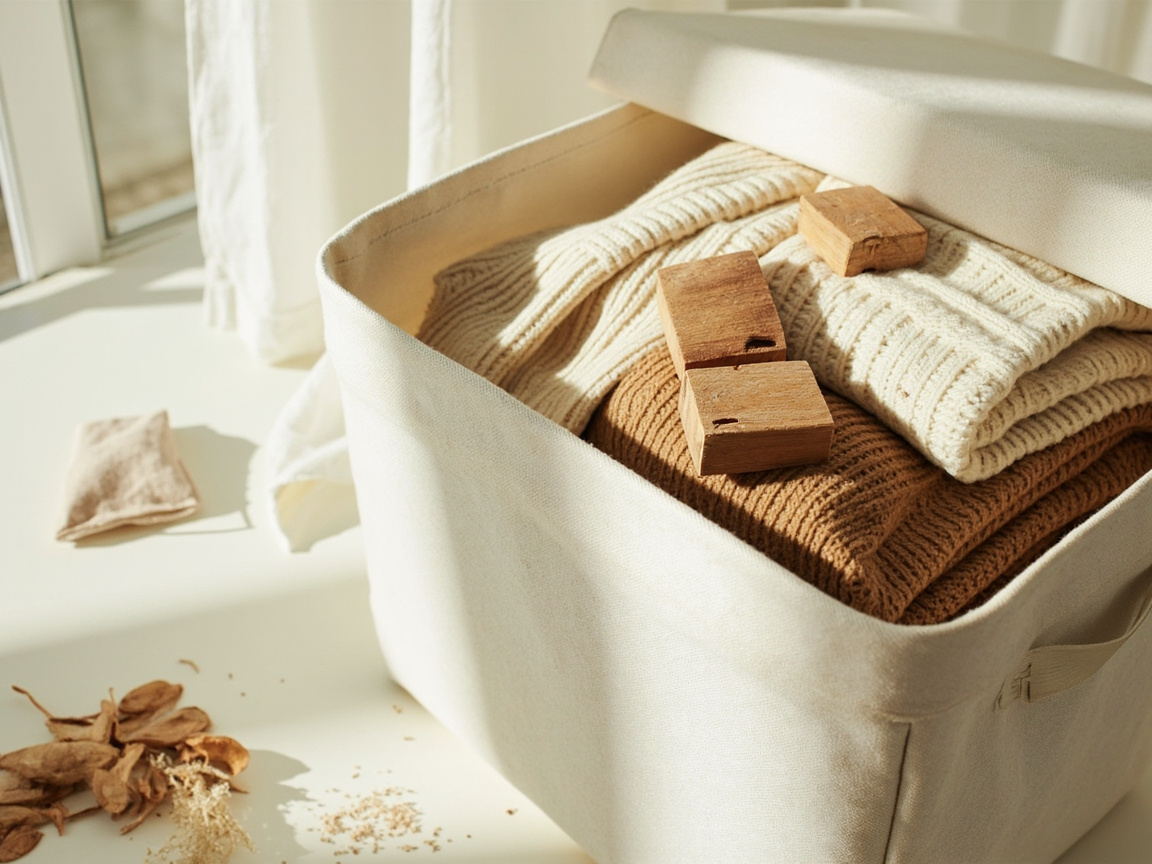
For moth-prone items — wool, silk, cashmere — the Woodever Cedar Blocks 56-piece set provides natural moth deterrence. Cedar naturally repels the #1 destroyer of stored natural fibers. Place 2-3 blocks per storage bin + sachets in drawers. Scent fades over 2-3 years — sand lightly to refresh or replace.
The 6-Step Rotation Method
Order matters — set the date, then triage, wash, sort, store, and reverse the process at the next rotation. Each step builds on the last and skipping any one reduces the system’s lifespan.
Step 1: Set the calendar date
Pick the 2 dates for the year: early March (winter → spring) and early November (summer → winter). These match daylight saving time boundaries. Set recurring calendar reminders 1 week before each date. The dates anchor the rotation; without them, the rotation drifts 2-4 weeks and eventually stops happening.
Step 2: Pre-wash triage
Apply the declutter-fast 4-quadrant system to the outgoing season’s clothes: Trash (stained/damaged) / Donate (unworn 12+ months) / Keep (return next season) / Relocate (belongs to another season’s category). The triage happens BEFORE washing — washing donated clothes wastes water and detergent.
Critical rule: every Keep item MUST be washed or dry-cleaned before storage. Body oils oxidize over months.
Step 3: Sort by garment type
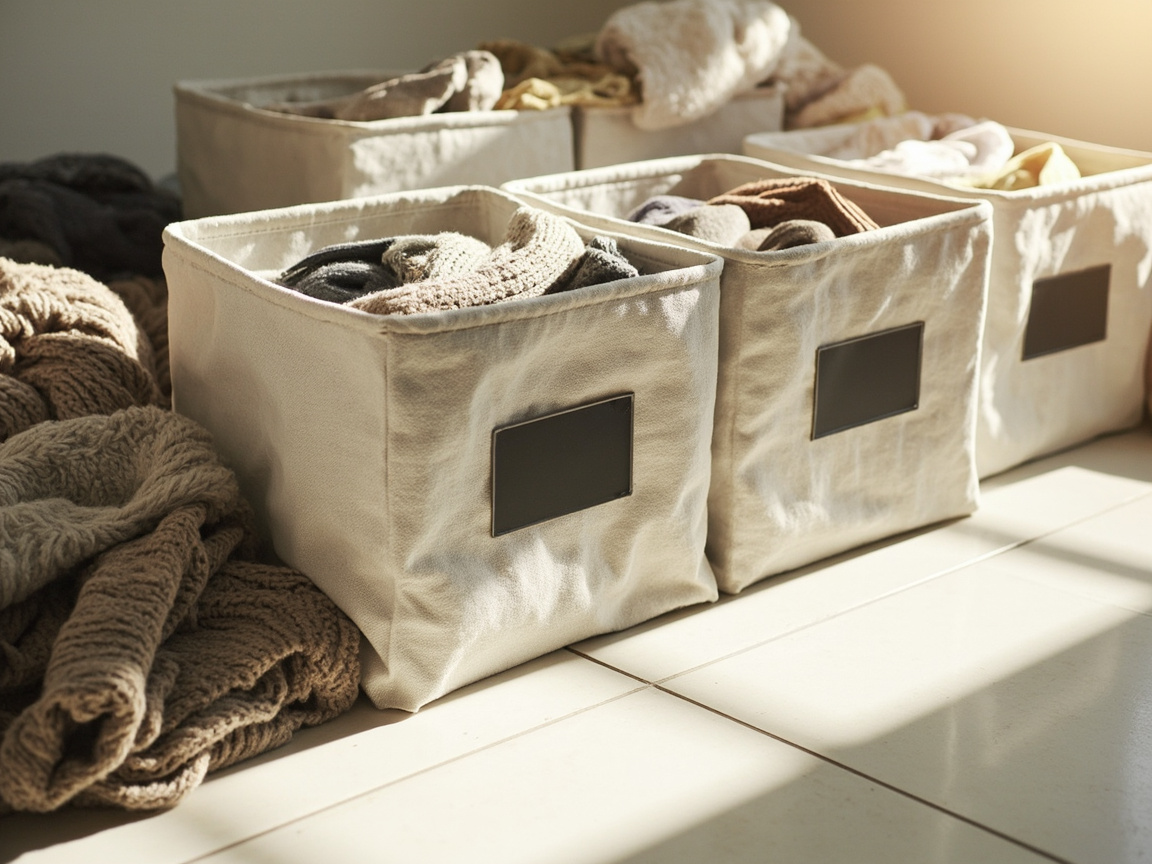
Sort the Keep pile into 4 storage streams: bulky outerwear (coats, puffy jackets) → vacuum bags; hanging items (suits, dresses) → clear garment bags; knits and sweaters → clean cotton bins with cedar; bedding/linens (comforters, duvets) → jumbo vacuum bags under bed. Sister cross-link: our under-bed storage guide for the under-bed storage stream.
Step 4: Choose storage location
Climate-controlled interior space is mandatory. Back-of-closet rod, under-bed, or interior closet are all acceptable. Avoid: garage (humidity + pests), basement (moisture + flooding risk), attic (heat degrades fabric). For apartments with no extra space, under-bed storage is the only safe option for bulky items.
Step 5: Pack and label
Pack each category with cedar blocks inside. Label every bin and bag with: (1) contents (e.g. “Winter Sweaters”), (2) season stored (e.g. “Stored Nov 2026”), (3) date for return (e.g. “Return Mar 2027”). Our how-to-label-anything guide covers reusable label systems.
Step 6: Reverse the process
2 weeks before the next rotation date, pull the stored items out. Air them for 24 hours (closets get musty over 6 months, even with cedar). Inspect each item for damage — moth holes, yellowing, stretched knits, musty smell. Re-apply the 4-quadrant triage: anything with damage gets donated or trashed; anything that didn’t get worn in the last cycle gets relocated to a deeper-storage bin or removed entirely. Sister cross-link: our KonMari method for the keep decision when uncertain.
4-Season Breakdown
The differentiator most competitor guides skip: all 4 seasons with storage specifics. WikiHow covers winter only. GoodHousekeeping splits by room. This guide covers all 4 seasons in one place.
Winter (stored in summer)
What’s stored: puffy coats, wool sweaters, thermal underwear, fleece, scarves, gloves, wool socks.
Storage: vacuum bags (compression to 1/3 size) + cedar blocks for moth protection + back-of-closet rod or under-bed. Avoid hanging wool (stretches on hangers).
Watch out: cedar needs to be replaced every 2-3 years (scent fades); plastic bags trap moisture and yellow natural fibers.
Spring (stored in winter)
What’s stored: ski gear, snow boots, heavy blankets, flannel sheets, winter coats (still in use until mid-March).
Storage: garage shelves (acceptable for ski gear) + under-bed for blankets + cedar for anything wool.
Watch out: ski boots need drying before storage (trapped moisture causes odor + bacteria).
Summer (stored in winter)
What’s stored: linen pants, sundresses, tank tops, sandals, swimwear, beach towels, light bedding.
Storage: clean cotton bins + cedar sachets (moths don’t bother linen, but cedar adds fresh scent) + under-bed or closet back-of-rod.
Watch out: leather sandals need breathable storage (cloth bag, never plastic).
Fall (stored in summer)
What’s stored: shorts, t-shirts, summer dresses, sandals, beach gear, light jackets.
Storage: cotton bins + under-bed or garage (acceptable for non-natural-fiber items).
Watch out: rain boots should be cleaned and dried before storage to prevent mold.
Storage Solutions by Space
Match storage to the space you have. Climate-controlled + pest-free + accessible = the 3 criteria.
Closet back-of-rod
Use the back 1/3 of the closet rod for hanging storage (clear garment bags for suits/dresses) and back-of-closet floor for bins (sweaters in cotton bins). The advantage: items are immediately accessible when rotation day arrives — no hauling from basement or garage. Sister cross-link: our walk-in closet organization guide covers the broader closet system.
Under-bed
Vacuum bags + jumbo bins fit perfectly under standard 7-inch bed clearance. Best for bulky items (comforters, blankets) that don’t fit in back-of-closet. Sister cross-link: our under-bed storage guide for the full bin-measurement guide.
Interior closet (no bedroom access)
Use hallway closet, linen closet, or guest-room closet for stored items. Climate-controlled + dark = ideal for natural fibers (wool, silk, cashmere). Label every bin clearly — hallway closets often house 2+ households’ worth of seasonal storage, and unlabeled bins become mystery boxes that never get opened.
Garage or basement (last resort only)
Acceptable only for non-natural-fiber items (ski jackets, snowboarding gear, beach towels) and never for wool, silk, cashmere, or leather. Humidity swings damage natural fibers within 1-2 seasons. If garage is the only option, use airtight plastic bins + replace every 2 years. Cedar blocks can’t fully compensate for 90°F summer heat or basement moisture.
Common Mistakes
Five failure patterns show up in nearly every seasonal rotation that fails.
-
Storing dirty clothes. The most damaging failure. Body oils + invisible stains oxidize over months and become permanent. A March stain that’s invisible becomes a yellow blotch by November. Fix: wash or dry-clean every Keep item before storage. See our declutter-fast method for the pre-wash triage.
-
Storing in plastic bins for natural fibers. Plastic traps moisture → yellowing + mold + mildew. Fix: use clean cotton bins or vacuum bags (not airtight plastic bins) for wool, silk, cashmere. For the visibility tradeoff, our clear vs opaque bins guide covers when each works.
-
Storing in garage, basement, or attic. Humidity + pests + temperature swings destroy garments over time. Even cedar blocks can’t fully protect against 90°F attic heat. Fix: climate-controlled interior space only. For broader closet planning, our walk-in closet organization guide covers the full system.
-
Forgetting cedar blocks or moth protection. Moths eat wool, silk, cashmere. By the time you see holes in March, the damage is done. Fix: 2-3 cedar blocks per storage bin + cedar sachets in drawers.
-
Skipping the calendar date. Without recurring reminders, the rotation drifts and eventually stops. Fix: set 2 recurring calendar reminders on daylight saving dates (early March + early November). Each rotation takes 2-4 hours; the calendar nudge is the difference between system survival and decay.
Maintenance: The Twice-Yearly Calendar
The 5-minute setup that prevents the 6-month drift.
- Set 2 recurring calendar reminders (early March + early November) on your phone or work calendar.
- Each reminder fires 1 week before the rotation date with a 2-4 hour time block reserved.
- On rotation day, run through the 6-step method in sequence: triage, wash, sort by type, choose location, pack, label.
- Mark off each bin in the calendar note (which seasons stored, which return date). Review the bin list at the next rotation — anything that didn’t return is a “toss or re-store” candidate.
- Sister cross-link: our bedroom-declutter-checklist covers the broader maintenance routine that runs alongside the rotation.

For closet context, see the closet hub and our walk-in closet organization guide and shoe organization closet guide for sister articles. The general maintenance routine lives in our bedroom-declutter-checklist; the 4-quadrant triage in declutter-fast. For ambiguous keep decisions, see KonMari method. For label systems, see how-to-label-anything. For under-bed overflow, see under-bed storage. For storage bin choices, see how-to-choose-storage-bins and clear vs opaque bins.