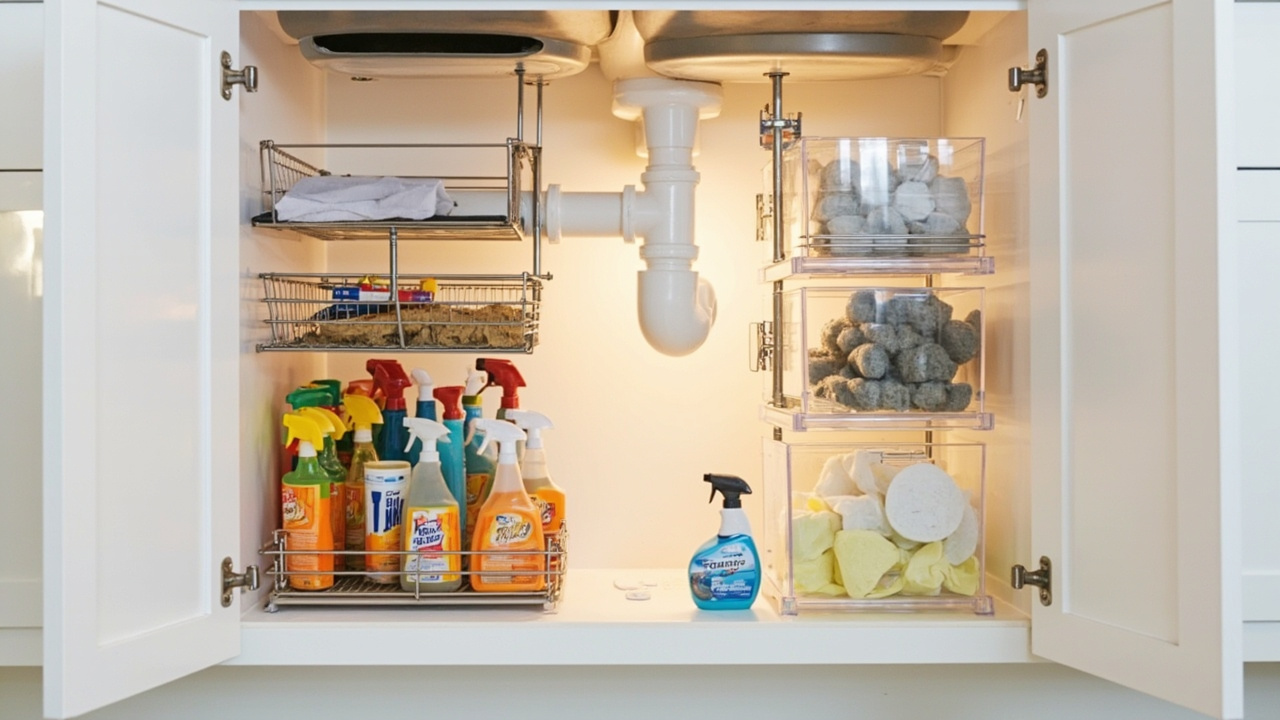
The kitchen under-sink cabinet is the most failure-prone space in any kitchen for 3 reasons: plumbing in the way (P-trap, supply lines, dishwasher connection, possibly garbage disposal take up 30-50% of usable space), leak risk (one slow drip can ruin cabinet floors), and hidden inventory (most people can’t see what’s behind the pipes, so they over-buy or duplicate cleaning supplies).
This guide covers the 4-zone pipe-aware system + the 4-category map + Layout by Plumbing Setup + constraint guide + 5 common mistakes + quarterly leak-check rhythm. Sister cross-links: kitchen-cabinet organization for upper/lower cabinets, bathroom-under-sink organization for the cross-room sister.
Why Under-Sink Cabinets Fail
Three forces — plumbing in the way, leak risk, hidden inventory — combine to overwhelm any under-sink cabinet.
The fix is the 4-zone pipe-aware system: design storage AROUND the plumbing, not against it. Add leak detectors as prevention — $35 saves $5000 in cabinet replacement. The leak detector is the unique differentiator vs bathroom-under-sink.
What You’ll Need
Four products cover all 4 zones + leak prevention — ~$103.
Pull-Out Drawers (Zone A — P-Trap Area)
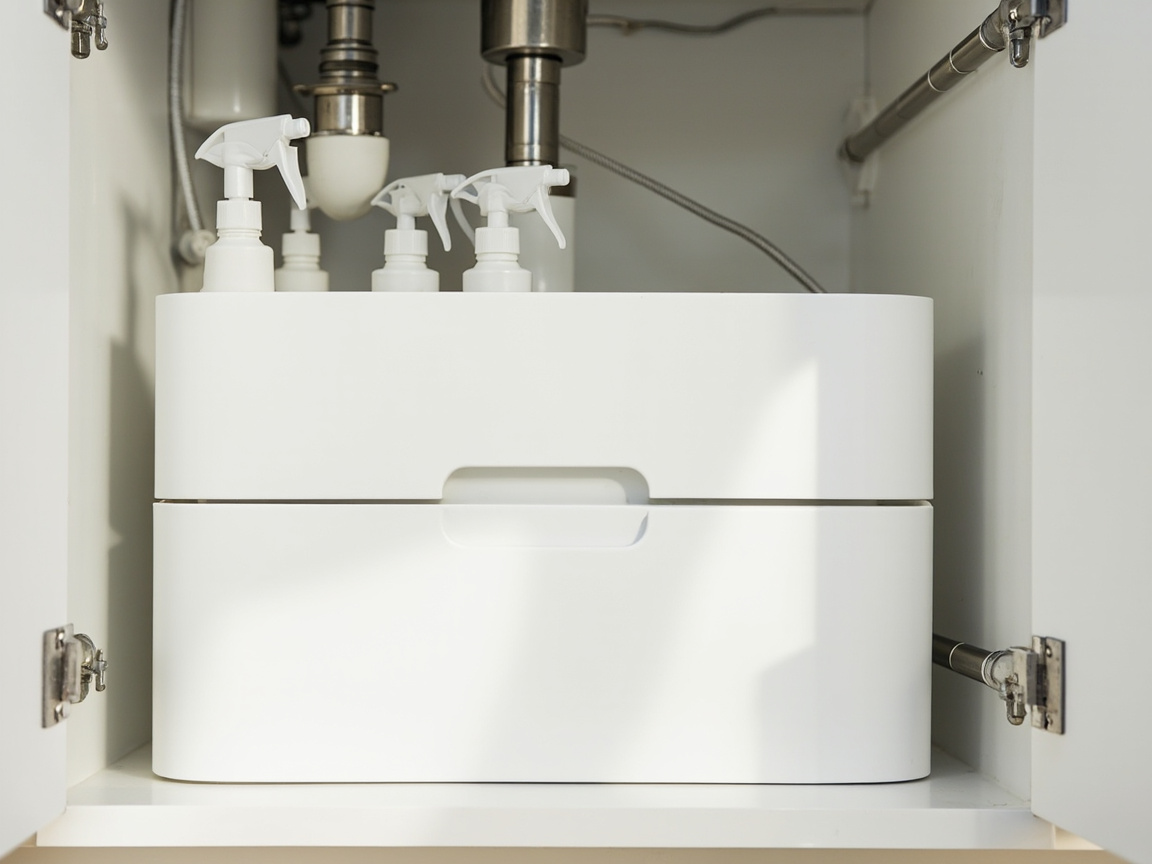
The Ukeetap Pull-Out Under-Sink Organizer 2-Pack — 12.8” slide-out drawers reveal back items. Fits standard cabinet. $14.99 for 2-pack.
Hanging Baskets (Zone B — Back Wall)
The HERCHR Hanging Basket Organizer 2-Pack — slide over shelf divider for vertical space. No drilling. $17.25 for 2-pack.
Clear Stackable Drawers (Zone C — Floor)
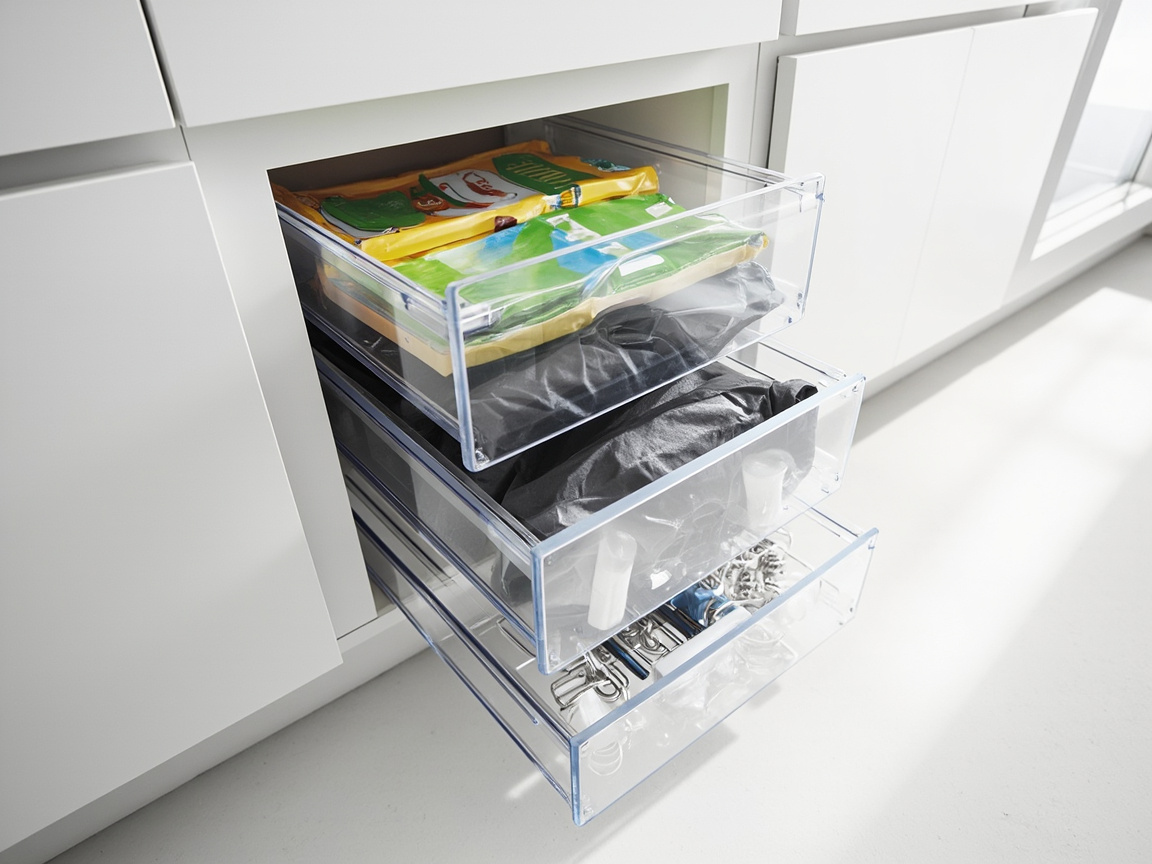
The Vtopmart 4-Pack Clear Stackable Drawers multiply vertical space 2-3 high. Clear acrylic for visibility. $34.99.
Leak Detector (Prevention — Unique Differentiator)
The METAK Water Leak Detectors 5-Pack — 100dB alarm catches drips before $5000 cabinet floods. $35.99.
The 5-Step Method
Order matters. Leak check first (prevention), then measure, then categorize, then map to zones.
Step 1: Empty + leak check
Pull EVERYTHING out. Inspect for water stains on floor or walls. Check supply line connections. Run water for 30 seconds, look under cabinet for drips. If drips found, call plumber before organizing. Install leak detectors at each plumbing connection. Apply declutter-fast 4-quadrant — most lose 30-40%.
Step 2: Identify your plumbing setup
Before placing anything, map your plumbing. Standard setup: P-trap (U-shaped) + 2 supply lines (hot + cold) + drain pipe. Allow 6” clearance around all. With dishwasher: dishwasher drain hose loops up high — leaves less vertical clearance. With garbage disposal: extra pipe + electrical outlet beneath = restricted back-of-cabinet space. Cross-link: the bathroom-under-sink system has similar P-trap focus but typically skips dishwasher + disposal.
Step 3: Apply the 4-category system
Sort the keep-pile into 4 categories: Cleaning Supplies (spray bottles, dish soap, scrub brushes), Trash & Recycling (extra trash bags, recycling bags, compostable bags), Dish Supplies (dishwasher pods, sponges, sink stoppers, drying rack), Tools & Spare (plumber’s tape, spare filters, paper towels for spills).
Step 4: Map categories to 4 zones
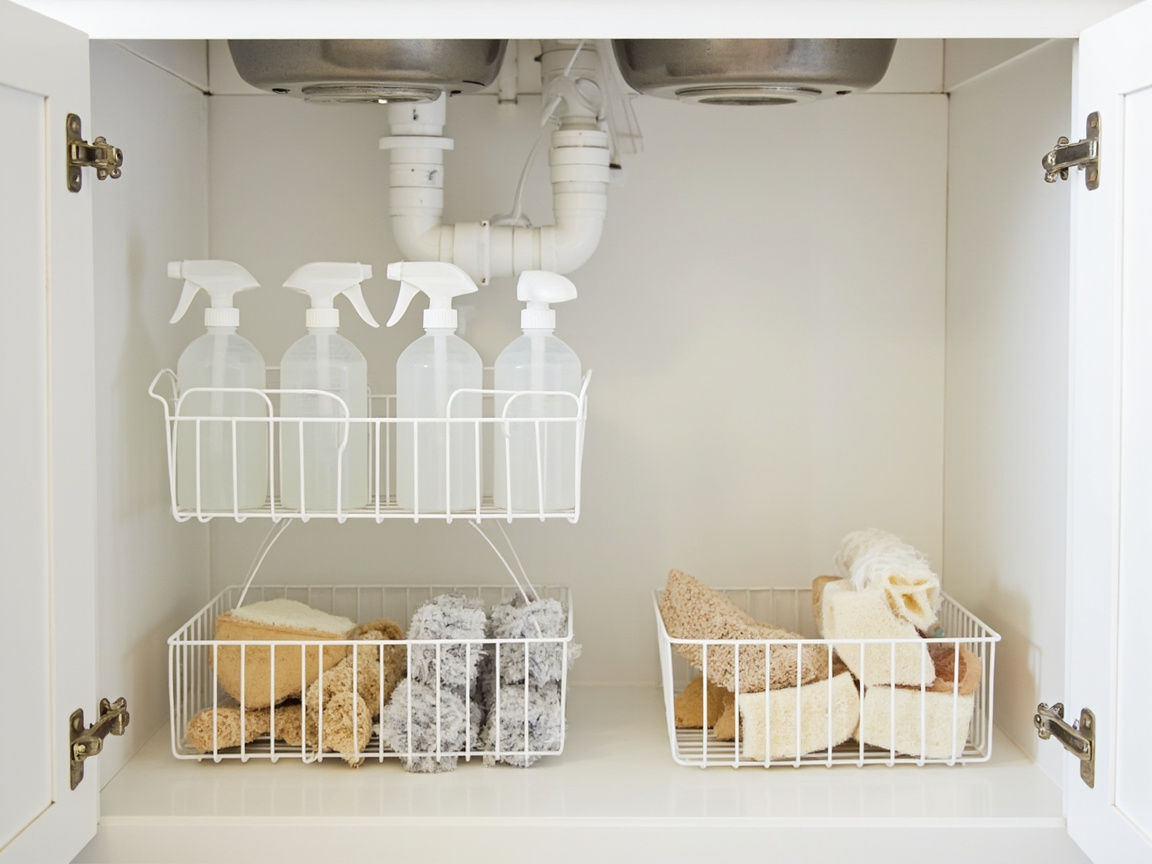
Place each category in the matching zone: Zone A (P-Trap Area) — KEEP CLEAR for emergency access. Light Tools & Spare only. Zone B (Back Wall, 6”+ clearance from pipes) — Cleaning Supplies via hanging baskets. Zone C (Floor, with stackable drawers) — Dish Supplies in stackable bins. Zone D (Door-Back) — Trash & Recycling; flat items fit better.
Step 5: Maintain + quarterly leak check
Every 3 months, run water for 60 seconds, look under cabinet for drips, test each leak detector. Replace batteries annually. Apply KonMari sparks-joy.
Layout by Plumbing Setup
The differentiator: plumbing-setup-specific layouts.
Standard P-Trap setup
Standard P-trap + 2 supply lines + drain. Pull-out drawers slide to left/right of P-trap. Hanging baskets attach to shelf divider. Skip storage within 4” of pipe threads.
With garbage disposal
Disposal adds bulky equipment at back-left (or back-right). Less back-wall space. Solution: shift Zone B (Back Wall) to side-wall (disposal-free side). Add hanging baskets on side-wall. Skip electrical outlet at back — keep clear for disposal plug.
With dishwasher
Dishwasher drain hose loops up HIGH (typically left). Blocks upper-back storage. Solution: only shorter items (12” or less) on dishwasher side. Use stackable bins on dishwasher-free side. Leave hose loop area completely clear.
Deep farmhouse sink
Wider + shorter under-cabinet (sink exposed front). Less vertical clearance (often 18” instead of 24”). Skip hanging baskets (no clearance). Rely on stackable drawers + pull-out. Pipe clearance zone wider.
Constraint Guide by Scenario
Four scenarios cover most under-sink constraints: renting, with garbage disposal, frequent leaks / old plumbing, and tight budget.
Renting / can’t drill
Drilling in rentals + under-sink cabinets leaves visible marks on deposit inspection. Solution: use hanging baskets (slide over shelf, no tools), stackable bins (drop-in), pull-out drawers (drop-in). Skip mounted organizers.
With garbage disposal
Disposal takes 30-40% of back-cabinet space. Reduce zones: Zone A expanded (P-trap area + disposal area = emergency access). Zone B (Back Wall) shifted to side-wall. Apply our kitchen-cabinet organization 4-zone logic to overall layout. Disposal electrical outlet must remain accessible.
Frequent leaks / old plumbing
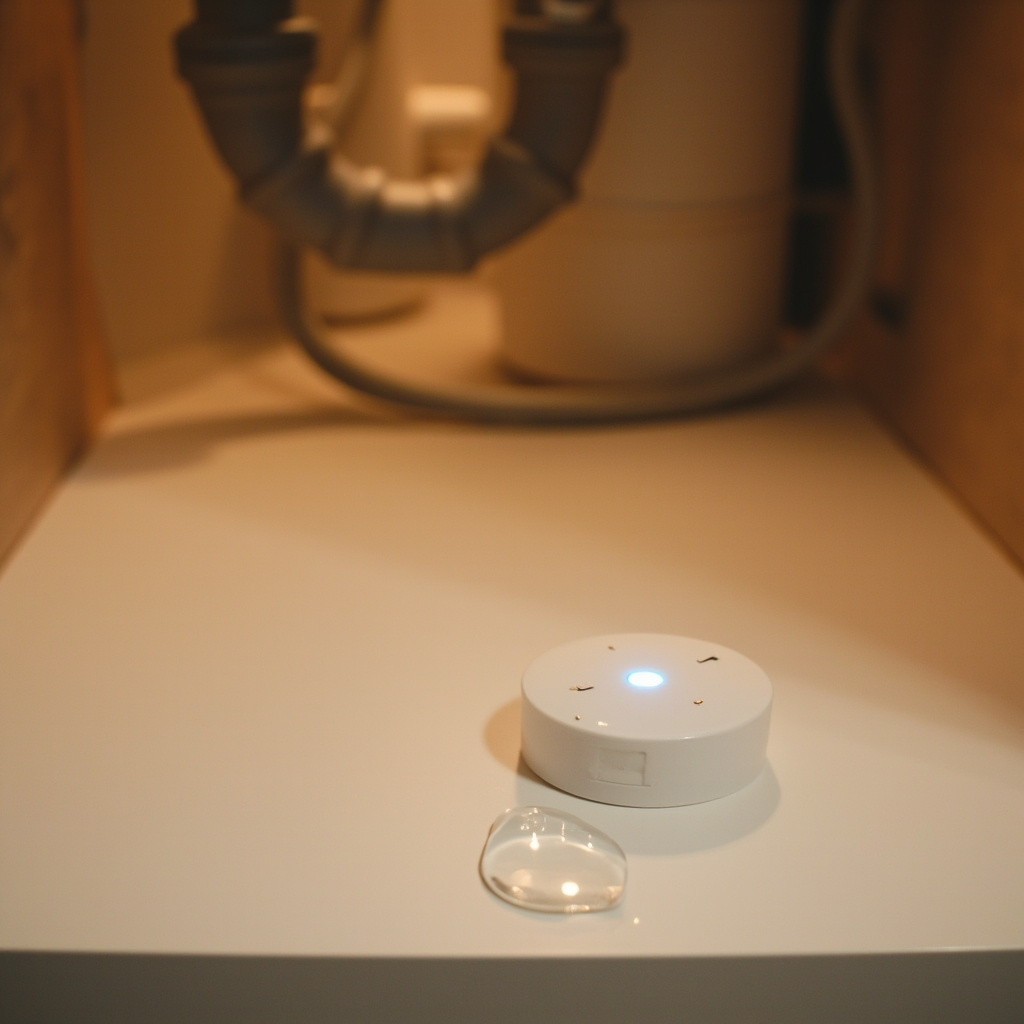
Older homes (pre-1990) often have galvanized pipes that develop slow leaks. Solution: install leak detectors AT EVERY PLUMBING CONNECTION (4-5 sensors for full coverage). Place items on stackable bins above floor level (off the cabinet floor in case of floor leak).
Tight budget under $30
Single most impactful product: pull-out drawers ($14.99 for 2-pack) gives 80% of the organization benefits. Skip the leak detector for now (add later if budget allows). Use shoeboxes as DIY stackable bins. Apply the declutter-fast method first.
Common Mistakes
Five failure patterns in nearly every kitchen under-sink that stays messy:
-
Storing food under the kitchen sink. Pet food, snacks. Fix: pipe leaks + cleaning chemicals = contamination risk. Move food to kitchen pantry or linen closet.
-
Not leaving pipe-clearance. Pushing bins right up against the P-trap. Fix: keep 6” minimum clearance around P-trap and supply line connections.
-
Storing liquids above electrical outlets. Dishwasher + garbage disposal outlets. Fix: never store liquids directly above electrical outlets.
-
Heavy items on the cabinet floor. Fix: use stackable bins to raise items OFF the floor.
-
Not having leak detectors. Fix: a $35 METAK 5-pack leak detector catches drips before they ruin the cabinet.
Maintenance: Quarterly Leak Check + Restock
Apply the 3-tier leak-prevention rhythm.
Monthly (5 min): Visual scan underneath cabinet for water stains.
Quarterly (15 min): Run water for 60 seconds, look under cabinet, check all 4-5 leak detectors — splash briefly to test.
Annually (45 min): Pull everything out, inspect supply line connections, replace batteries, deep clean walls. Apply KonMari sparks-joy.
For kitchen context, see the kitchen hub and our kitchen-cabinet organization for upper/lower cabinets, bathroom-under-sink organization for the cross-room sister, and kitchen pantry. The general method is declutter-fast; the joy-check is KonMari method. For product deep-dives, see storage bins and linen-closet-organization.
For kitchen context, see the kitchen hub and our kitchen-cabinet organization for upper/lower cabinets, kitchen pantry for food storage, bathroom-under-sink organization for the cross-room sister, and storage bins for product deep-dives.