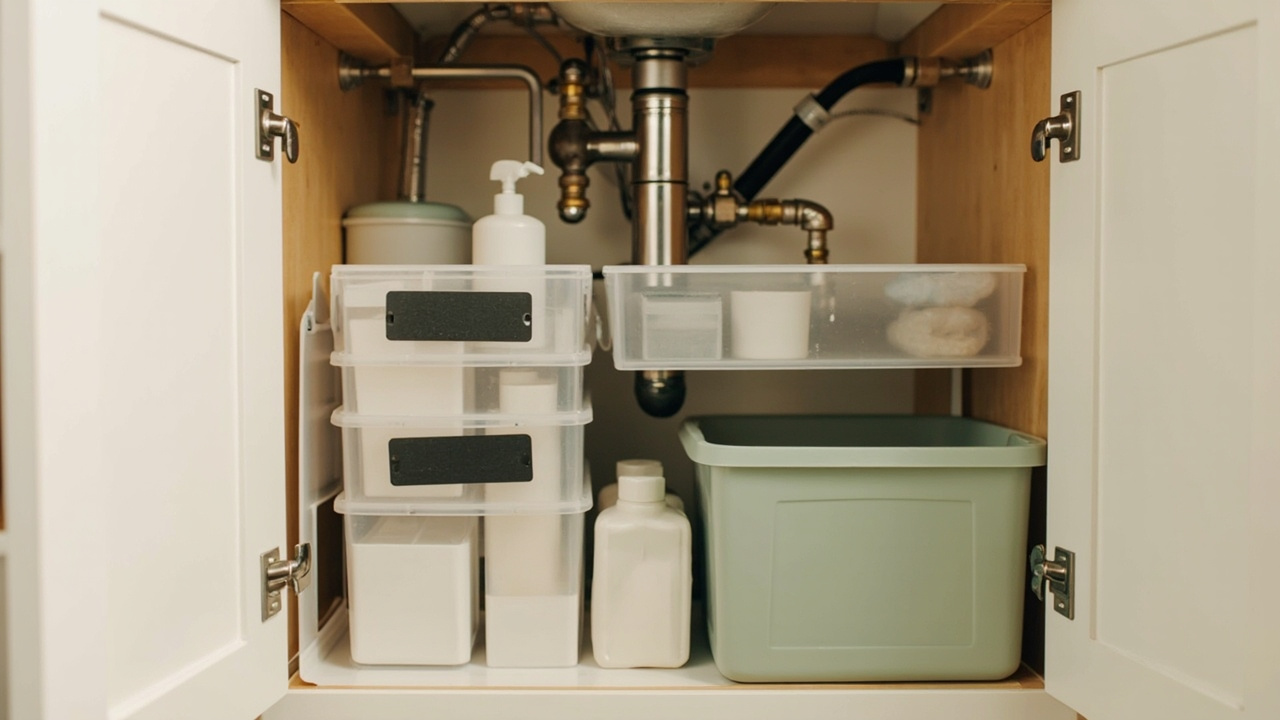
The under-sink cabinet is the most constrained storage zone in most bathrooms. Unlike walk-in closets (room to spread out), the under-sink has 4 pipes (P-trap, hot/cold supply, shut-off valves) eating 20-40% of usable space. Most owners default to shoving bottles on the cabinet floor and hoping the door stays closed.
This guide covers the 5-step method + 4 layout variants + pipe layout awareness + constraint guide + quarterly reset. Sister cross-link: the bathroom hub covers vanity + linen storage + shower caddies; this article focuses on the under-sink cabinet specifically.
Why Under-Sink Cabinets Get Messy
Three forces stack against under-sink organization:
Pipe constraints. 4 pipes reduce usable space by 20-40%. The P-trap alone takes a 6-10 inch vertical zone that no bin can occupy without height adjustment.
Moisture exposure. Humidity + occasional leaks damage paper products and corrode unprotected electronics. A slow leak can damage a cabinet floor in 6 months.
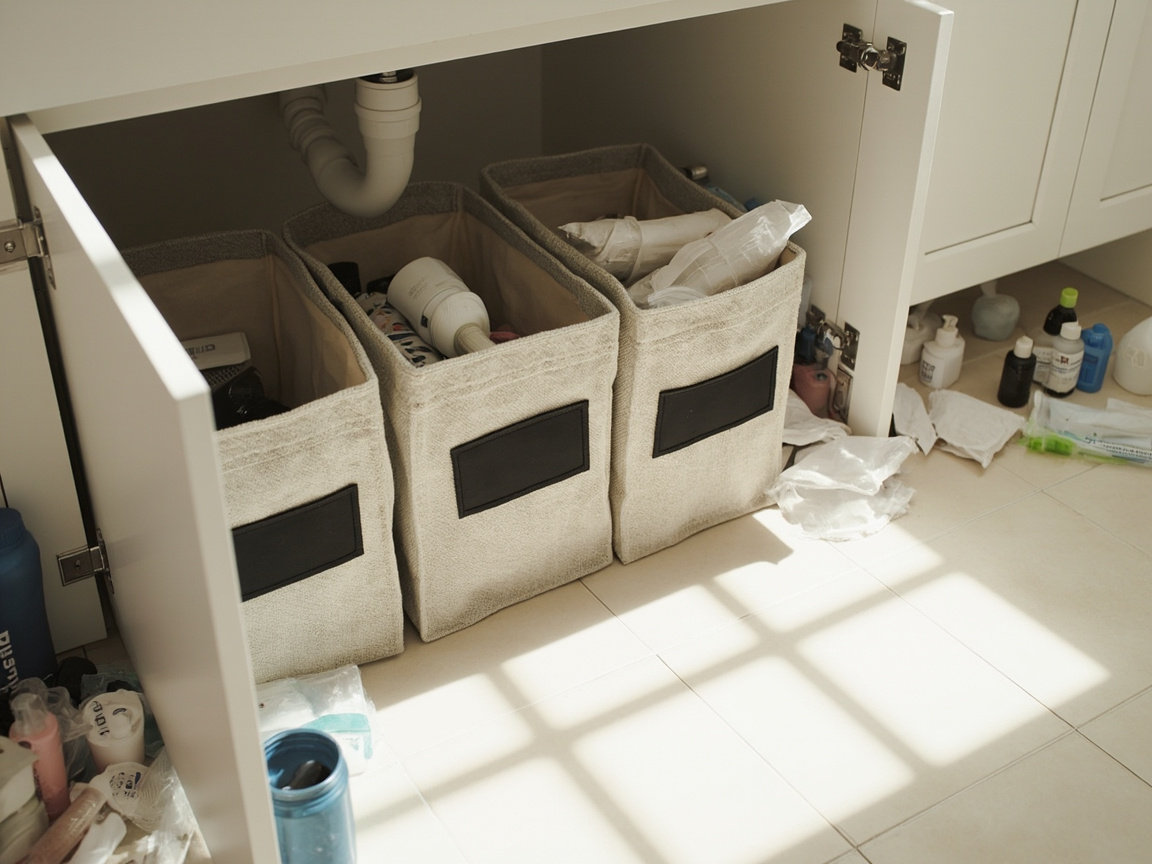
Out of sight. The closed cabinet door makes it the easiest zone to neglect, accumulating 6+ months of random items.
What You’ll Need
Five products cover 95% of under-sink organization problems — all bathroom-specific or compatible.
Height-adjustable 2-tier under-sink pull-out drawer
For double-door cabinets, the Sevenblue 2-Pack Height-Adjustable Under Sink Organizer is the workhorse. Height adjustment clears the P-trap (10-15 inches). Black metal frame slides smoothly. $25.99 for 2 organizers.
Over-the-cabinet door organizer with towel bars
The YMCCOOL 2-Pack Over-Cabinet Organizer hangs over the inside of the cabinet door. Towel bars hold hand towels; pockets hold small items. Zero floor/shelf footprint.
Tension rod for vertical divider
The KXLIFE 2-Pack Spring Tension Rod (16-28” range) creates a vertical divider for spray bottles with no drilling. 2-pack covers both sides of double-door cabinets.
Clear stackable storage drawers
The Vtopmart 4-Pack Clear Stackable Storage Drawers provides clear visibility and stackability. Place AROUND pipes, not against the back wall. Use for items too small for the pull-out drawer.
Command damage-free caddy for pedestal sinks
The Command Large Caddy mounts damage-free to the wall for pedestal sinks (no cabinet). Holds daily toiletries without drilling. Ideal for rentals.
The 5-Step Method
Order matters. Declutter first, then measure around pipes.
Step 1: Empty and triage
Apply the declutter-fast 4-quadrant system — Trash, Donate, Keep, Relocate. Many items belong in the linen closet, medicine cabinet, or vanity top.
Step 2: Map the 4 pipes
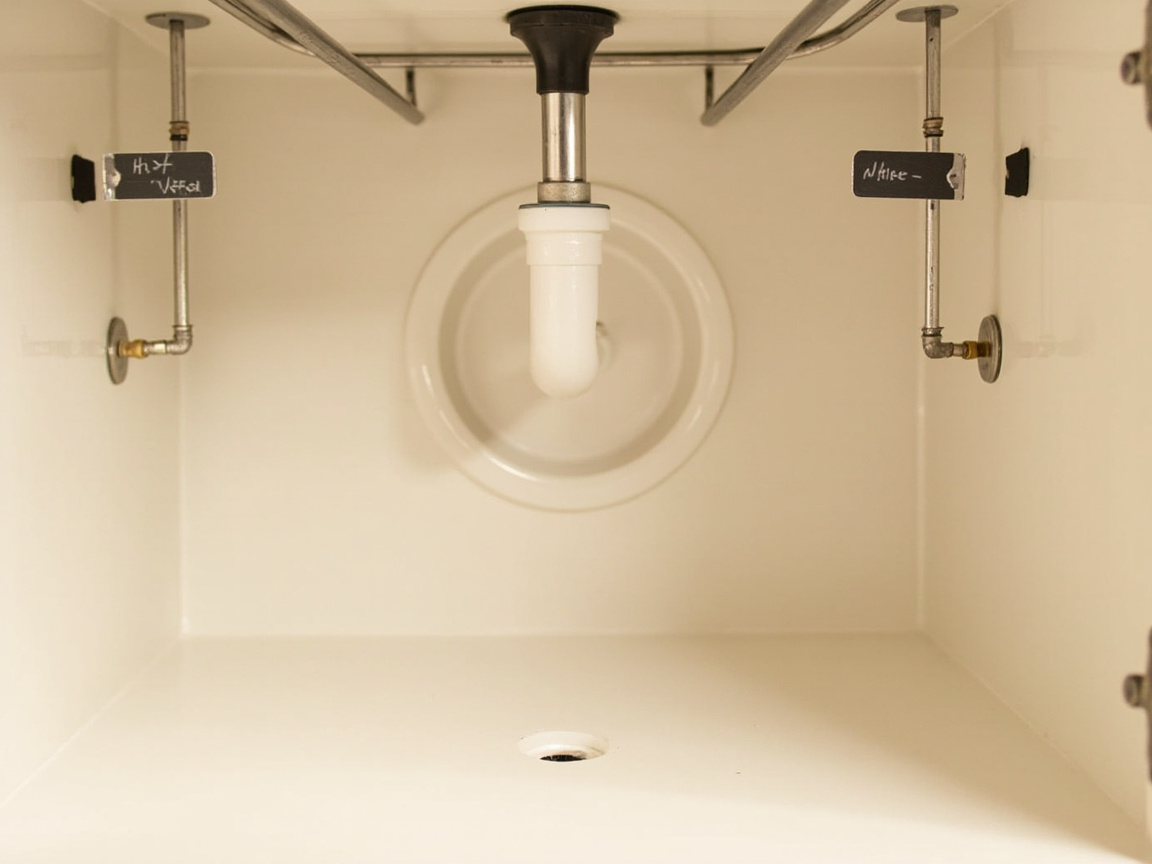
Identify all 4 pipes before measuring: P-trap (curved drain pipe, 8-12 inches below sink drain) + hot/cold supply lines (vertical pipes to faucets) + shut-off valves (round handles on supply lines). The pipe layout defines usable zones.
Step 3: Measure around the pipes
Measure the cabinet in 3 dimensions: width (18-36 inches), depth (16-24 inches), clear height (18-30 inches minus pipe height). See bedroom-declutter-checklist.
Step 4: Pick 1-2 systems
Match system to cabinet type. Double-door → 2-pack pull-out drawers. Single-door → stackable clear bins around pipes. Pedestal sink → Command caddy on wall. Drawer vanity → drawer dividers only. See storage bins guide.
Step 5: Place items by zone
Front 1/3: daily-use toiletries. Back 2/3: cleaning supplies + backups. Around pipes: small bins sized to clear P-trap. See under-bed storage guide.
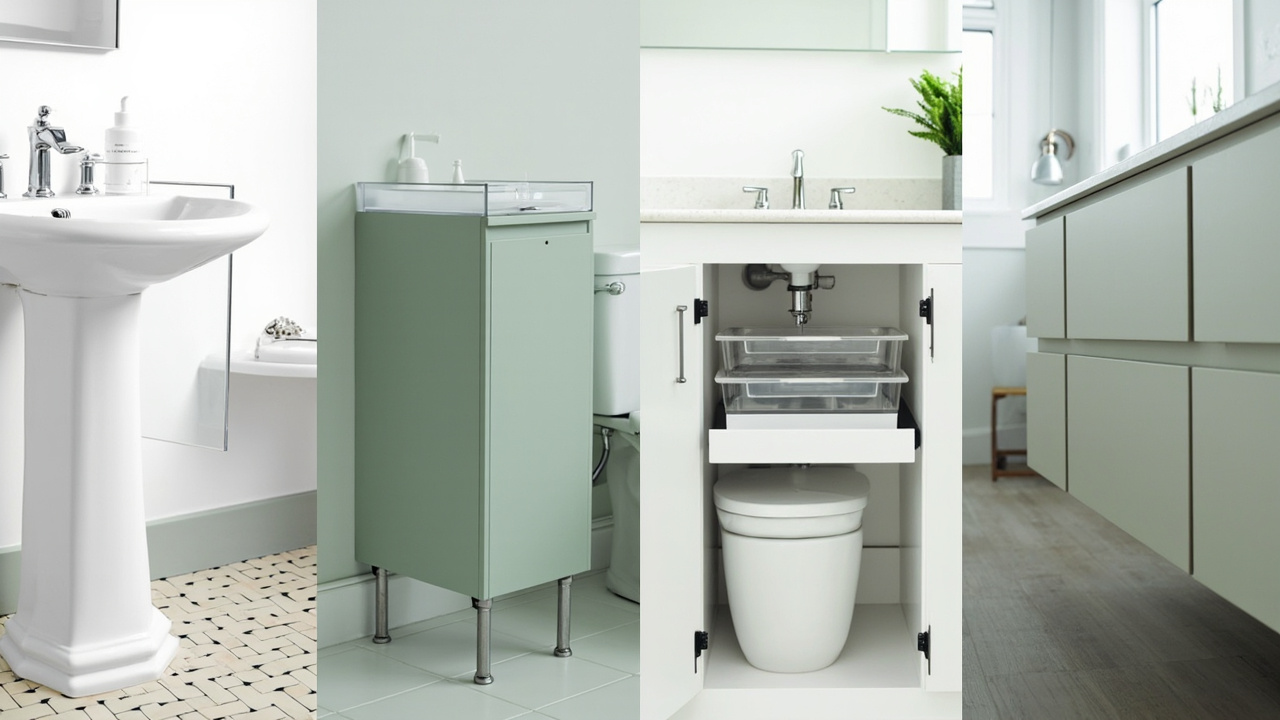
Layout by Cabinet Type
The differentiator most competitor guides skip: all 4 cabinet types together. WikiHow covers only one type. HouseBeautiful is product-focused.
Pedestal sink (no cabinet at all)
No cabinet means the under-sink “zone” doesn’t exist. Wall-mounted Command caddy for daily toiletries; toilet-tank-top tray for backup items. See bathroom hub.
Single-door cabinet
Narrow cabinet (12-18 inches wide) with 1 door. Best layout: stackable clear bins AROUND the P-trap, not against the back wall. Door interior for over-cabinet organizer (small items only).
Double-door cabinet
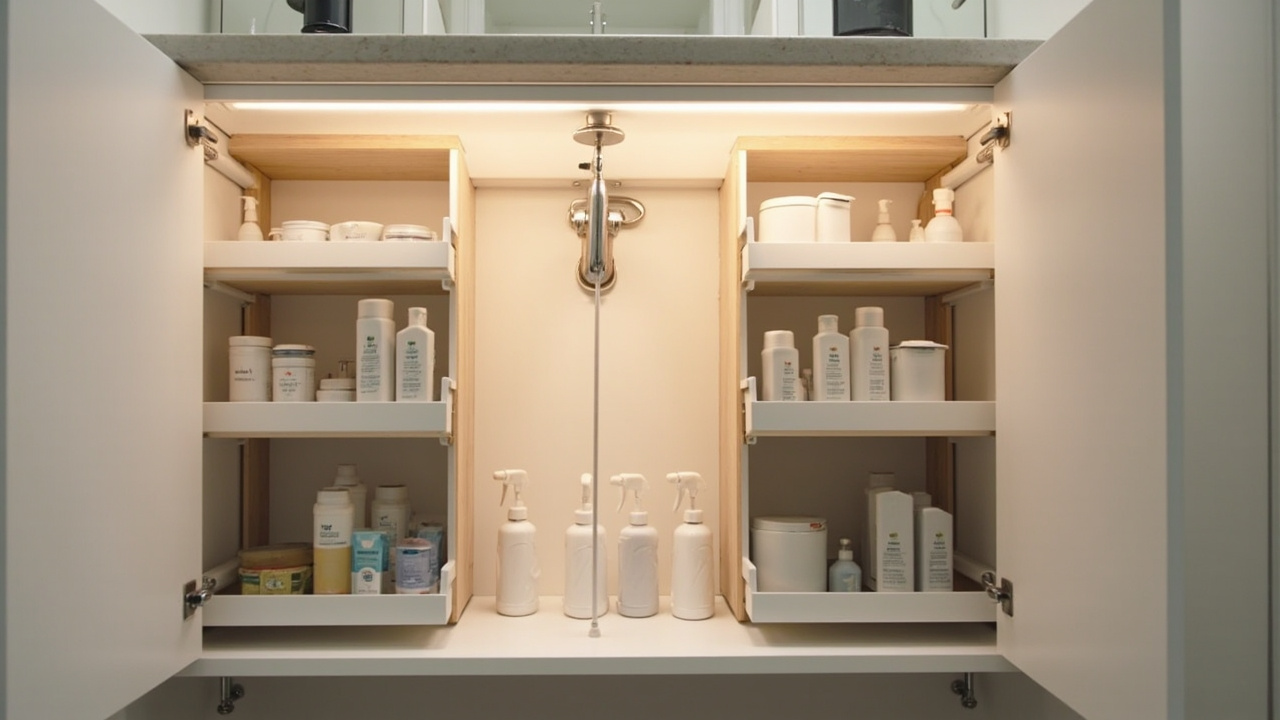
Wider cabinet (24-36 inches wide) with 2 doors. Best layout: 2-pack pull-out drawers for left + right sides, with tension rod divider in the middle for spray bottles.
Drawer vanity (no under-sink cabinet)
Modern bathroom vanity with all-drawer storage. The under-sink “zone” doesn’t apply. Use drawer dividers + cabinet-top tray. See drawer organizers buying guide.
Pipe Layout Awareness
The 4 under-sink pipes eat 20-40% of usable space.
The 4 pipes map
P-trap (curved drain pipe): usually back-center, 8-12 inches below sink drain. Biggest space-eater.
Hot/cold supply lines: vertical pipes to faucet. Usually 2-4 inches apart.
Shut-off valves: round handles on supply lines near the wall. Each takes 1-2 inches.
Total pipe coverage: 20-40% of cabinet interior.
Measuring for clearances
Three measurements: (1) P-trap height from cabinet floor (6-10 inches); (2) Side clearance (2-8 inches); (3) Vertical clearance (8-18 inches). See bedroom-declutter-checklist.
Constraint Guide by Scenario
Four scenarios cover most under-sink constraints: renting, moisture/leak concerns, drawer vanity, and wooden cabinet without adjustable shelf.
Renting (no drilling, no permanent install)
If renting, use Command Large Caddy (damage-free) + stackable bins (no install) + tension rods (no drilling). Avoid over-cabinet organizers requiring screws and pull-out drawers requiring cabinet-floor mounting.
Moisture / leak concerns
If leak history, place a leak detector (or dry washcloth) at the P-trap base, never store paper products, quarterly inspect all joints. The tension rod vertical divider keeps spray bottles upright. See seasonal-closet-rotation quarterly check.
Drawer vanity (no under-sink zone)
If drawer vanity, skip pull-out drawers and over-the-cabinet organizers. Use drawer dividers only — see drawer organizers buying guide. Add a small tray on the cabinet top for daily items.
Wooden cabinet without adjustable shelf
If fixed wooden shelf, the standard pull-out drawer may not fit at your P-trap height. Skip the pull-out drawer and use clear stackable bins placed AROUND the pipes.
Common Mistakes
Five failure patterns in nearly every under-sink cabinet that returns to chaos:
-
Storing liquids too close to pipes. Bottle leak onto pipe joint = moisture damage. Fix: keep liquids in bins or on the front 1/3.
-
No leak detector. Small leaks go unnoticed for months. Fix: place a dry washcloth or commercial leak detector at the P-trap base — check it monthly.
-
Over-buying organizers. Narrow cabinets punish over-buying. Fix: 1 primary + 1 secondary max.
-
Wrong size for the cabinet. Bins that touch the P-trap prevent the drawer from sliding. Fix: measure around the pipes before buying.
-
Skipping the quarterly check. Small leaks go undetected. Fix: 30-second quarterly inspection. See seasonal-closet-rotation quarterly routine.
Maintenance: The Quarterly Reset
Three rules for the 5-minute quarterly reset.
- Pull everything out (4-quadrant triage any new items).
- Wipe the cabinet floor (moisture check + cleanliness).
- Check all visible pipe joints for moisture or rust stains (early leak detection).
Five minutes every 3 months absorbs what five hours of emergency cleanup can’t undo.
What is the best way to organize under the bathroom sink?
Five steps handle 90% of under-sink cabinet problems: (1) Clear everything out, (2) Map the 4 pipes (P-trap, hot/cold supply, shut-off valves) — they define the layout, (3) Measure clearance around pipes, (4) Pick 1-2 systems that fit (pull-out drawer or tiered shelf for double-door; stackable bins for single-door), (5) Place daily-use items in the front 1/3, occasional items in the back 2/3. For pedestal sinks, the solution moves to the wall — a Command Large Caddy damage-free mounted to the wall holds daily toiletries. Cross-link: our declutter-fast method for the pre-organize 4-quadrant triage.
For the broader bathroom strategy, see the bathroom hub. For cross-room sister articles, see walk-in closet organization guide, small-bedroom-organization, and under-bed storage. The general method is declutter-fast. The measurement step is in bedroom-declutter-checklist, and the quarterly check rhythm is in seasonal-closet-rotation. For product deep-dives, see storage bins, drawer organizers, and hooks-racks-vertical-storage. For the visibility tradeoff, see clear vs opaque bins.