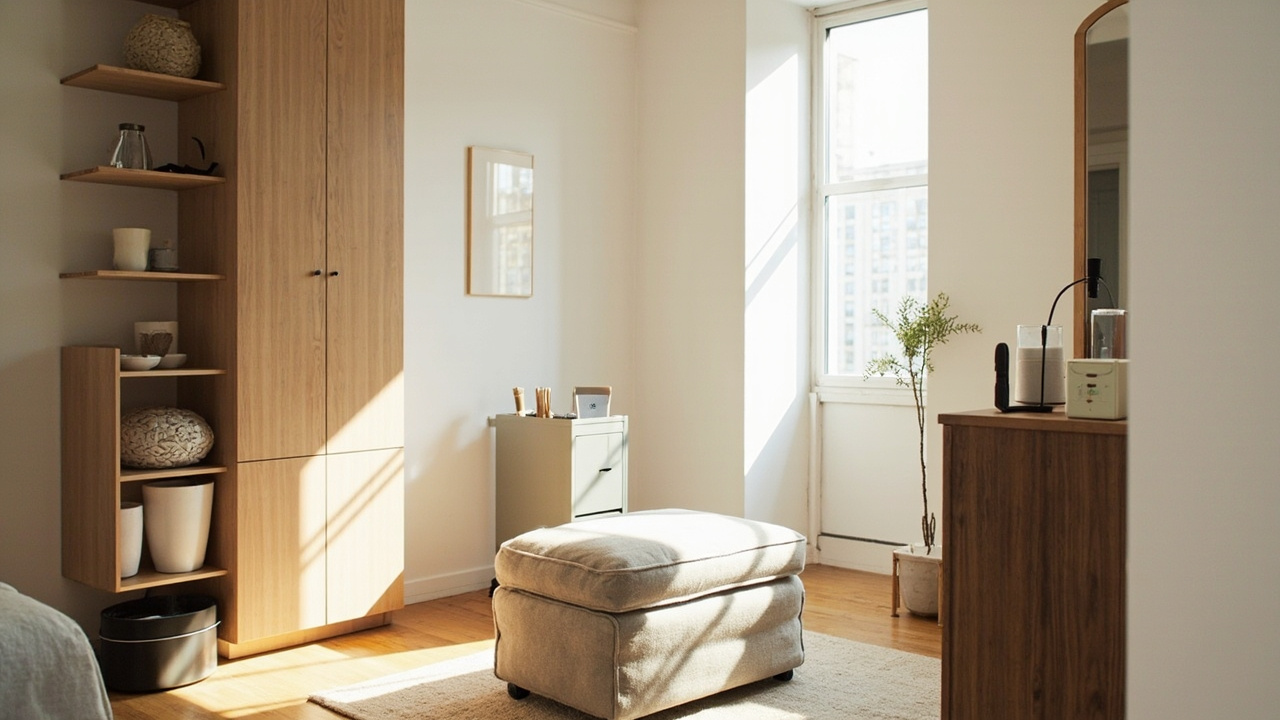
Small spaces fail for 3 compounding reasons: less square footage than the stuff you own, no traditional storage zones (kitchen/bathroom/closet all overlap), and most “small-space tips” ignore vertical-first thinking. Most people cram everything into the floor and wonder why they still feel cramped.
The fix is the 5-Principle System + 8 multi-functional furniture picks under $60. The principles work for studios, dorms, tiny bedrooms, and small kitchens alike. All 8 picks are verified live on Amazon.
This guide covers the 5 principles + room-by-room strategies + 8 furniture picks + common mistakes. For general decluttering method, see declutter-fast. For bedroom-specific declutter, see bedroom-declutter-checklist. For budget organizing, see frugal-home-organization.
Why Small Spaces Need Different Rules
Most organizing advice assumes a normal-size room with multiple storage zones (closet + cabinet + drawer + counter). Small spaces collapse these zones — your “closet” might be a 24-inch rack, your “pantry” might be 2 shelves above the microwave.
The standard advice “just declutter more” helps, but it’s only half the solution. Even a fully decluttered small space still has the same square footage problem. The other half is multi-functional furniture + vertical storage — and that’s where most guides fail to give specific product recommendations.
This guide combines both: aggressive decluttering AND smart furniture. Together they create a small space that feels bigger than its square footage.
The 5 Principles of Small-Space Decluttering
These principles apply whether you’re in a 200 sq ft studio or a 100 sq ft dorm room.
Principle 1: Declutter FIRST (More Aggressive Than Normal)
Normal-size rooms can absorb 30-40% clutter and still feel OK. Small spaces can absorb maybe 10-15%. Be ruthless:
- Items used less than once per month → store elsewhere or sell/donate
- Duplicates of anything → keep one, donate the rest
- “Just in case” items → replace “just in case” with “I can buy a new one in 20 minutes for under $20”
Apply the declutter-fast 4-quadrant method — Trash / Relocate / Donate / Keep — but with a stricter “Keep” threshold.
Principle 2: Multi-Functional Furniture
Every piece of furniture in a small space should do at least 2 things. Examples:
- Ottoman = seating + hidden storage
- Storage bench = entryway seating + shoe storage
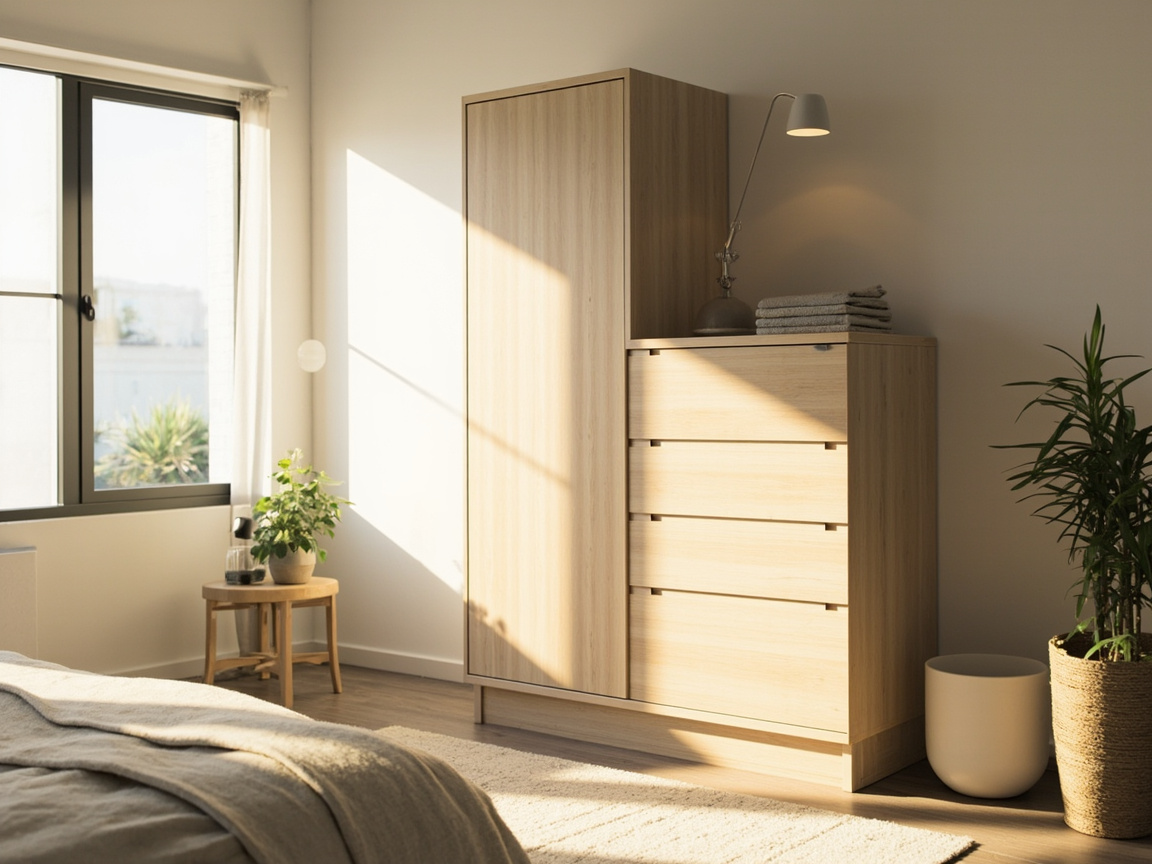
- Tall dresser = clothes storage + nightstand
- Rolling cart = pantry + kitchen prep station
Apply the same principle to existing furniture: your bed frame should have under-bed storage (or use bins underneath), your desk should have keyboard tray + drawer space, your coffee table should have a lift-top with storage inside.
Principle 3: Vertical-First Storage
The biggest small-space win most people ignore. Vertical space = free space:
- Floor bins cost horizontal space
- Over-door racks use dead space
- Tall dressers use ceiling height
- Wall-mounted shelves use wall area
- Tree bookshelves use vertical plane
A 1-foot wide × 6-foot tall tower holds more than a 3-foot wide × 2-foot tall cabinet. Same items, 3x less floor footprint.
Principle 4: Micro-Categorization
Normal-size rooms can store things in broad categories (clothes / toiletries / food). Small spaces need sub-categories:
- Clothes → by frequency (daily / weekly / seasonal)
- Kitchen → by zone (prep / cooking / serving / storage)
- Bathroom → by user (his / hers / shared)
Micro-categorization works because small containers force intentional choices. The declutter-fast method gets you started; micro-categorization keeps it organized.
Principle 5: Edit Ruthlessly + Maintain Weekly
Small spaces re-clutter 3x faster than normal rooms because every item competes for the same surface. The 1-touch rule is non-negotiable:
- Item comes in → goes to designated spot immediately
- Item is used → goes back immediately, not “later”
- 5-minute daily reset prevents 30-minute weekly cleanup
Maintenance beats reorganization. Reorganizing a small space every month is exhausting; a 5-minute daily reset keeps it forever.
Room-by-Room Strategies
Different small spaces have different pain points. Match the strategy to your space.
Studio / One-Room Apartment
All-in-one space means bed + living + work + eat all share one room. Strategies:
- Use room dividers or tall bookcases to create visual separation (bed behind a divider feels like a separate room)
- Zone rugs define each area (bed zone, work zone, dining zone)
- Storage ottoman at the foot of the bed holds seasonal items
- Tall dresser doubles as a TV stand (place TV on top, clothes below)
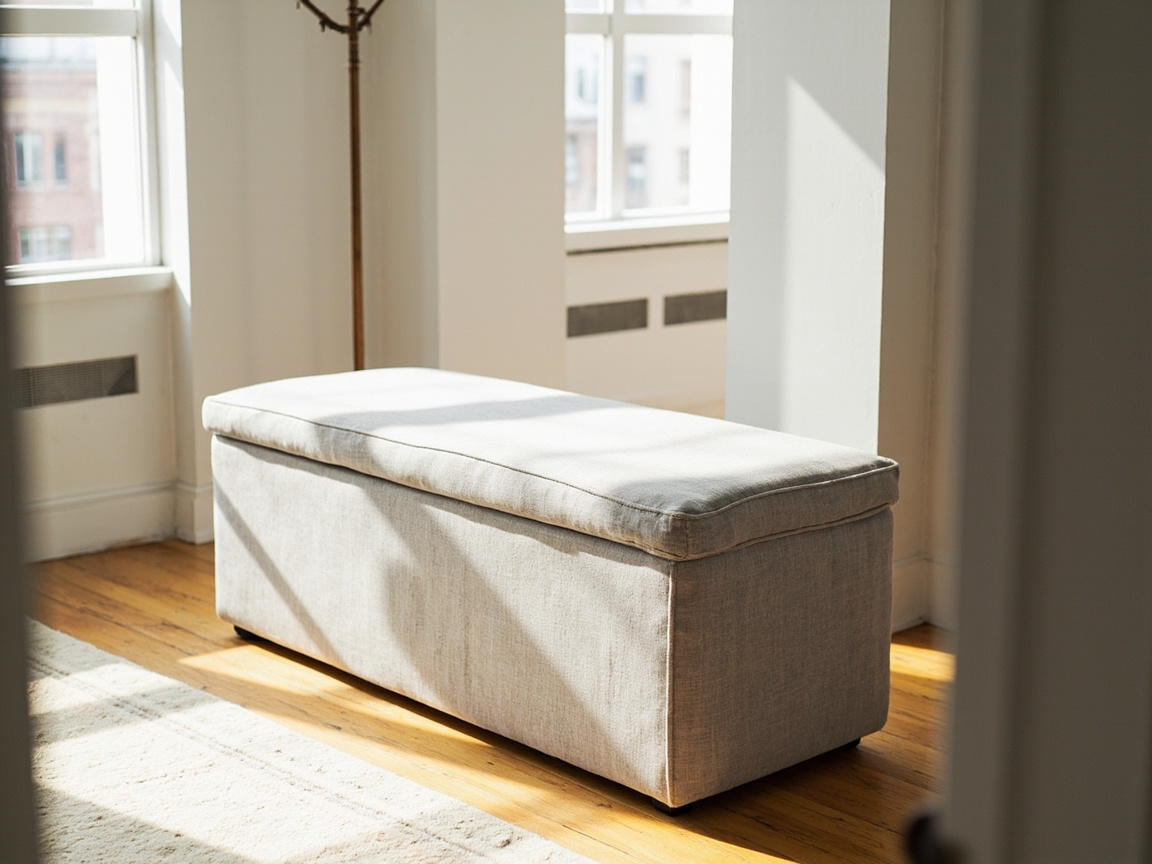
Best multi-functional: DUMOS 43” Folding Storage Ottoman — $29.97. Doubles as seating AND storage. 660 lb load means it works as a bench. Folds flat when not in use. Best for: end-of-bed storage, entryway seating, extra guest bed.
Small Bedroom (Under 100 sq ft)
Most of the floor is the bed. Strategies:
- Under-bed storage bins for seasonal items
- Tall dresser (6+ drawers) instead of wide dresser (4 drawers)
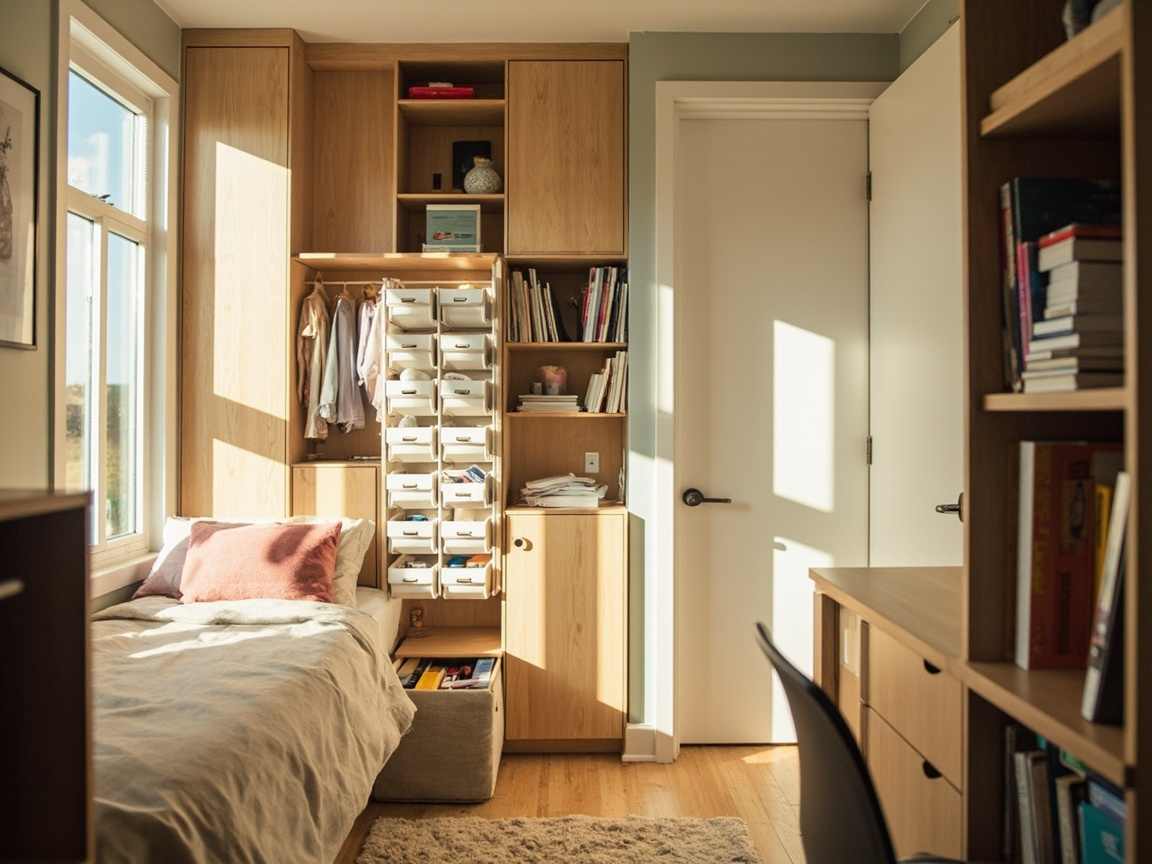
- Over-door organizer for shoes, accessories, daily-use items
- Wall-mounted nightstand (or skip — use a tall dresser drawer as your nightstand)
Best vertical dresser: HIGDBFE 44” Tall Dresser with Hanging Rack — $59.99. 44 inches tall = full wardrobe in 2 sq ft of floor space. Built-in hanging rack for shirts/dresses. 4 fabric drawers + hanging section. Best for: full wardrobe replacement when you can’t fit a regular dresser.
Small Kitchen (Under 50 sq ft)
Most counters have 6-12 inches of clear space. Strategies:
- Wall-mounted magnetic strip for knives + metal tools
- Over-the-sink cutting board adds 6 sq ft of prep space
- Slim rolling cart fits in 6-inch gaps between fridge and wall
- Tiered shelf risers double your cabinet shelf space
Best slim rolling cart: SPACELEAD Slim Storage Cart 4-Tier (Black) — $19.99. 4-tier rolling cart fits in 6-inch gaps. Moveable — roll between kitchen and dining area. Best for: extra pantry storage, kitchen prep station, bathroom overflow.
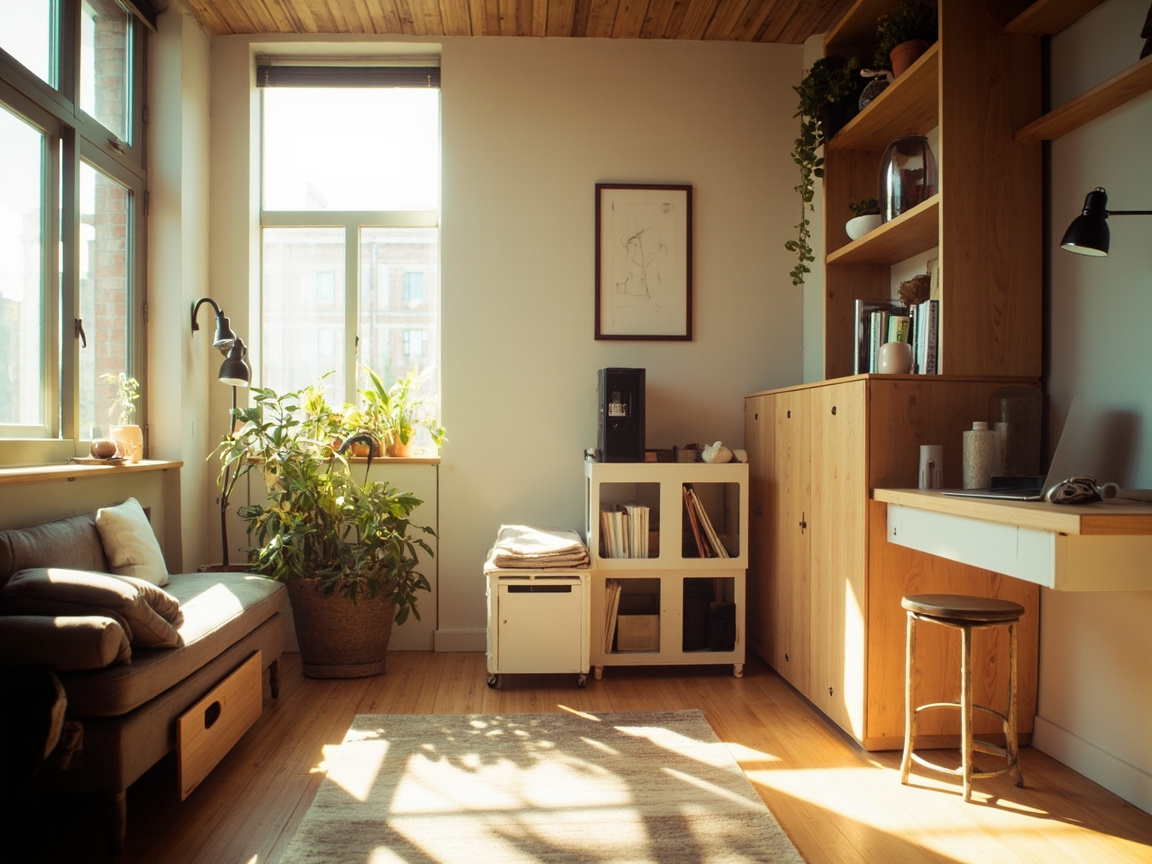
Dorm Room
Dorms usually ban wall-mounting and drilling. Strategies:
- Over-door organizers for ALL doors (bedroom, closet, bathroom if shared)
- Rolling carts that move between classes and room
- Storage ottoman doubles as seating + holds dorm supplies
- Vertical towers for clothes (no closet? Use a tall dresser)
Best over-door: JARLINK Over The Door Organizer — $19.98. 5 shelves + 5 pockets. 44 lb load — holds textbooks, shoes, accessories. No drilling required. Best for: dorms + rentals where wall-mounting is forbidden.
Tiny Bathroom
No counter space + no storage = same problems as small kitchen. Strategies:
- Over-the-toilet rack adds 3-4 shelves in dead space
- Over-door hooks use the back of the door
- Tiered shelf risers double cabinet shelf space
- Wall-mounted dispensers free counter space
See our small-bathroom-organization guide for the full bathroom 4-zone system.
8 Multi-Functional Furniture Picks
The 8 picks below cover the most common small-space pain points:
| Product | Price | Function | Best For |
|---|---|---|---|
| SPACELEAD Slim Cart 4-Tier | $19.99 | Moveable storage + counter | Kitchen, bathroom, dorm |
| DUMOS Ottoman Bench | $29.97 | Seating + storage | Entryway, bedroom end |
| Furnulem Nightstand | $37.98 | Vertical dresser + nightstand | Small bedrooms |
| SUNMORY Tree Bookshelf | $39.99 | Vertical bookshelf + display | Living room, bedroom |
| HIGDBFE Tall Dresser | $59.99 | Full wardrobe + hanging rack | No-closet studios |
| Furnulem 5-Drawer Tower | $53.99 | Narrow footprint, 5 drawers | Hallways, closets |
| Crestlive Vertical Storage Tower | $77.99 | Sturdy frame, 5 fabric bins | Closets, bedrooms |
| JARLINK Over-Door Organizer | $19.98 | Door-back storage | Dorms, rentals |
Total for all 8: $321.86 — but you won’t need all 8. Pick the 2-3 that solve YOUR specific pain point.
Why These Picks Matter
Common Mistakes
Five failure patterns specific to small spaces:
-
Buying organizers BEFORE decluttering. Every organizer added to clutter makes clutter worse. Most small spaces have 30-50% more stuff than they should. Apply declutter-fast BEFORE any purchase.
-
Choosing decorative over functional. Pretty baskets without purpose waste space. A clear plastic bin beats a wicker basket every time in a small space.
-
Not using vertical space — the biggest small-space win most people ignore. Floor bins cost space. A 1-foot wide × 6-foot tall tower holds more than a 3-foot wide × 2-foot tall cabinet.
-
Skipping multi-functional furniture. Your bed frame should have under-bed storage. Your ottoman should have hidden storage. Your dresser should double as a TV stand.
-
Treating small space like a regular room. Same rules don’t apply. Standard advice (“just declutter more”) helps but ignores the furniture piece.
Constraint Guide: If-Then Decisions
Four if-then rules for small spaces:
- IF renting → choose no-drill furniture (rolling carts, over-door organizers, freestanding dressers)
- IF under 200 sq ft → prioritize vertical over horizontal — every square foot of floor must earn its space
- IF studio apartment (one room) → use room dividers + zone rugs to create visual separation
- IF dorm room → check dorm rules for wall-mounting — usually not allowed, use over-door only
FAQ
What is the best furniture for a small space?
Multi-functional furniture that does 2+ jobs. The DUMOS Ottoman Bench ($29.97) is the highest-ROI single piece — seating + storage + occasional guest bed in one. For clothes storage, a tall dresser like the HIGDBFE 44” H with Hanging Rack ($59.99) replaces a full closet in 2 sq ft.
How do I declutter when I have no storage space?
Declutter MORE aggressively than normal rooms. Apply the declutter-fast 4-quadrant method but keep the “Keep” pile much smaller — small spaces need less stuff. Items used less than once per month should be stored elsewhere (parent’s house, storage unit) or sold/donated.
How do I organize a studio apartment?
Use room dividers + zone rugs to create visual separation (bed behind divider = “bedroom”; sofa area = “living room”). Apply the 5 Principles: aggressive decluttering, multi-functional furniture, vertical storage, micro-categorization, weekly maintenance. Storage ottomans + tall dressers are the highest-ROI investments for studios.
Related Decluttering Guides
For the broader decluttering system:
- Declutter Fast — the 4-quadrant method (start here)
- Bedroom Declutter Checklist — bedroom-specific 9-step system
- KonMari Method — philosophy-based decluttering
- Frugal Home Organization — budget storage under $10
- Linen Closet Organization — sheet + towel organization
- Seasonal Closet Rotation — quarterly rotation
For room-specific organization:
- Small Bathroom Organization — bathroom 4-zone system
- Bathroom Hub — all bathroom content
- Kitchen Hub — kitchen content
For product deep-dives:
- Storage Bins Guide — bin selection
- Shelf Organizers Guide — shelf risers
- Drawer Organizers Guide — drawer inserts
- Labeling Guide — label everything
For declutter-the-mind content: see all Learn collection articles at /learn/.